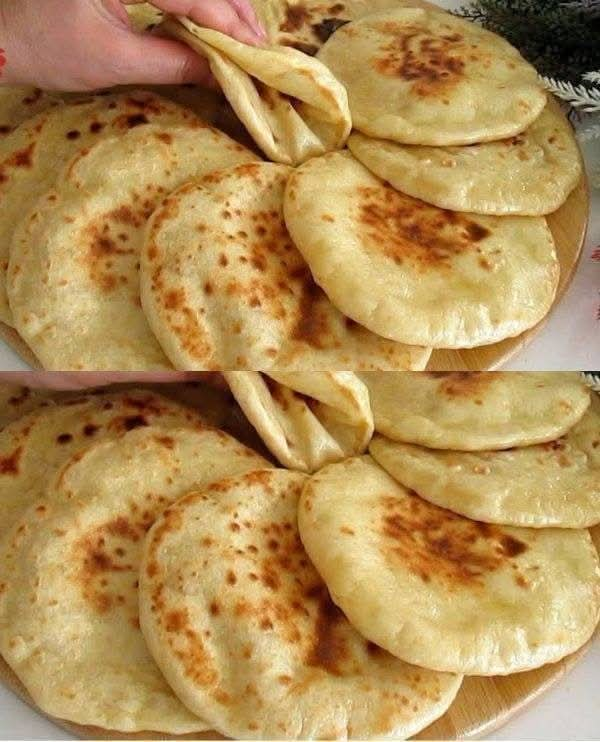
Here is a comprehensive guide to making traditional Flatbreads (similar to Moroccan Msemen or Middle Eastern Pita), based on the image you provided.
These flatbreads are characterized by their soft, chewy texture and golden-brown blistered spots.
Introduction
The image showcases a stack of freshly cooked, golden flatbreads being pulled apart to reveal a soft, layered interior. These breads are a staple in many cultures, often served with honey, cheese, or used to scoop up stews. They are pan-fried to create a crispy exterior while remaining fluffy inside.
Ingredients
For the Dough:
· 4 cups All-purpose flour
· 1 tsp Salt
· 1 tbsp Sugar (optional, aids browning)
· 2 tbsp Olive oil or melted butter
· 1 1/4 cups Warm water (approximate)
· 1 tsp Instant yeast (optional, for fluffier bread)
For Cooking & Finishing:
· 1/2 cup Melted butter or olive oil (for brushing)
· Semolina flour (for dusting the surface)
· Extra flour (for dusting)
Instructions
Method 1: The Layered Approach (similar to Msemen – best for the texture seen in the photo)
1. Make the Dough: Mix flour, salt, sugar, and yeast in a bowl. Add warm water gradually and knead for 10 minutes until smooth and elastic.
2. Rest: Divide dough into small balls (about golf ball size). Cover with oil and let rest for 15 minutes.
3. Flatten & Layer: On a greased surface, flatten a ball into a very thin square. Brush generously with melted butter/oil.
4. Fold: Fold the square into thirds (like a letter) or roll it up like a snail shell.
5. Shape: Flatten the folded dough gently into a circle or square.
6. Cook: Heat a skillet (cast iron is best) over medium heat. Cook the bread for 2-3 minutes on each side until golden brown spots appear.
7. Finish: Brush with butter immediately after removing from the pan.
Method 2: The Pita Style (simpler, quicker)
1. Mix & Knead: Combine ingredients and knead until dough is soft.
2. Rise: Let the dough rise for 1 hour.
3. Roll: Divide into balls and roll out into circles (about 1/4 inch thick).
4. Cook: Place on a hot, dry skillet. Cook until bubbles form, then flip and cook until the bottom is golden.
History
Flatbread is one of the oldest prepared foods in history, dating back to ancient Egypt and Mesopotamia. It was discovered that mixing crushed grains with water and cooking the paste on hot stones created a durable, portable food. Over centuries, this evolved into the diverse styles we see today, from Indian Naan to Moroccan Msemen. The bread in the photo appears to be a type of pan-fried flatbread, common in North African and Middle Eastern cuisine, where the technique of folding creates layers.
Benefits
· Versatile: Can be eaten for breakfast, lunch, or dinner.
· Economical: Made with basic pantry staples.
· Easy to Digest: The fermentation (if using yeast) or resting period breaks down gluten, making it easier on the stomach.
· Portable: Perfect for lunchboxes or travel.
Nutrition (Per Serving – approx. 1 bread)
· Calories: 150-200
· Carbohydrates: 30g
· Protein: 4g
· Fat: 4g (depends on oil used)
· Fiber: 1g
Formation
These breads are usually formed by creating layers. The dough is stretched thin, brushed with fat, and then folded. This traps air and creates steam during cooking, which separates the layers, making them soft and flaky (as seen in the top hand in the image holding the layers apart).
Lovers of this Bread
· Breakfast Enthusiasts: Perfect with morning tea or coffee, dipped in honey.
· Meat Lovers: Ideal for wrapping shawarma or kebabs.
· Vegetarians: Great with hummus, baba ghanoush, or veggie stews.
· Kids: They love the soft texture and mild flavor.
Conclusion
Making these flatbreads at home is not only rewarding but also quite simple. The smell of fresh bread cooking on a skillet is unmatched. Whether you choose the layered method for a flaky texture or the simple pita method for a quick fix, this recipe is a must-have in your kitchen repertoire.
Enjoy your homemade flatbreads!