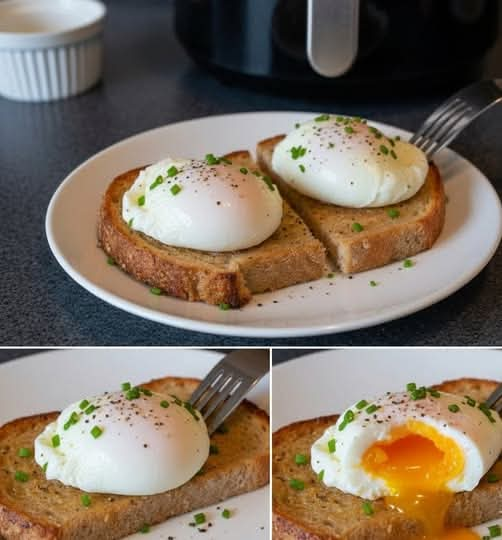
Here is a comprehensive guide to making the perfect Poached Egg on Toast—a classic, elegant, and nutritious breakfast.
The Perfect Poached Egg on Toast: A Complete Guide
Introduction
There is something universally comforting about a perfectly poached egg. With its delicate, translucent white enveloping a warm, golden yolk, it is a culinary masterpiece of simplicity. Served atop a slice of crusty, golden-brown toast, it transforms a humble breakfast into a gourmet experience.
While often seen as a dish for fancy brunches, making a poached egg at home is entirely achievable. This guide will walk you through the history, the health benefits, the precise method, and the variations of this beloved dish.
Ingredients
To make 2 servings (2 eggs on 2 slices of toast)
The Core Ingredients:
· 2 Large Eggs: Use the freshest eggs you can find (older eggs have runnier whites that spread).
· 2 Thick Slices of Bread: Sourdough, brioche, or a hearty whole grain work best.
· 1 tbsp White Vinegar: Helps the egg whites coagulate.
· Salt & Pepper: To taste.
· Fresh Chives: Finely chopped for garnish.
Optional Equipment:
· A fine-mesh strainer (to remove the watery part of the egg white).
· A slotted spoon.
· A small bowl.
History
The technique of poaching eggs dates back to ancient Rome, where eggs were cooked in various ways, though the modern method of cracking an egg into simmering water is often attributed to French culinary tradition (Œufs pochés).
However, “Egg on Toast” became a cultural staple in the 19th century. In Victorian England, it was a standard breakfast for the working class and the aristocracy alike. It gained massive popularity in the United States in the early 20th century, particularly in diners, eventually evolving into dishes like Eggs Benedict (which uses poached eggs on English muffins) and Avocado Toast.
Benefits & Nutrition
Poached eggs are one of the healthiest ways to prepare eggs.
· High Protein: Eggs are a complete protein source, containing all nine essential amino acids.
· No Added Fat: Unlike frying, poaching requires no oil or butter, making it low in calories and saturated fat.
· Nutrient-Dense: Eggs are rich in Vitamin D, B12, Choline (great for brain health), and Selenium.
· Satiety: The combination of protein (eggs) and complex carbohydrates (whole grain toast) keeps you full for hours, preventing mid-morning snacking.
Methods: How to Poach an Egg
There are two main methods. Here is the “Vortex” method (professional) and the “Strainer” method (foolproof).
Method 1: The Vinegar & Vortex Method (Traditional)
1. Boil: Fill a deep saucepan with 3 inches of water. Bring to a rolling boil, then reduce to a gentle simmer (small bubbles at the bottom).
2. Acid: Add the white vinegar. This helps the white hold together.
3. Vortex: Stir the water with a spoon to create a gentle whirlpool.
4. Drop: Crack the egg into a small bowl and gently slide it into the center of the whirlpool.
5. Cook: Simmer for 3 minutes (for a runny yolk). Do not stir.
6. Remove: Lift with a slotted spoon.
Method 2: The Strainer Method (Best for Freshness)
1. Bring water to a simmer (no vinegar needed).
2. Crack the egg into a fine-mesh strainer over a bowl. The watery, loose white will drain out, leaving only the thick white and yolk.
3. Gently slide the egg into the simmering water.
4. Cook for 3-4 minutes. Remove with a slotted spoon.
Instructions (Step-by-Step)
1. Toast the Bread: Toast your bread until golden and crisp. This creates a barrier so the toast doesn’t get soggy.
2. Prepare the Eggs: Fill a pot with water and bring to a gentle simmer. Add vinegar (if using).
3. Poach: Crack each egg carefully into the water. Cook for 3 minutes for a runny yolk.
4. Assemble: Place the toast on a plate. If desired, spread a thin layer of butter or mashed avocado.
5. Plate: Use a slotted spoon to lift the poached egg out of the water. Touch the bottom of the spoon to a paper towel to dry off excess water.
6. Season: Place the egg on the toast. Season with salt and freshly cracked black pepper. Garnish with chives.
Formation & Presentation
· The Look: The perfect poached egg should be a smooth, white orb. When cut, the yolk should be liquid gold.
· The Garnish: A sprinkle of bright green chives or parsley adds color contrast. A pinch of coarse sea salt adds texture.
· Accompaniments: Serve with a side of roasted cherry tomatoes or a small side salad.
Conclusion
Making the perfect poached egg on toast is a life skill. It requires a little patience and the right water temperature, but the result is a delicious, nutrient-packed meal that feels elegant yet is incredibly simple. Whether you are rushing out the door or enjoying a slow Sunday morning, this dish is a reliable winner.
For Lovers: A Romantic Breakfast
This dish is fantastic for a romantic morning.
· Presentation: Use a heart-shaped cookie cutter on the toast.
· Flavor: Add a sprinkle of truffle salt or a drizzle of truffle oil.
· Pairing: Serve with a glass of fresh orange juice and a single red rose. The runny yolk acts as a rich sauce, making it a sensual and satisfying meal to share.
Conclusion (Final Words)
The poached egg on toast is more than just breakfast; it is a testament to the beauty of simplicity. By mastering the poach, you unlock endless variations—from adding smoked salmon and hollandaise to a simple sprinkle of chili flakes. It is cheap, fast, and incredibly healthy. Go ahead and crack an egg today!