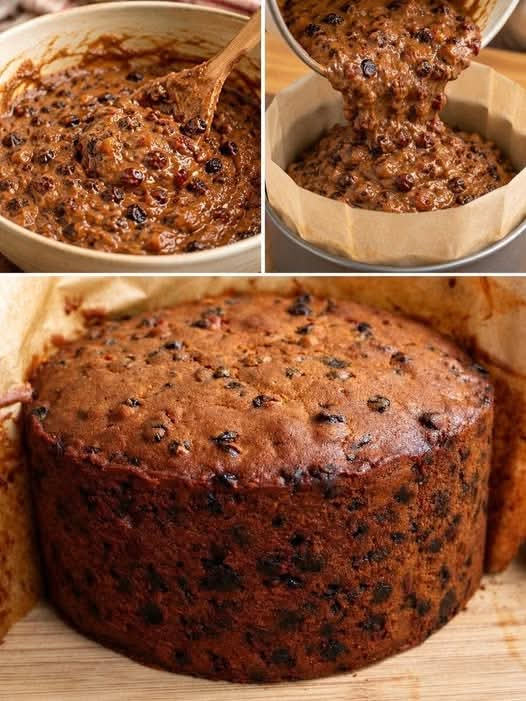
Here is a comprehensive guide to making a traditional Rich Fruit Cake (often associated with British holidays like Christmas or weddings), based on the images provided.
The Ultimate Rich Fruit Cake Recipe
Introduction
The image displays the holy trinity of fruit cake making: the dense, spiced batter filled with dried fruits and nuts, the pouring of the batter into a lined tin, and the glorious, dark, golden-brown finished product. This isn’t the dry, store-bought fruitcake of legend; this is a moist, alcohol-laced (or juice-soaked), flavor-packed cake that improves with age. It is a labor of love that rewards the baker with a centerpiece dessert.
Ingredients
The Fruits & Nuts:
· 1 kg (2.2 lbs) mixed dried fruit (raisins, sultanas, currants, chopped dates, candied peel)
· 100g (1/2 cup) glacé cherries (rinsed and halved)
· 50g (1/2 cup) chopped almonds (optional)
· Zest of 1 orange and 1 lemon
The Wet Mix:
· 250g (1 cup) unsalted butter (softened)
· 200g (1 cup) dark brown sugar
· 4 large eggs
· 2 tbsp black treacle or molasses (for color/depth)
· Liquid: 150ml (2/3 cup) brandy, dark rum, or orange juice (plus extra for feeding)
The Dry Mix:
· 250g (2 cups) all-purpose flour
· 1 tsp baking powder
· 1.5 tsp mixed spice (cinnamon, nutmeg, cloves)
· Pinch of salt
Instructions
Step 1: Prep (The Night Before)
· Soak your dried fruit in the brandy/rum or juice overnight. This plumps the fruit and ensures a moist cake.
· Preheat your oven to 150°C (300°F). Grease and double-line a deep 8-inch (20cm) round cake tin with parchment paper (as seen in the top right image).
Step 2: Creaming
· In a large bowl, cream the butter and sugar together until light and fluffy.
· Beat in the eggs one at a time. If the mixture curdles, add a tablespoon of flour.
Step 3: Combine
· Fold in the treacle/molasses.
· Sift in the flour, baking powder, salt, and spices.
· Stir in the soaked fruit (along with any leftover liquid), nuts, and zest. The batter will be extremely thick and stiff (as seen in the top left image)—this is correct.
Step 4: Baking
· Spoon the mixture into the prepared tin. Smooth the top with the back of a spoon (top right image).
· Bake in the center of the oven for 3 to 4 hours.
· Test: Insert a skewer into the center. It should come out clean (or with a few dry crumbs).
Step 5: Cooling
· Leave the cake in the tin to cool completely (usually overnight). Do not remove it while hot, or it may crack.
Methods
· The “Feed” Method: To keep the cake moist and extend its shelf life, poke small holes in the bottom of the cooled cake and spoon over 1-2 tablespoons of brandy/rum every week. Wrap it tightly in parchment and foil.
· Water Bath (Optional): Some bakers place a roasting pan of water on the shelf below the cake to keep the oven humid, preventing a hard crust.
History
Fruit cakes date back to Ancient Rome, where barley mash, pomegranate seeds, nuts, and raisins were mixed. In the Middle Ages, spices and dried fruits from the Mediterranean became available, leading to “Plum Cakes.” By the Victorian era, the fruit cake became a status symbol; a rich, dark fruit cake was served at weddings and Christmas, representing fertility (the fruit) and prosperity (the spices).
Benefits
· Energy Density: Due to the high sugar and fruit content, a small slice provides quick energy.
· Fiber: The abundance of dried fruit provides a good source of dietary fiber.
· Shelf Life: Unlike sponge cakes, this cake can last for months if stored correctly, making it a great make-ahead gift.
· Antioxidants: Dark molasses and spices like cinnamon offer small amounts of antioxidants.
Formation (Why it works)
The formation of this cake relies on the “creaming method.” The butter and sugar trap air, which expands in the heat. However, because the fruit adds significant weight, the cake relies on the flour for structure and the eggs for binding. The treacle and brown sugar cause the Maillard reaction (browning) and caramelization, giving it that iconic dark color.
Nutrition (Per Slice – approx)
· Calories: 350-450 (depending on size)
· Fat: 12g
· Carbs: 60g
· Sugar: 40g
· Protein: 4g
(Note: This is a treat meant for enjoyment, not a health food.)
Conclusion
Baking a fruit cake is an act of patience. From soaking the fruit to the long, slow bake, it requires time. However, the result is a dense, aromatic, and deeply satisfying confection that is a staple of celebration across the globe.
For the Lovers of Fruit Cake
Why we love it:
· The Texture: The dense crumb that gives way to bursts of juicy soaked fruit.
· The Aroma: The house smells like cinnamon, citrus, and warm spirits while it bakes.
· The Tradition: There is something romantic about making a cake that you “feed” for weeks, watching it mature.
Serving Suggestion:
· Serve with a sharp cheddar cheese (a classic British pairing).
· Pair with a cup of Earl Grey tea or a small glass of dessert wine.
· Slice thinly—it is very rich!
Storage:
· Store in an airtight tin in a cool, dark place. It gets better with age (up to 3-6 months).