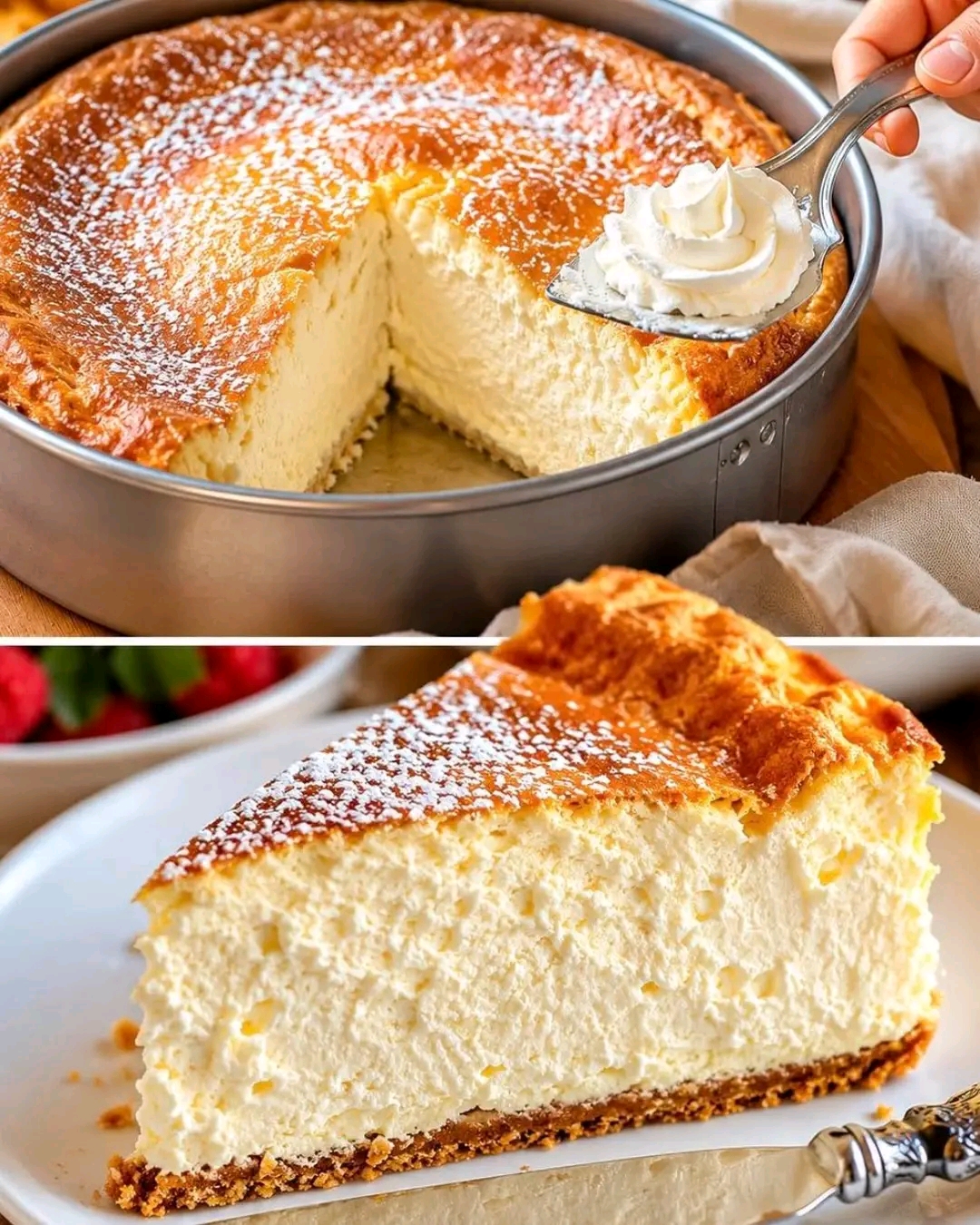
Käsekuchen mit Vanillepudding Incredibly Creamy & Easy to Bake
Introduction
This German-style cheesecake with vanilla pudding is wonderfully creamy, smooth, and comforting. Unlike dense American cheesecake, German Käsekuchen traditionally has a lighter, slightly tangy filling, often made with quark. The addition of vanilla pudding powder helps create a beautifully soft yet sliceable texture and gives the cake a delicate vanilla aroma.
It is an easy dessert for family gatherings, afternoon coffee, holidays, or whenever you want a homemade cake that feels both classic and elegant.
Origin
Käsekuchen is a beloved German cheesecake with a long tradition of regional variations. Traditional versions commonly use Quark, a fresh cultured dairy product with a texture between yogurt and soft cheese. Recipes vary from region to region, with some using raisins, citrus zest, shortcrust pastry, or a simple crustless filling.
Vanilla pudding powder became a popular ingredient in many modern German baking recipes because it provides vanilla flavor while helping stabilize creamy fillings.
Cultural Significance
In Germany, cheesecake is closely associated with Kaffee und Kuchen, the traditional afternoon ritual of enjoying coffee and cake with family or friends. A homemade Käsekuchen is especially suited to this occasion because it can be prepared ahead of time and tastes even better once completely chilled.
This cake represents the simple, comforting style of European home baking: familiar ingredients, careful preparation, and a dessert designed to be shared.
Ingredients Quantity
For the crust
250 g all-purpose flour
100 g granulated sugar
125 g unsalted butter, softened
1 large egg
1 teaspoon baking powder
1 teaspoon vanilla extract
Pinch of salt
For the creamy filling
750 g quark, preferably 20% fat
150 g granulated sugar
2 large eggs
1 packet vanilla pudding powder, about 37–40 g
120 ml heavy cream
100 ml milk
1 teaspoon vanilla extract
1 tablespoon lemon juice
Finely grated zest of ½ lemon
For finishing
Powdered sugar, optional
Equipment: 24–26 cm springform pan
Optional Additions
75–100 g raisins
1 tablespoon rum or rum extract
Extra lemon zest for a brighter flavor
A teaspoon of vanilla bean paste
Fresh berries for serving
A light dusting of powdered sugar
Thinly sliced apples for an autumn-inspired variation
Tips for Success
1. Use room-temperature ingredients. The filling will blend much more smoothly.
2. Drain very wet quark. Excess moisture can make the cheesecake difficult to set.
3. Do not overmix the eggs. Mix just until the ingredients are combined to reduce excessive air in the filling.
4. Bake gently. A moderate oven temperature helps the cheesecake remain creamy rather than becoming dry.
5. Avoid opening the oven repeatedly. Sudden temperature changes can encourage cracking.
6. Let it cool completely. The filling continues to firm as it cools.
7. Chill before slicing. Refrigerating the cheesecake for several hours gives you cleaner slices and the best texture.
Instructions
1. Prepare the crust
Preheat the oven to 175°C (350°F). Grease a 24–26 cm springform pan.
Combine the flour, sugar, baking powder, and salt. Add the softened butter, egg, and vanilla. Mix until a soft dough forms.
Press the dough evenly into the bottom of the prepared pan. If desired, press some of the dough about 2–3 cm up the sides.
2. Prepare the filling
In a large bowl, combine the quark, sugar, eggs, pudding powder, cream, milk, vanilla, lemon juice, and lemon zest.
Whisk until smooth and creamy, but avoid excessive beating.
3. Fill the pan
Pour the cheesecake mixture over the prepared crust. Gently smooth the top.
Tap the pan lightly on the counter once or twice to release large air bubbles.
4. Bake
Bake for approximately 55–65 minutes, or until the edges are set and the center still has a slight wobble.
If the top begins browning too quickly, loosely cover it with aluminum foil during the final portion of baking.
5. Cool slowly
Turn off the oven and leave the cheesecake inside with the door slightly open for about 15–20 minutes.
Remove it and allow it to cool completely in the pan.
6. Chill and serve
Refrigerate for at least 4 hours, preferably overnight.
Carefully remove the springform ring, dust with powdered sugar if desired, slice, and serve chilled.
Description
Each slice has a tender, buttery crust surrounding a silky, creamy vanilla cheesecake filling. The lemon adds just enough freshness to balance the sweetness, while the vanilla pudding gives the filling its characteristic smooth consistency.
It is rich without being overwhelmingly heavy and makes a beautiful centerpiece for an afternoon coffee table.
Nutritional Information
Approximate values per serving, assuming 12 servings:
Calories: 330–370 kcal
Protein: 10–12 g
Carbohydrates: 38–42 g
Fat: 16–19 g
Sugar: 22–26 g
Fiber: 1–2 g
Values will vary depending on the quark, cream, milk, and amount of sugar used.
Conclusion
Käsekuchen mit Vanillepudding is a wonderful example of comforting German baking. Its creamy vanilla filling, delicate lemon notes, and buttery crust make it an easy dessert that looks impressive without requiring complicated techniques.
For the best flavor and texture, prepare it a day ahead and allow it to chill thoroughly before serving.
Recommendation
Serve each slice with fresh berries, a spoonful of lightly whipped cream, or simply a dusting of powdered sugar. Pair it with coffee, black tea, or a cup of vanilla tea for a classic afternoon treat.
Embracing Healthful Indulgence
Dessert can be enjoyed as part of a balanced lifestyle, and portion size makes a big difference. For a lighter version, you can reduce the sugar slightly, use lower-fat quark, replace some of the cream with milk, and serve smaller slices alongside fresh berries.
The goal isn’t to remove the pleasure from dessert—it is to enjoy a creamy homemade treat thoughtfully and in a satisfying portion.