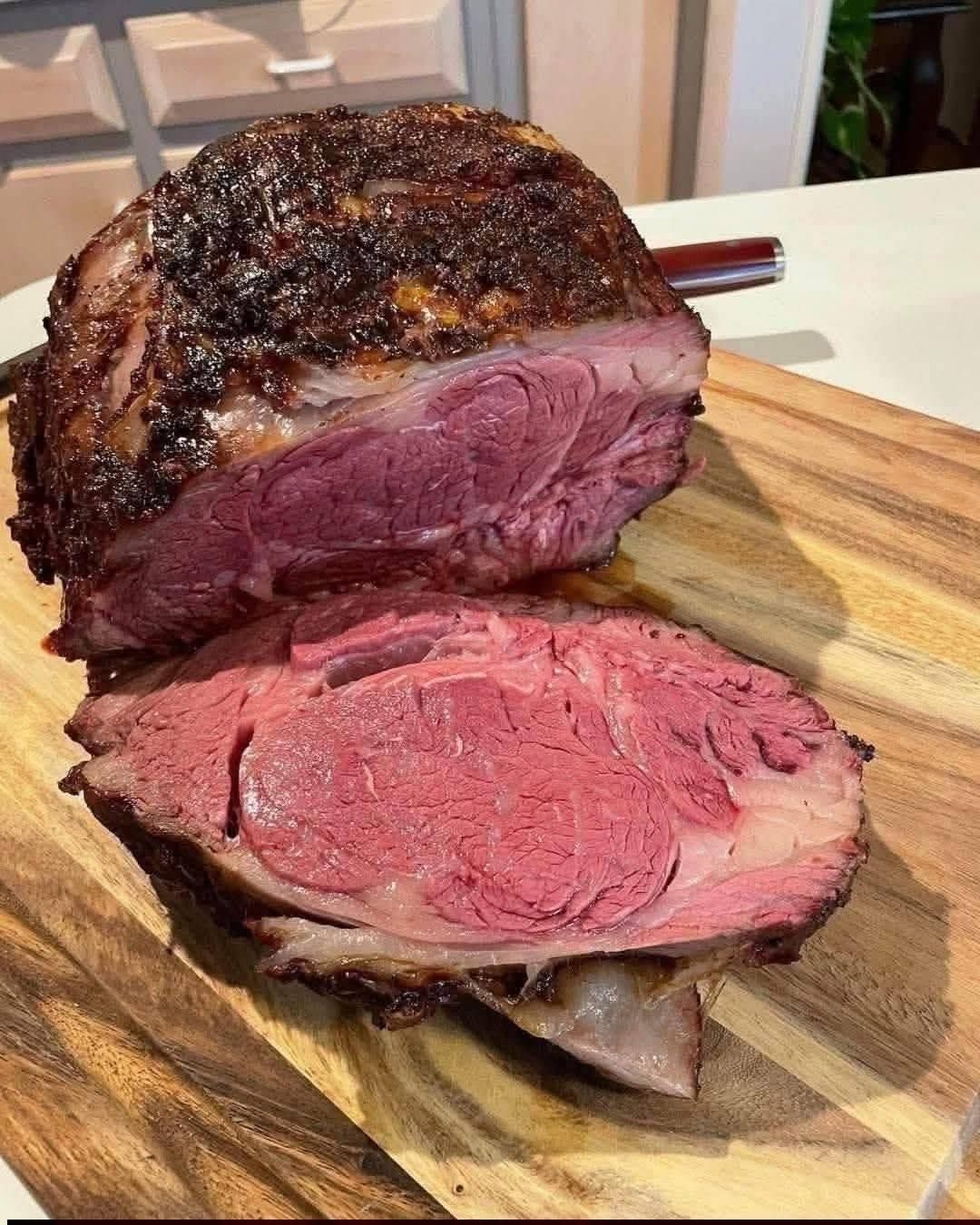
Here is a comprehensive guide to creating the magnificent roast beef shown in the image. This is a classic Prime Rib Roast (also known as a Standing Rib Roast), famous for its dark, crusty exterior and vibrant, rosy-red, juicy interior.
Introduction
There is perhaps no dish more synonymous with celebration and luxury than a perfectly cooked Prime Rib. The image showcases the epitome of this culinary masterpiece: a thick, caramelized, heavily seasoned crust (the “bark”) giving way to a tender, melt-in-your-mouth interior cooked to a perfect medium-rare. While it looks intimidating, roasting a prime rib is surprisingly straightforward. It relies on high-quality meat, simple seasonings, and a reliable meat thermometer. This recipe will guide you through creating this show-stopping centerpiece for your next gathering.
Ingredients
The Roast:
· 1 (5 to 7-pound) Bone-In Prime Rib Roast (Allow it to sit at room temperature for 2-3 hours before cooking).
· 2-3 tablespoons Kosher Salt (or coarse sea salt).
· 2 tablespoons Black Pepper, freshly cracked.
· 4 cloves Garlic, minced (or 2 tablespoons garlic powder).
· 2 tablespoons Fresh Rosemary, finely chopped.
· 2 tablespoons Fresh Thyme, finely chopped.
· 2 tablespoons Olive Oil or softened butter (for binding).
Optional Au Jus (Sauce):
· Pan drippings from the roast.
· 1 cup Beef Broth.
· 1/2 cup Red Wine (optional).
· 1 tablespoon Cornstarch mixed with 1 tablespoon cold water.
Instructions & Methods
Method: High Heat Sear & Low Heat Roast (Reverse Sear Alternative)
Step 1: Preparation
1. Remove the roast from the refrigerator 2-3 hours before cooking to bring it to room temperature. This ensures even cooking.
2. Pat the roast completely dry with paper towels. Moisture on the surface will steam the meat instead of roasting it.
3. In a small bowl, combine the salt, pepper, minced garlic, rosemary, thyme, and olive oil to create a paste.
4. Rub this mixture generously all over the roast, massaging it into the meat. Ensure the bone side is also seasoned.
Step 2: The Initial Sear (The Crust)
1. Preheat your oven to 500°F (260°C).
2. Place the roast, bone-side down (fat cap up), in a heavy roasting pan with a rack. If you don’t have a rack, place it on a bed of roughly chopped onions and carrots.
3. Roast at 500°F for exactly 15 minutes. This high heat creates the dark, flavorful crust seen in the picture.
Step 3: The Slow Roast
1. After 15 minutes, reduce the oven temperature to 325°F (165°C).
2. Continue roasting until the internal temperature reaches your desired doneness (see the Temperature Guide below).
3. Estimated time: Roughly 12-15 minutes per pound after the initial sear.
Step 4: The Crucial Rest
1. Remove the roast from the oven and transfer it to a cutting board.
2. Tent it loosely with aluminum foil.
3. Let it rest for at least 20-30 minutes. This is non-negotiable. Resting allows the juices to redistribute; if you cut it immediately, all the juice will run out, leaving dry meat. The internal temperature will also rise by about 5-10 degrees while resting (carryover cooking).
Step 5: Carving & Serving
1. Remove the strings if your butcher tied it.
2. Slice against the grain into thick (1/2 to 3/4 inch) slabs. If bone-in, you can either carve the meat off the bone in one piece first or cut between the bones into individual ribs.
Temperature Guide (Internal Temp before Resting)
· Rare: 115°F – 120°F (Final temp ~125°F) – Cool red center.
· Medium-Rare: 125°F – 130°F (Final temp ~135°F) – Warm red center (Recommended, as seen in the photo).
· Medium: 135°F – 140°F (Final temp ~145°F) – Warm pink center.
History
The Prime Rib is an American culinary icon, though its roots trace back to the British tradition of roasting beef on a spit. The term “Prime Rib” originally referred to a specific cut from the primal rib section (bones 6 through 12). In the 18th and 19th centuries, the English nobility considered roasted beef a symbol of wealth and power. As the tradition crossed the Atlantic, it became a staple of American Christmas dinners and upscale steakhouses. The “Standing Rib Roast” gets its name because it is roasted standing upright on its bones.
Benefits
· High-Quality Protein: Beef provides all essential amino acids necessary for muscle repair and growth.
· Rich in Nutrients: Prime rib is an excellent source of Iron (necessary for oxygen transport in the blood), Zinc (supports immune function), and B-vitamins (especially B12).
· Satiety: The fat content makes this a highly satisfying meal, keeping you full longer.
· Social Bonding: It is a communal meal; a large roast is designed to be shared.
Formation (How it gets its look)
· The Bark: The dark, textured crust is formed by the Maillard reaction. The high heat of the initial sear (500°F) combined with the dry rub of herbs, garlic, and salt creates a chemical reaction between amino acids and reducing sugars, giving the meat a savory, roasted flavor.
· The Pink Center: The striking red/pink color is due to the protein myoglobin. It retains its reddish hue when cooked to lower internal temperatures (below 140°F). Once it passes 140°F, the myoglobin oxidizes and turns gray/brown.
Nutrition (Per 3 oz / 85g serving, approximate)
· Calories: 250-300 (depending on fat trim)
· Protein: 20g
· Fat: 20g
· Carbohydrates: 0g
· Iron: 10% DV
Conclusion
Mastering a Prime Rib Roast is a rite of passage for home cooks. It requires patience (especially during the resting phase) and a good thermometer, but the result is a visually stunning, succulent piece of meat that elevates any dinner table. The contrast between the savory, crispy bark and the buttery, tender interior is a dining experience that rivals the finest steakhouses.
For Lovers (Serving Suggestions)
For the ultimate romantic or celebratory dinner:
· Pairing: Serve with a full-bodied Red Wine, such as a Cabernet Sauvignon or a bold Bordeaux.
· Sides: Creamed spinach, Yorkshire pudding, roasted root vegetables, or a classic Caesar salad. Horseradish cream sauce is a traditional and fiery complement.
· Ambiance: Dim the lights, light some candles, and slice the roast tableside for dramatic effect.