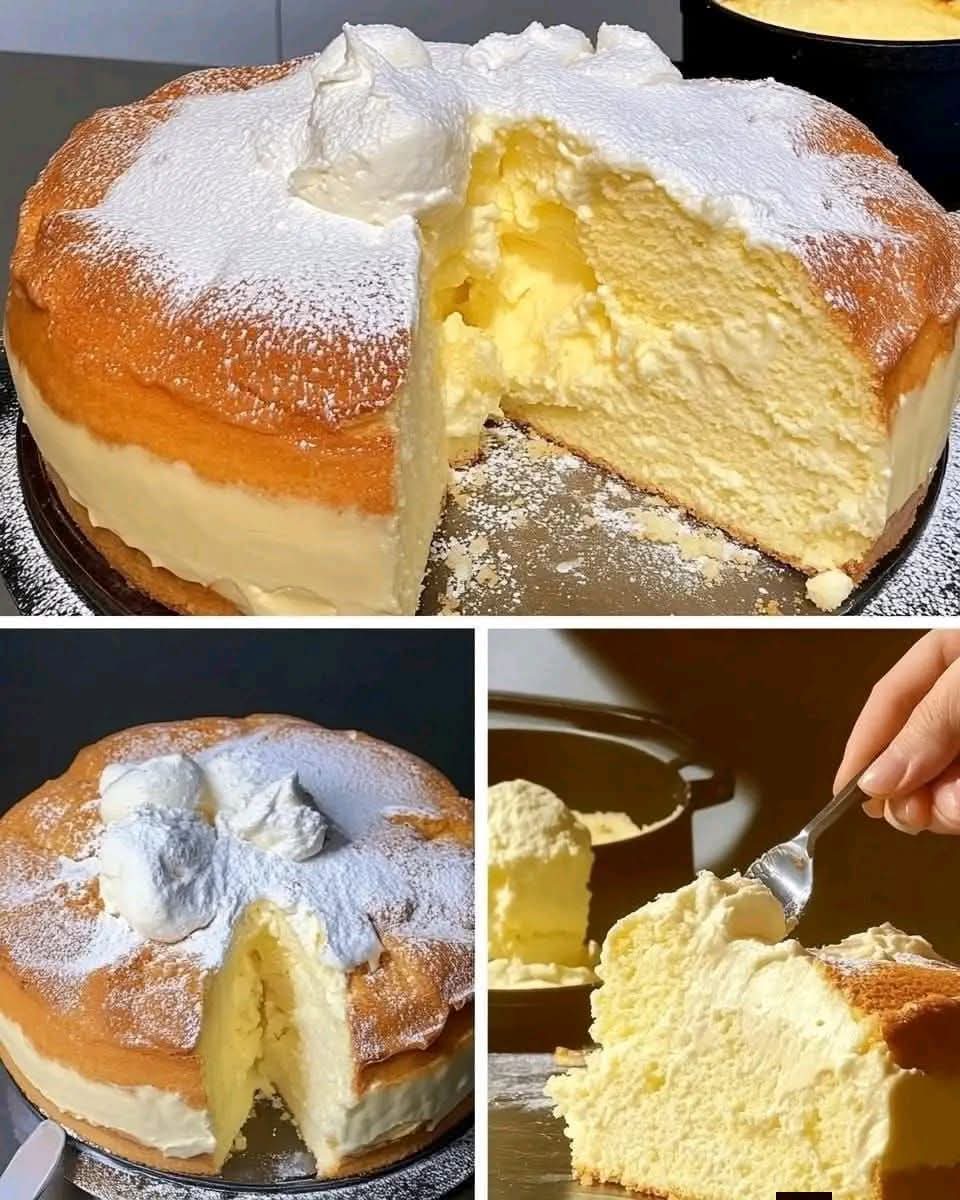
- Fluffy Japanese Cheesecake with Whipped Cream Topping
This recipe creates the iconic “cotton cheesecake” —a dessert that jiggles like a soufflé and melts like a cloud, topped with lightly sweetened whipped cream.
Introduction
Japanese cheesecake, also known as soufflé cheesecake or cotton cheesecake, is a beloved dessert that combines the rich tang of cream cheese with the airy lightness of a chiffon cake. Unlike its dense New York cousin, this cake is less sweet, crustless, and remarkably fluffy, thanks to a meringue folded into the batter . The whipped cream topping adds a luxurious finish without weighing it down.
Ingredients
For the Cheesecake
· 200 g cream cheese (full-fat, room temperature)
· 60 g whole milk
· 25 g unsalted butter
· 5 large eggs, separated
· 100 g granulated sugar (divided: 10 g for yolks, 90 g for whites)
· 40 g cake flour
· 10 g cornstarch
· Zest of 1 lemon (optional, for brightness)
· ¼ tsp cream of tartar (optional, stabilizes whites)
For the Whipped Cream Topping
· 200 ml heavy whipping cream (cold)
· 2 tbsp powdered sugar
· ½ tsp vanilla extract
Instructions & Methods
Method: Bain-Marie (Water Bath) Baking
Step 1: Prepare the Pan and Oven
1. Preheat oven to 200°C (390°F) using convection (natural) heat, NOT fan-forced—fan heat dries the surface and causes cracks .
2. Line an 18–20 cm (7–8 inch) round springform pan with parchment paper on the bottom and sides. If using a springform pan, wrap the outside with two layers of aluminum foil to prevent water from seeping in .
Step 2: Make the Cheese Base
3. In a heatproof bowl over simmering water (or microwave in short bursts), melt together the cream cheese, milk, and butter until smooth. Do not exceed 40°C .
4. Remove from heat. Whisk in the egg yolks and 10 g sugar.
5. Sift in the cake flour and cornstarch. Whisk gently until just combined. Add lemon zest if using.
6. Strain the mixture through a fine sieve for a silky texture . Set aside.
Step 3: Make the Meringue
7. In a clean, dry bowl, beat egg whites at low speed until foamy. Add cream of tartar if using .
8. Gradually add 90 g sugar in three additions. Beat until soft peaks form—the meringue should be glossy and hold a gentle “bird’s beak” curl. Do not over-beat; stiff meringue causes cracks .
Step 4: Fold and Bake
9. Fold one-third of the meringue into the cheese base to lighten it. Then gently fold in the remaining meringue in two additions, using a spatula and bottom-to-top motions. Stop as soon as no white streaks remain .
10. Pour batter into the prepared pan. Tap gently on the counter to release large air bubbles .
11. Place the pan inside a larger roasting pan. Pour hot water into the roasting pan until it reaches about 2 cm up the sides of the cake pan .
12. Bake at 200°C for 15 minutes, then reduce to 110–140°C and bake for 60–70 minutes until golden and set but still slightly jiggly in the center .
13. Turn off the oven and let the cake rest inside with the door slightly ajar for 15 minutes to prevent sudden collapse .
Step 5: Cool and Top
14. Remove from water bath. Let cool completely in the pan. The cake will deflate slightly—this is normal.
15. Chill for at least 4 hours (ideally overnight) for the best texture .
16. Whip the cream: Beat cold heavy cream, powdered sugar, and vanilla to soft peaks. Dollop generously over each slice.
History
The Japanese cheesecake was created by chef Tomotaro Kuzuno in the 1960s after he tasted German Käsekuchen during a trip to Berlin . He adapted it into a lighter, soufflé-style cake. The dessert gained iconic status through Uncle Tetsu’s Cheesecake chain, founded in Fukuoka in 1947, famous for its jiggly fresh-from-the-oven cakes . In 2013, a viral 3-ingredient version exploded on YouTube, reigniting global obsession .
Benefits
· Lighter than American cheesecake: Contains less cheese and sugar, with fewer calories per slice .
· High in protein: Eggs and cream cheese provide 9–16 g protein per slice, making it more satiating than typical desserts .
· Naturally crustless: Suitable for those avoiding biscuit bases or seeking a gluten-reduced option (though flour is still present).
· Rich in vitamins: Provides vitamin A, B12, and riboflavin from eggs and dairy .
Formation (Science of the Texture)
The magic lies in air incorporation:
· Meringue network: Whipped egg whites create micro-bubbles that expand in the oven, giving the cake its lift .
· Bain-marie: Gentle, humid heat allows proteins to coagulate slowly, setting the structure without collapsing .
· Low sugar in meringue: Soft peaks (not stiff) fold more easily and create a finer crumb .
Nutrition (Per Slice, Approximate)
Nutrient Amount (1/8 cake)
Calories ~250–350 kcal
Protein 8–12 g
Fat 16–22 g
Carbohydrates 18–26 g
Sugar 14–18 g
Values vary by specific ingredients and slice size. A 141g piece provides ~355 kcal .
Conclusion
This Fluffy Japanese Cheesecake with Whipped Cream is a showstopper that delivers restaurant-quality elegance with humble ingredients. The jiggly, soufflé-like crumb paired with cool, lightly sweetened cream creates a dessert experience that feels both indulgent and airy. Though it requires patience and gentle technique, the result is a cake that trembles, melts, and disappears far too quickly.
For Lovers Of…
· Light desserts: If you find New York cheesecake too heavy, this is your cake .
· Soufflés and chiffon cakes: The texture is a hybrid of both .
· Matcha and Asian flavors: Add 1 tbsp sifted matcha to the flour for a green tea variation .
· Fruit toppings: Serve with strawberry coulis, raspberry jelly, or fresh berries .
· Coffee pairings: Excellent with ube latte, matcha, or a simple black coffee .
Final Tip: The cake tastes even better the next day, after the crumb settles and the flavors meld. Store covered in the refrigerator for up to 3–5 days .