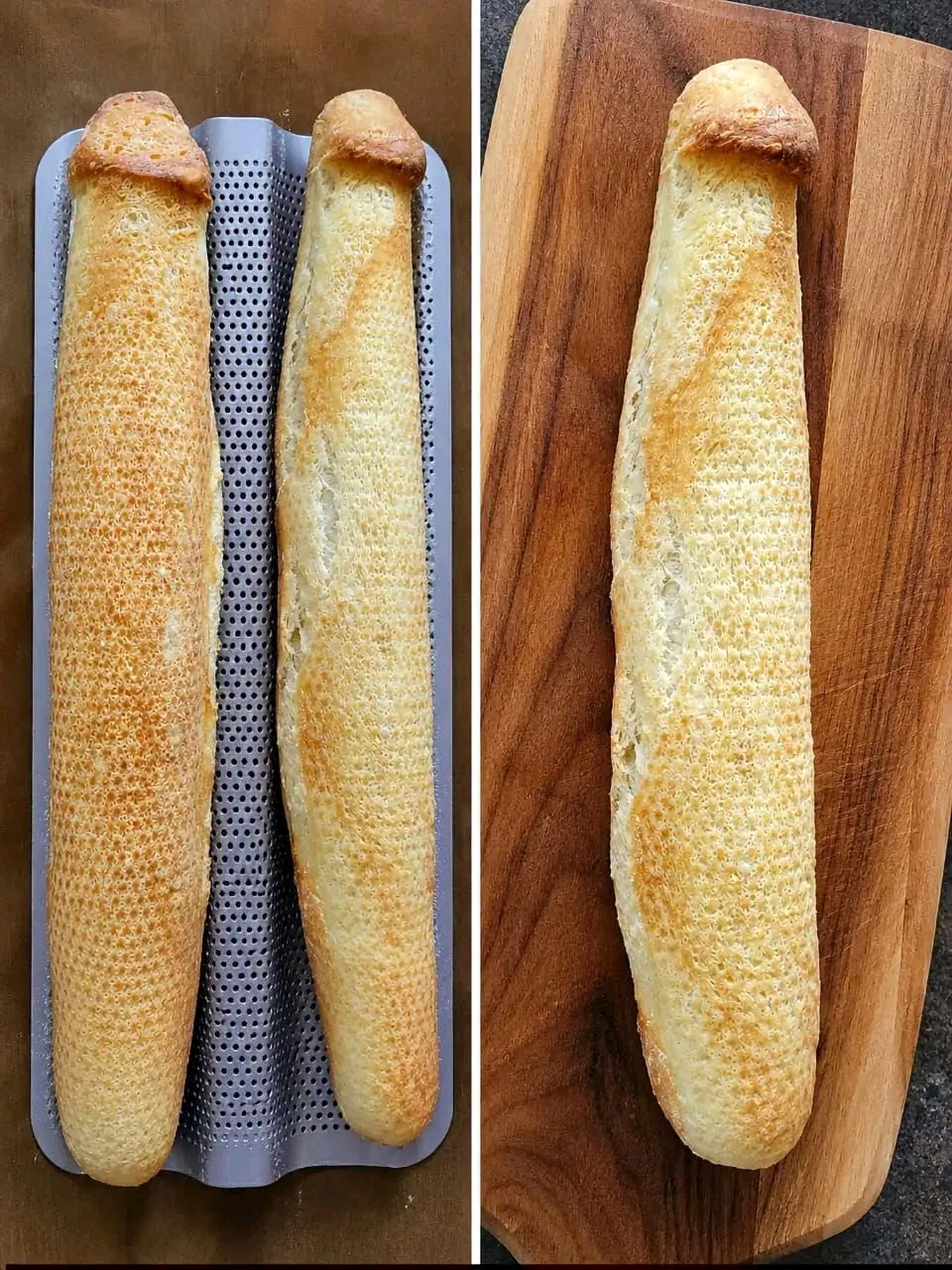
Homemade Baguettes in a Baguette Mold
Introduction
There is something wonderfully satisfying about baking your own baguettes—especially when you expect perfectly straight, bakery-style loaves and end up with something completely unexpected! A baguette mold can certainly help support the dough during baking, but homemade bread has a personality of its own. Even when the shape isn’t perfect, a crisp crust and delicious flavor can make the effort completely worthwhile.
Origin
The baguette is one of France’s most recognizable breads. Its long, narrow shape became particularly associated with French baking during the 20th century, although the exact history of the modern baguette is more complex than the familiar story suggests. Traditional baguettes are made with a simple dough of flour, water, yeast, and salt and are valued for their crisp crust and light, airy interior.
Cultural Significance
Baguettes are deeply connected with everyday French food culture. They are commonly enjoyed with butter, cheese, preserves, pâté, soups, and countless other dishes. The baguette has become an international symbol of French baking, and making it at home is a fun way to recreate a small part of that tradition—even if your loaves decide to take a few creative turns!
Ingredients Quantity
Makes 2 baguettes:
500 g bread flour
350 g water
7 g instant yeast
10 g salt
1 teaspoon sugar or honey, optional
1 tablespoon olive oil, optional
Optional Additions
Sesame seeds
Poppy seeds
Black or white sesame
Dried herbs
Roasted garlic
Grated cheese
A little whole-wheat flour
Flaky sea salt for the crust
Tips for Success
Use a baguette mold or perforated baguette tray to provide support during baking.
Don’t make the dough excessively wet if you’re still learning to shape baguettes; a manageable dough is easier to handle.
Give the dough enough time to rise. Proper fermentation contributes greatly to flavor and texture.
Shape the baguettes gently without completely deflating the dough.
Score the loaves with a sharp blade immediately before baking.
Create steam during the first part of baking to encourage a crisp crust.
Don’t worry if the loaves aren’t perfectly straight—small imperfections are part of homemade baking!
Instructions
1. Combine the flour, yeast, and optional sugar in a large bowl.
2. Gradually add the water and mix until a shaggy dough forms.
3. Add the salt and knead for approximately 8–10 minutes, until the dough becomes smoother and elastic.
4. Place the dough in a lightly greased bowl, cover, and let it rise for about 1–1½ hours, or until noticeably expanded.
5. Gently turn the dough onto a lightly floured surface and divide it into two equal portions.
6. Shape each portion into a rough rectangle. Fold the dough lengthwise, seal the seam, and gently roll it into a long baguette shape.
7. Place the shaped loaves into a lightly floured baguette mold.
8. Cover and let them proof for another 30–45 minutes.
9. Preheat the oven to 450°F (230°C).
10. Using a sharp blade, make several diagonal cuts across the top of each baguette.
11. Place the mold in the oven and introduce steam by placing a heatproof pan of hot water in the oven or using another safe steaming method.
12. Bake for approximately 20–25 minutes, until the baguettes are deeply golden and crisp.
13. Remove from the mold and transfer to a wire rack.
14. Let the baguettes cool before slicing.
Description
These homemade baguettes should have a beautifully crisp, golden crust and a soft, chewy interior. The baguette mold helps support the dough while it bakes, but variations in fermentation, shaping, oven heat, and dough strength can affect the final form. So even if your baguettes come out wonderfully crooked, they can still be absolutely delicious!
Nutritional Information
Estimated per baguette, based on 2 baguettes:
Calories: approximately 850–900
Protein: 28–30 g
Carbohydrates: 175–185 g
Fat: 3–6 g
Fiber: 5–7 g
Sodium: approximately 1,800–2,000 mg
Estimated per slice: approximately 110–120 calories, depending on how many slices are cut from each loaf.
Nutritional values are approximate and vary according to the flour, ingredients, and serving size.
Conclusion
Perfectly straight baguettes may require some practice, but delicious bread doesn’t need to look flawless. Homemade baguettes are about the aroma, crisp crust, chewy crumb, and satisfaction of creating something from scratch. Sometimes the most memorable loaves are the ones that don’t go exactly according to plan!
Recommendation
Serve your baguettes fresh with butter, cheese, jam, olive oil, or a bowl of soup. For an especially delicious treat, slice the bread, brush it with olive oil and garlic, and toast until golden.
Embracing Healthful Indulgence
Bread can absolutely be part of a balanced eating pattern. Enjoy a moderate portion alongside vegetables, lean proteins, soups, or other nutrient-rich foods. For additional fiber, substitute a portion of the bread flour with whole-wheat flour. Most importantly, savor the homemade experience—because a slightly wonky baguette that tastes amazing is still a baking success!