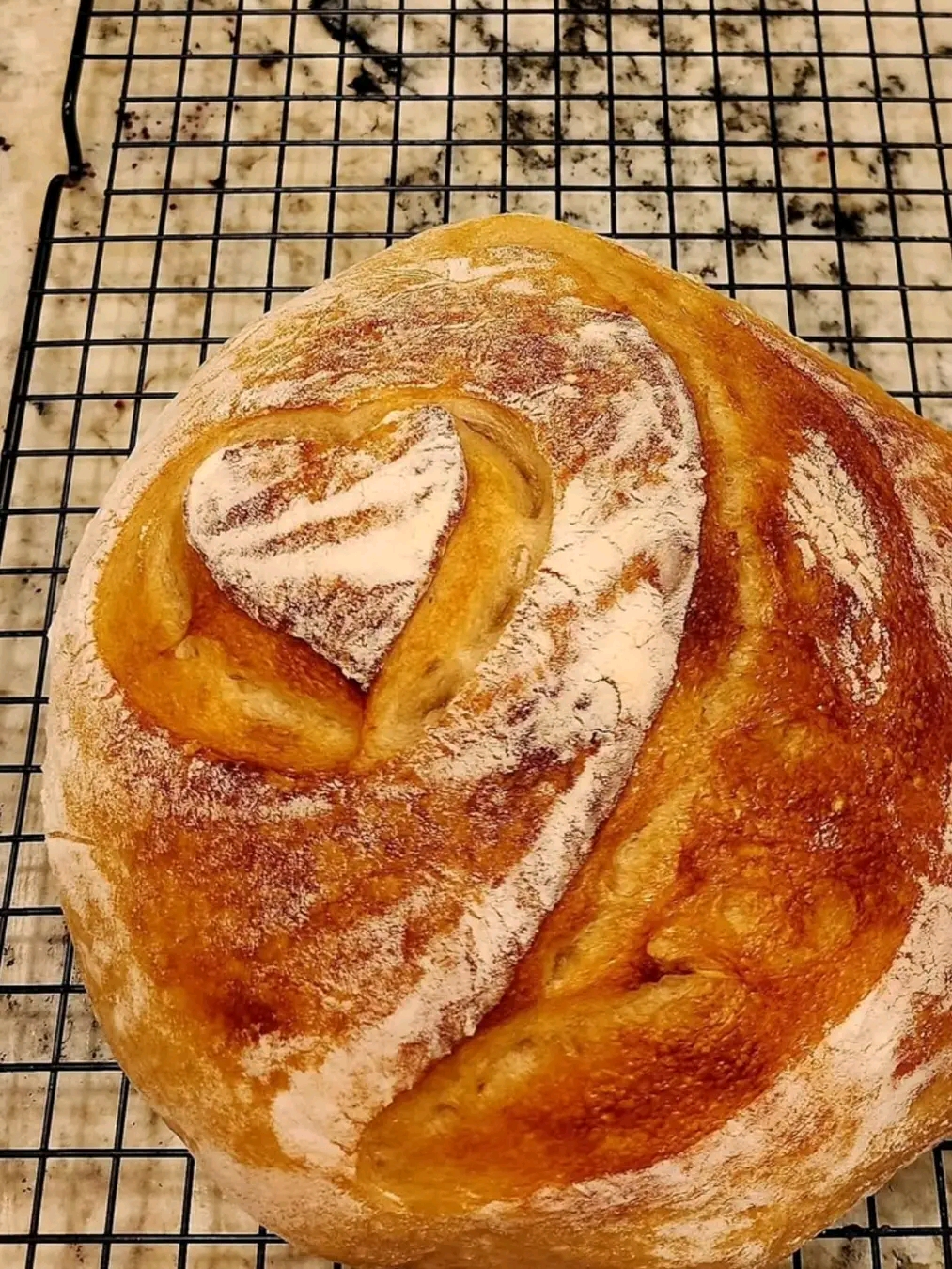
Freshly Baked Sourdough Bread
Introduction
Freshly baked sourdough bread is one of those simple foods that can turn an ordinary meal into something special. With its crisp, golden crust, airy interior, and naturally tangy flavor, homemade sourdough offers a delicious combination of texture and aroma. Although it requires patience, the result is well worth the wait.
Origin
Sourdough is one of the oldest methods of leavening bread. Long before commercial baker’s yeast became widely available, bakers relied on naturally occurring wild yeast and beneficial bacteria captured in a fermented flour-and-water starter. This traditional technique has been used across many cultures for centuries and remains popular among home bakers today.
Cultural Significance
Sourdough represents traditional baking, patience, and the value of handmade food. It has become especially beloved in modern artisan baking communities, where maintaining a sourdough starter and producing beautiful loaves is both a culinary skill and a rewarding hobby. A freshly baked loaf also carries the warmth and comfort associated with sharing homemade bread.
Ingredients Quantity
100 g active sourdough starter
350 g warm water
500 g bread flour
10 g salt
Extra flour or rice flour for shaping
A little water for handling the dough, if needed
Optional Additions
Roasted garlic and fresh herbs
Sesame, sunflower, or pumpkin seeds
Dried cranberries and walnuts
Olives and rosemary
Jalapeños and cheddar cheese
Caramelized onions
Everything-bagel seasoning
Tips for Success
Use a strong, active starter that has recently risen significantly and looks bubbly.
Weigh ingredients with a kitchen scale for consistent results.
Fermentation time depends heavily on room temperature and starter activity, so watch the dough rather than relying only on the clock.
Don’t add excessive flour during shaping; a slightly sticky dough can still produce a beautifully open crumb.
Build surface tension during shaping to help the loaf hold its form.
A Dutch oven helps trap steam, producing a crisp crust and excellent oven spring.
Allow the loaf to cool completely before slicing so the interior can finish setting.
Instructions
1. Combine the sourdough starter and water in a large mixing bowl.
2. Add the flour and mix until no dry patches remain. Cover and let the dough rest for about 30 minutes.
3. Add the salt and incorporate it thoroughly into the dough.
4. Over the next 2 hours, perform several rounds of gentle stretch-and-folds, approximately every 30 minutes.
5. Cover the dough and allow it to undergo bulk fermentation until it becomes noticeably lighter, smoother, and expanded.
6. Turn the dough onto a lightly floured surface and gently shape it into a round.
7. Let it rest for about 20 minutes, then perform the final shaping and place it seam-side up in a floured banneton or bowl lined with a clean towel.
8. Cover and refrigerate for approximately 8–16 hours for a slow final fermentation.
9. Preheat a Dutch oven in a 475°F (245°C) oven for about 30–45 minutes.
10. Carefully turn the chilled dough onto parchment paper and score the surface with a sharp bread lame or knife.
11. Place the dough into the hot Dutch oven, cover, and bake for 20 minutes.
12. Remove the lid, reduce the oven temperature to 450°F (230°C), and bake for another 20–25 minutes, or until deeply golden brown.
13. Transfer the loaf to a wire rack and allow it to cool completely before slicing.
Description
This sourdough loaf has a beautifully crisp crust surrounding a soft, chewy interior with an irregular crumb. Natural fermentation creates the characteristic subtle tang and complex flavor that makes sourdough so distinctive. Served warm with butter, alongside soup, or simply toasted, it is wonderfully versatile.
Nutritional Information
Estimated per slice, based on 12 slices:
Calories: approximately 180–200
Protein: 6–7 g
Carbohydrates: 36–39 g
Fat: 1–2 g
Fiber: 2–3 g
Sodium: approximately 300–350 mg
Values are estimates and will vary according to flour, starter composition, slice size, and fermentation method.
Conclusion
Fresh sourdough bread is a beautiful example of how flour, water, salt, and time can become something extraordinary. While an artisan loaf may have a premium price at a bakery, making one at home can be a deeply satisfying experience—and the aroma of freshly baked bread is hard to beat.
Recommendation
Enjoy your sourdough freshly cooled with butter, olive oil, cheese, or your favorite spread. It also makes excellent toast, sandwiches, croutons, and bread for dipping into soups and stews.
Embracing Healthful Indulgence
Homemade sourdough can be enjoyed as part of a balanced diet. Pair a slice with protein-rich foods, vegetables, eggs, or healthy fats to create a more satisfying meal. Whole-wheat or partially whole-grain flour can also increase the fiber content. The key is to enjoy the bread mindfully while appreciating the time and craftsmanship that go into every loaf.