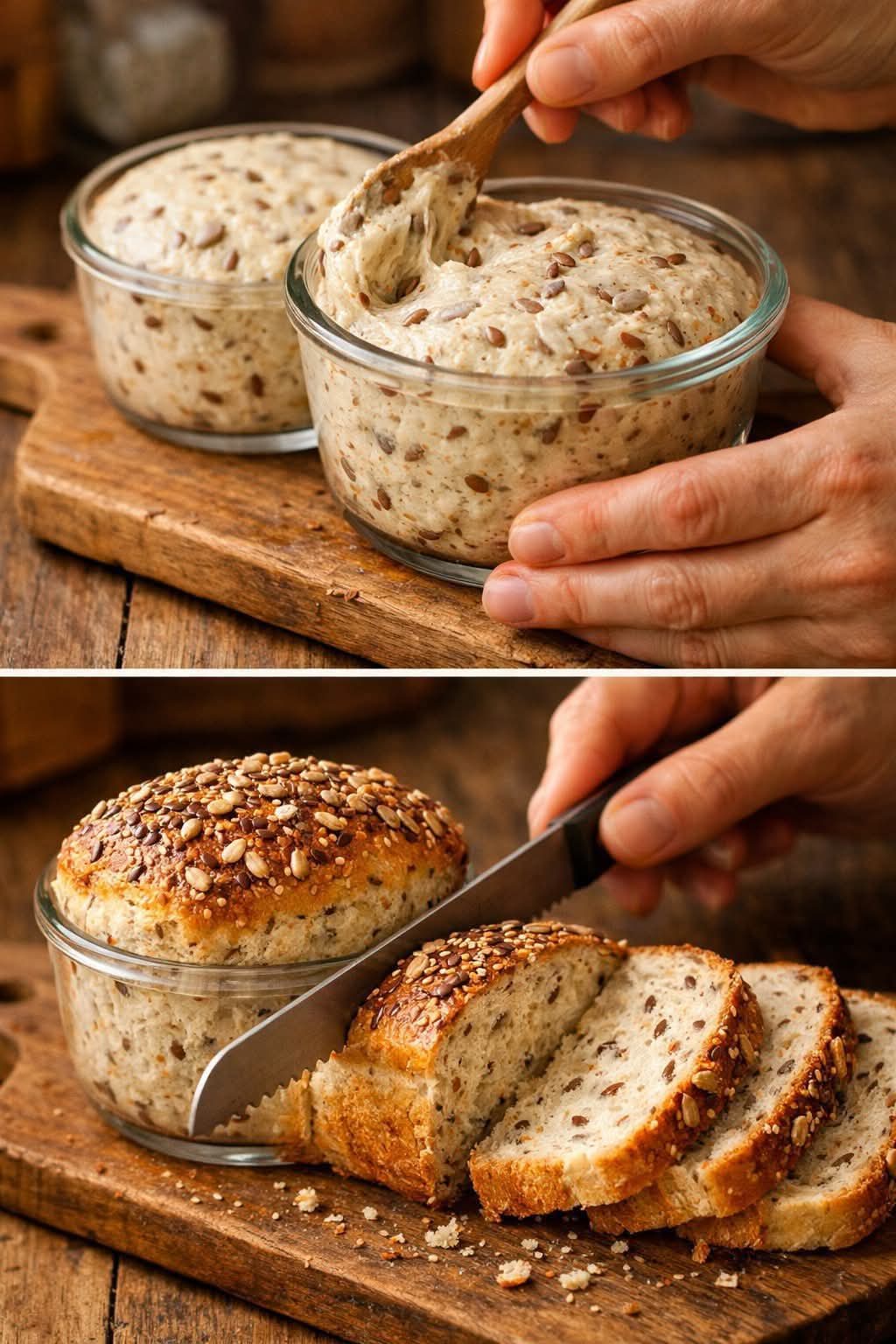
Here is everything you need to know about making a rustic, no-knead seeded bread at home.
The Story of No-Knead Bread
The “no-knead” method revolutionized home baking. Popularized in 2006, this technique relies on a long, slow fermentation (12–18 hours). Instead of developing gluten through strenuous kneading, you simply mix the ingredients and let time do the work. This method, often combined with baking in a preheated Dutch oven, creates a professional, crispy artisan loaf with minimal effort .
Why You’ll Love This Seeded Loaf
This recipe takes the classic no-knead bread and packs it with nutrient-dense seeds. The result is a dense, hearty loaf with a deep, nutty flavor and a satisfying crunch. It is perfect for sandwiches, toast, or served alongside soup. It’s also incredibly forgiving—perfect for beginners .
History & Origins
The specific combination of pumpkin, sunflower, and flax seeds in bread draws from Central European baking traditions, where nutrient-rich seeds were added to dark rye or whole wheat breads for texture and sustenance. Modern versions have become popular due to the health benefits associated with seeds, such as high Omega-3 content and protein .
Health Benefits
This bread is a nutritional powerhouse. The blend of seeds provides healthy fats, plant-based protein, and essential minerals like magnesium and zinc. Flaxseeds are rich in Omega-3 fatty acids, pumpkin seeds are high in iron, and sunflower seeds provide Vitamin E
Formation (The Science)
The magic lies in Glutenin and Gliadin. When flour mixes with water, these two proteins bond to form gluten. The long, slow rise allows enzymes to break down starches and the gluten network to organize itself without physical kneading. The steam trapped inside a Dutch oven creates a “Maillard reaction” on the crust, turning it brown and crispy .
The Ultimate No-Knead Seeded Bread Recipe
Introduction
Yield: 1 large loaf
Time: 5 mins active, 12–18 hours rising, 1 hour baking
Ingredients
· 3 cups whole wheat flour
· 2 cups unbleached bread flour
· ½ cup old-fashioned rolled oats
· 1 ½ tbsp coarse salt
· 1 ¼ tsp instant yeast
· ¼ cup pumpkin seeds, plus extra for topping
· 2 tbsp flax seeds
· 2 tbsp poppy seeds
· 2 tbsp sesame seeds
· 2 ½ cups cold water
· ¼ cup sugar or honey
· Olive oil and egg white for brushing
Equipment
· Large mixing bowl
· Plastic wrap
· Dutch oven (heavy pot with lid)
Methods & Instructions
Step 1: The Initial Mix
In a large bowl, whisk together the flours, oats, salt, yeast, and ¾ of your seeds. In a separate jug, whisk the cold water with the sugar until dissolved .
Step 2: The No-Knead Rise
Pour the wet ingredients into the dry. Stir with a wooden spoon until you have a shaggy, sticky dough. Brush the top lightly with olive oil to prevent drying. Cover tightly with plastic wrap. Let it sit at room temperature for 12 to 18 hours. The dough should look bubbly and doubled in size .
Step 3: Shaping
Generously oil your Dutch oven. Dust a work surface with flour. The dough will be sticky; pour it out onto the surface. Fold the edges into the center 4 or 5 times to form a rough ball. Place the ball seam-side down into the oiled pot. Cover with the lid and let it rise again for 1 to 1.5 hours .
Step 4: The Final Decoration
Preheat your oven to 240°C (475°F). Brush the top of the risen loaf with beaten egg white (this makes the seeds stick). Sprinkle the remaining seeds generously over the top. Use a sharp knife to slash an “X” or score lines across the top—this controls how the bread expands .
Step 5: Baking
Cover the pot with the lid and place in the oven. Bake for 45 minutes. Remove the lid and bake for another 15 minutes to crisp the crust .
Step 6: Cooling
Remove the bread from the pot and transfer it to a wire rack. Let it cool completely (at least 1 hour) before slicing. Cutting into hot bread makes it gummy .
Nutrition (Per Slice – Approx. 12 Slices)
Nutrient Amount
Calories ~293 kcal
Protein ~10 g
Fat ~7 g
Carbohydrates ~50 g
Fiber ~6 g
Nutritional values are estimates based on the seed and flour blend .
Who Are The Lovers?
This bread is beloved by home bakers who want artisan results without the physical labor of kneading. It is also adored by the health-conscious community, particularly those following low-carb or keto diets (when modified) and anyone seeking high-fiber, unprocessed foods .
Troubleshooting & Methods
· Sticky Dough: This dough is supposed to be wetter than standard bread dough. Do not add too much extra flour or the bread will be dense.
· Crust too Hard: If the crust is burning before the inside cooks, ensure your oven rack is in the lower third position.
· Seeds Burning: If the exposed seeds look too dark halfway through baking, tent the pot loosely with aluminum foil while keeping the lid off .
Storage
Wrap the cooled loaf in a tea towel. It will stay fresh at room temperature for up to 4 days. For longer storage, slice and freeze .
Conclusion
This Seeded No-Knead Bread proves that the best things in life take time, not effort. By trusting your oven and a long fermentation, you can produce a loaf that is superior in flavor, nutrition, and texture to anything found in a plastic bag at the supermarket.
Enjoy your baking!