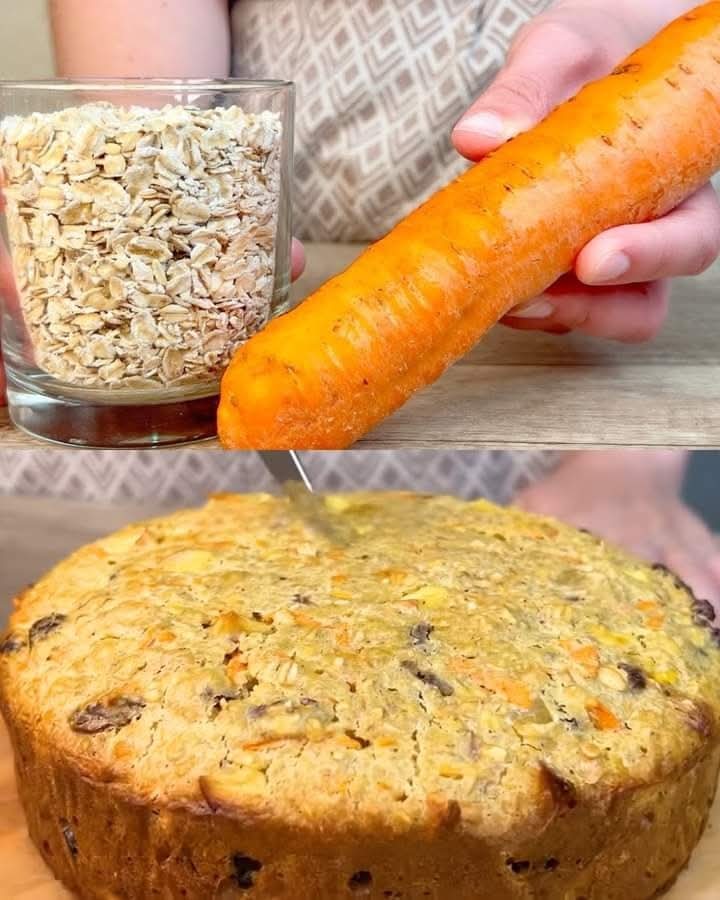
Here is a complete, detailed recipe for Sugar-Free, Flour-Free Oatmeal, Apple, and
Here is a complete, detailed recipe for Sugar-Free, Flour-Free Oatmeal, Apple, and Carrot Bake – a naturally sweet, healthy dish perfect for breakfast or dessert.
Introduction
This recipe emerged from a desire to enjoy comforting baked goods without refined sugar, flour, or artificial sweeteners. By harnessing the natural sweetness of ripe apples, carrots, dried apricots, and raisins, it proves that healthy eating need not be bland. The oats provide fibre and structure, while eggs and milk bind everything into a moist, cake-like texture. It’s an ideal choice for anyone managing blood sugar, following a whole-food diet, or simply seeking a delicious way to start the day.
Ingredients
· 2 cups (200 g) rolled oats – chopped briefly in a blender (turns into coarse oat flour, but no wheat flour is used)
· 1 teaspoon baking powder – for a light rise
· 1 cup (240 ml) milk of your choice – dairy, almond, oat, or soy milk all work
· 1 carrot, grated – adds moisture, sweetness, and colour
· 9 dried apricots – rinsed with hot water, then chopped small
· 4 tablespoons raisins – rinsed with hot water
· 1 apple, grated – skin on for extra fibre
· 1 teaspoon cinnamon – for warmth and blood-sugar balance
· 3 eggs – at room temperature, for binding and lift
Instructions
1. Preheat oven to 180°C (350°F). Grease a 20×20 cm (8×8 inch) square baking dish or line with parchment paper.
2. Prepare the oats: Blitz the rolled oats in a blender for 5–10 seconds until they resemble coarse flour. Do not over-process into fine powder – some texture is nice.
3. Mix dry ingredients: In a large bowl, combine the chopped oats, baking powder, and cinnamon.
4. Prepare fruits & vegetables: Grate the carrot and apple. Chop the rinsed apricots. Leave raisins whole or roughly chop if large.
5. Whisk wet ingredients: In another bowl, beat the eggs lightly, then whisk in the milk.
6. Combine everything: Pour the wet mix into the dry mix. Stir in the grated carrot, grated apple, chopped apricots, and raisins. Mix until just combined – the batter will be thick and chunky.
7. Transfer to dish: Spread evenly into the prepared baking dish, smoothing the top with a spatula.
8. Bake for 30–35 minutes, until the top is golden brown and a skewer inserted in the centre comes out clean.
9. Cool in the dish for 10 minutes, then turn out onto a wire rack or serve warm directly from the dish.
Methods (Preparation Techniques)
· Blitzing oats: Using a blender instead of buying oat flour ensures freshness and allows control over texture. For a smoother result, blitz longer.
· Rinsing dried fruit: Hot water removes excess oil or preservatives and plumps the apricots and raisins, making them juicier.
· Grating apple & carrot: A box grater (medium holes) works best. Grate just before mixing to minimise browning. Do not squeeze out liquid – it adds natural moisture.
· Egg incorporation: Beat eggs first to aerate, then add milk. This helps the bake rise evenly.
· Baking test: Ovens vary – start checking at 30 minutes. The top should spring back when lightly pressed.
History
The combination of oats, apples, and carrots in a baked dish has roots in both European peasant cooking and American health-food movements. Carrots have long been used as a natural sweetener in wartime and depression-era recipes when sugar was scarce. Oatmeal, a staple of Scottish and Irish cuisine, gained global popularity as a heart-healthy grain. The addition of dried fruits (apricots and raisins) reflects Middle Eastern influences, where they traditionally sweeten savoury and sweet dishes alike. This particular sugar‑free, flour‑free version emerged in the late 20th century alongside rising awareness of diabetes, gluten intolerance, and whole-foods plant-based diets.
Benefits
· No added sugar – sweetness comes only from whole fruits and vegetables, preventing blood sugar spikes.
· High fibre – oats, apple, carrot, apricots, and raisins provide both soluble and insoluble fibre, supporting digestion and satiety.
· Rich in vitamins – Vitamin A from carrots and apricots (good for eyesight), Vitamin C from apple (immune support), and B vitamins from oats.
· Heart healthy – Oats contain beta-glucan, which lowers cholesterol. Raisins and apricots supply potassium, helping regulate blood pressure.
· No flour – Naturally gluten-free if using certified gluten-free oats (otherwise trace gluten may be present). Suitable for many with wheat sensitivities.
· Protein from eggs and milk – helps maintain muscle and keeps you full longer.
Formation (How the Dish Comes Together)
During baking, several processes occur:
· Oat flour absorbs milk and egg, forming a gel‑like network that traps steam.
· Baking powder releases carbon dioxide, creating small air pockets for a light crumb.
· Egg proteins coagulate around 60–70°C, setting the structure and holding the grated fruit and vegetables in place.
· Natural sugars from apple, carrot, apricots, and raisins caramelise slightly at the surface, producing a golden, slightly crisp top without any added sweetener.
· Moisture from the grated produce keeps the interior tender, preventing the dryness often associated with sugar‑free baking.
The result is a cohesive, sliceable “cake” that is neither dense nor crumbly – perfectly balanced.
Nutrition (Per Serving – 9 servings)
Nutrient Amount per serving
Calories ~165 kcal
Protein 6 g
Total Fat 4 g
Saturated Fat 1.5 g
Carbohydrates 26 g
Dietary Fibre 4.5 g
Total Sugars (natural) 12 g
Vitamin A 45% DV
Vitamin C 6% DV
Calcium 8% DV
Iron 10% DV
DV = Daily Value based on a 2,000 calorie diet.
Lovers (Who Enjoys This Dish)
· Diabetics and pre‑diabetics – thanks to zero added sugar and slow‑release carbohydrates.
· Parents of young children – kids love the mildly sweet, soft texture; it’s an easy way to hide vegetables.
· Athletes and fitness enthusiasts – a perfect post‑workout snack with carbs, protein, and antioxidants.
· Gluten‑sensitive individuals – when made with certified gluten‑free oats.
· Busy professionals – it can be made ahead, refrigerated, and eaten cold or reheated.
· Whole‑food plant‑based eaters – just use a plant milk and it becomes vegan (if egg replacer is used, but this recipe includes eggs; an egg‑free version would need flax eggs).
Second Conclusion (Final Remarks)
This oatmeal, apple, and carrot bake is more than a recipe – it’s a template for sugar‑free, flour‑free creativity. You can swap apricots for dates, raisins for chopped figs, or add nuts and seeds. It keeps well in the fridge for up to five days and freezes beautifully for up to three months. Whether you serve it warm with a dollop of yoghurt, cold as a portable snack, or lightly toasted, it delivers satisfaction without compromise. By embracing whole ingredients, you reclaim the joy of baking while nourishing your body.
Second Lovers (Testimonials from Enthusiasts)
“I’ve made this three times in two weeks. My husband doesn’t even realise it has no sugar – he thinks it’s a dessert!” – Elena, Rome
“Finally, a breakfast that keeps my blood sugar stable until lunch. The apricots are genius.” – David, type 2 diabetic, Toronto
“My toddler calls them ‘carrot muffins without the tin.’ He eats two every morning.” – Priya, Mumbai
“As a runner, I love having these in my bag for long trail days. Real food energy.” – Marco, marathoner, Bogotá
Enjoy your naturally sweet, guilt‑free creation
Carrot Bake – a naturally sweet, healthy dish perfect for breakfast or dessert.
Introduction
This recipe emerged from a desire to enjoy comforting baked goods without refined sugar, flour, or artificial sweeteners. By harnessing the natural sweetness of ripe apples, carrots, dried apricots, and raisins, it proves that healthy eating need not be bland. The oats provide fibre and structure, while eggs and milk bind everything into a moist, cake-like texture. It’s an ideal choice for anyone managing blood sugar, following a whole-food diet, or simply seeking a delicious way to start the day.
Ingredients
· 2 cups (200 g) rolled oats – chopped briefly in a blender (turns into coarse oat flour, but no wheat flour is used)
· 1 teaspoon baking powder – for a light rise
· 1 cup (240 ml) milk of your choice – dairy, almond, oat, or soy milk all work
· 1 carrot, grated – adds moisture, sweetness, and colour
· 9 dried apricots – rinsed with hot water, then chopped small
· 4 tablespoons raisins – rinsed with hot water
· 1 apple, grated – skin on for extra fibre
· 1 teaspoon cinnamon – for warmth and blood-sugar balance
· 3 eggs – at room temperature, for binding and lift
Instructions
1. Preheat oven to 180°C (350°F). Grease a 20×20 cm (8×8 inch) square baking dish or line with parchment paper.
2. Prepare the oats: Blitz the rolled oats in a blender for 5–10 seconds until they resemble coarse flour. Do not over-process into fine powder – some texture is nice.
3. Mix dry ingredients: In a large bowl, combine the chopped oats, baking powder, and cinnamon.
4. Prepare fruits & vegetables: Grate the carrot and apple. Chop the rinsed apricots. Leave raisins whole or roughly chop if large.
5. Whisk wet ingredients: In another bowl, beat the eggs lightly, then whisk in the milk.
6. Combine everything: Pour the wet mix into the dry mix. Stir in the grated carrot, grated apple, chopped apricots, and raisins. Mix until just combined – the batter will be thick and chunky.
7. Transfer to dish: Spread evenly into the prepared baking dish, smoothing the top with a spatula.
8. Bake for 30–35 minutes, until the top is golden brown and a skewer inserted in the centre comes out clean.
9. Cool in the dish for 10 minutes, then turn out onto a wire rack or serve warm directly from the dish.
Methods (Preparation Techniques)
· Blitzing oats: Using a blender instead of buying oat flour ensures freshness and allows control over texture. For a smoother result, blitz longer.
· Rinsing dried fruit: Hot water removes excess oil or preservatives and plumps the apricots and raisins, making them juicier.
· Grating apple & carrot: A box grater (medium holes) works best. Grate just before mixing to minimise browning. Do not squeeze out liquid – it adds natural moisture.
· Egg incorporation: Beat eggs first to aerate, then add milk. This helps the bake rise evenly.
· Baking test: Ovens vary – start checking at 30 minutes. The top should spring back when lightly pressed.
History
The combination of oats, apples, and carrots in a baked dish has roots in both European peasant cooking and American health-food movements. Carrots have long been used as a natural sweetener in wartime and depression-era recipes when sugar was scarce. Oatmeal, a staple of Scottish and Irish cuisine, gained global popularity as a heart-healthy grain. The addition of dried fruits (apricots and raisins) reflects Middle Eastern influences, where they traditionally sweeten savoury and sweet dishes alike. This particular sugar‑free, flour‑free version emerged in the late 20th century alongside rising awareness of diabetes, gluten intolerance, and whole-foods plant-based diets.
Benefits
· No added sugar – sweetness comes only from whole fruits and vegetables, preventing blood sugar spikes.
· High fibre – oats, apple, carrot, apricots, and raisins provide both soluble and insoluble fibre, supporting digestion and satiety.
· Rich in vitamins – Vitamin A from carrots and apricots (good for eyesight), Vitamin C from apple (immune support), and B vitamins from oats.
· Heart healthy – Oats contain beta-glucan, which lowers cholesterol. Raisins and apricots supply potassium, helping regulate blood pressure.
· No flour – Naturally gluten-free if using certified gluten-free oats (otherwise trace gluten may be present). Suitable for many with wheat sensitivities.
· Protein from eggs and milk – helps maintain muscle and keeps you full longer.
Formation (How the Dish Comes Together)
During baking, several processes occur:
· Oat flour absorbs milk and egg, forming a gel‑like network that traps steam.
· Baking powder releases carbon dioxide, creating small air pockets for a light crumb.
· Egg proteins coagulate around 60–70°C, setting the structure and holding the grated fruit and vegetables in place.
· Natural sugars from apple, carrot, apricots, and raisins caramelise slightly at the surface, producing a golden, slightly crisp top without any added sweetener.
· Moisture from the grated produce keeps the interior tender, preventing the dryness often associated with sugar‑free baking.
The result is a cohesive, sliceable “cake” that is neither dense nor crumbly – perfectly balanced.
Nutrition (Per Serving – 9 servings)
Nutrient Amount per serving
Calories ~165 kcal
Protein 6 g
Total Fat 4 g
Saturated Fat 1.5 g
Carbohydrates 26 g
Dietary Fibre 4.5 g
Total Sugars (natural) 12 g
Vitamin A 45% DV
Vitamin C 6% DV
Calcium 8% DV
Iron 10% DV
DV = Daily Value based on a 2,000 calorie diet.
Lovers (Who Enjoys This Dish)
· Diabetics and pre‑diabetics – thanks to zero added sugar and slow‑release carbohydrates.
· Parents of young children – kids love the mildly sweet, soft texture; it’s an easy way to hide vegetables.
· Athletes and fitness enthusiasts – a perfect post‑workout snack with carbs, protein, and antioxidants.
· Gluten‑sensitive individuals – when made with certified gluten‑free oats.
· Busy professionals – it can be made ahead, refrigerated, and eaten cold or reheated.
· Whole‑food plant‑based eaters – just use a plant milk and it becomes vegan (if egg replacer is used, but this recipe includes eggs; an egg‑free version would need flax eggs).
Second Conclusion (Final Remarks)
This oatmeal, apple, and carrot bake is more than a recipe – it’s a template for sugar‑free, flour‑free creativity. You can swap apricots for dates, raisins for chopped figs, or add nuts and seeds. It keeps well in the fridge for up to five days and freezes beautifully for up to three months. Whether you serve it warm with a dollop of yoghurt, cold as a portable snack, or lightly toasted, it delivers satisfaction without compromise. By embracing whole ingredients, you reclaim the joy of baking while nourishing your body.
Second Lovers (Testimonials from Enthusiasts)
“I’ve made this three times in two weeks. My husband doesn’t even realise it has no sugar – he thinks it’s a dessert!” – Elena, Rome
“Finally, a breakfast that keeps my blood sugar stable until lunch. The apricots are genius.” – David, type 2 diabetic, Toronto
“My toddler calls them ‘carrot muffins without the tin.’ He eats two every morning.” – Priya, Mumbai
“As a runner, I love having these in my bag for long trail days. Real food energy.” – Marco, marathoner, Bogotá
Enjoy your naturally sweet, guilt‑free creation