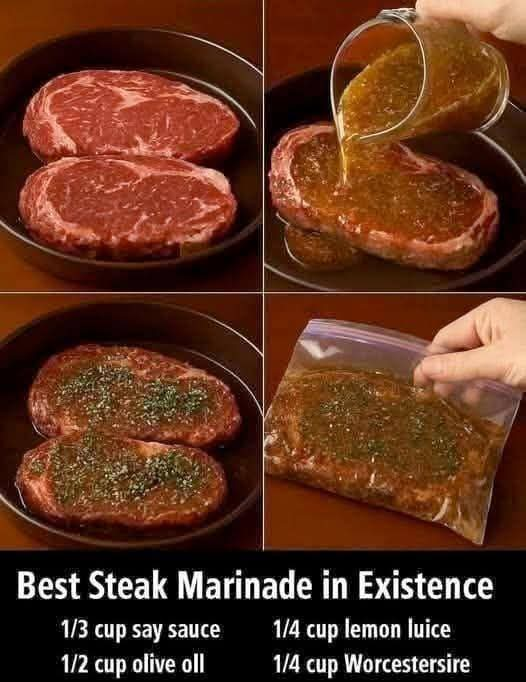
Based on the image provided, here is a comprehensive breakdown of the “Best Steak Marinade in Existence.” I have expanded the basic image text into a full culinary guide, including the history, science, and variations of this popular recipe.
The Ultimate Steak Marinade: A Comprehensive Guide
Introduction
There is a moment in every grill master’s life when they realize that a good cut of meat can be elevated to something transcendent with the right liquid bath. The recipe presented in the image—boasting soy sauce, olive oil, lemon juice, Worcestershire sauce, and garlic—is widely considered a “holy grail” marinade in home cooking circles. It balances salt, fat, acid, and umami perfectly. This guide will take you through every aspect of this marinade, from its chemical workings to its historical roots, ensuring your next steak is the best you’ve ever had.
Ingredients (The “Big Recipe” Scale)
To make a large batch suitable for 4–6 large steaks (approx. 2–3 lbs of meat):
· 2/3 cup Soy Sauce (Low sodium is preferred to control salt levels)
· 1 cup Olive Oil (Extra virgin or regular; acts as a carrier for flavors)
· 1/2 cup Lemon Juice (Freshly squeezed is best, but bottled works)
· 1/2 cup Worcestershire Sauce (The secret umami bomb)
· 1/4 cup Minced Garlic (Essential aromatic)
· 2 tbsp Dried Herbs (Rosemary, Thyme, or Oregano)
· 1 tsp Black Pepper (Freshly cracked)
· 1 tsp Onion Powder (Optional, for depth)
Instructions & Method
1. The Emulsion: In a medium bowl, whisk together the soy sauce, lemon juice, Worcestershire sauce, garlic, and spices. While whisking vigorously, slowly stream in the olive oil. This helps the oil bond with the water-based ingredients so the marinade coats the meat evenly rather than separating.
2. The Prep: Pat your steaks dry with a paper towel. This helps the marinade adhere better.
3. The Soak: Place the steaks in a large resealable plastic bag (Ziploc) or a shallow glass dish. Pour the marinade over the meat. Ensure the meat is fully submerged.
4. The Rest: Seal the bag and refrigerate. Time is critical here.
· For flank or skirt steak: 2–4 hours.
· For thick ribeyes or sirloins: 4–8 hours (do not exceed 12 hours, or the acid will “cook” the meat and make it mushy).
5. The Cook: Remove the steaks from the fridge 30 minutes before cooking to bring them to room temperature. Pat them dry before searing—wet meat steams rather than sears. Discard the used marinade (do not reuse it unless you boil it first).
6. The Sear: Grill or pan-sear on high heat to your desired doneness.
History of the Marinade
This specific combination is a classic example of “Acid-Oil-Salt” marinating, a technique popularized in the mid-20th century.
· Soy Sauce & Worcestershire: These ingredients represent the fusion of Asian and Western cuisines. Worcestershire sauce (originating in England) and Soy sauce (Asia) became pantry staples in American households after World War II. Combining them creates a deep, savory flavor known as umami.
· Lemon Juice: Historically, acidic marinades (like vinegar or citrus) were used not just for flavor, but to tenderize tough cuts of meat in the era before commercial meat tenderizers.
Benefits of This Marinade
· Tenderness: The lemon juice breaks down the tough muscle fibers on the surface of the steak.
· Flavor Penetration: Salt from the soy sauce helps draw moisture out of the meat initially, then reabsorbs it along with the flavors, essentially “brining” the steak.
· Crust Creation: The sugars in the Worcestershire sauce and soy sauce caramelize when they hit the hot pan, creating a delicious dark crust (Maillard reaction).
· Health: Using olive oil adds healthy monounsaturated fats, and garlic offers antioxidants.
Variations & Formation
· The “Spicy” Formation: Add 1 teaspoon of red pepper flakes or a dash of hot sauce.
· The “Herbaceous” Formation: Add fresh rosemary sprigs or basil leaves to the bag.
· The “Sweet” Formation: Add a tablespoon of honey or brown sugar (be careful, sugar burns easily on high heat, so cook on medium-high).
· Low-Sodium Formation: If you are watching salt intake, swap soy sauce for coconut aminos.
Nutrition (Per Serving – Approximate)
Note: This depends on the cut of meat, but looking at the marinade only:
· Calories: ~60 kcal (mostly from the olive oil)
· Fat: 6g (Heart-healthy monounsaturated fats)
· Sodium: 400mg (Can be reduced by using low-sodium soy sauce)
· Protein: 0g
· Sugar: 1g (from Worcestershire)
For the Meat Lovers
If you love steak, this marinade is your best friend for specific cuts:
· Flank Steak: This marinade is famous for Flank Steak. It makes the meat tender enough for tacos or fajitas.
· Skirt Steak: Excellent for this.
· The “Cheap” Cuts: This marinade is a miracle worker for tougher cuts like Round Steak or Sirloin. It makes budget-friendly meat taste like a premium cut.
· The Griller: If you are a purist who believes “salt and pepper only” for a Ribeye, use this marinade on chicken or vegetables instead—it’s that versatile!
Conclusion
This “Best Steak Marinade in Existence” deserves its title. It relies on the perfect scientific balance of salt (Soy), acid (Lemon), and fat (Oil), with Worcestershire adding that magical savory depth. Whether you are a beginner cook or a seasoned grill master, keeping these four ingredients on hand ensures that dinner will always be packed with flavor.