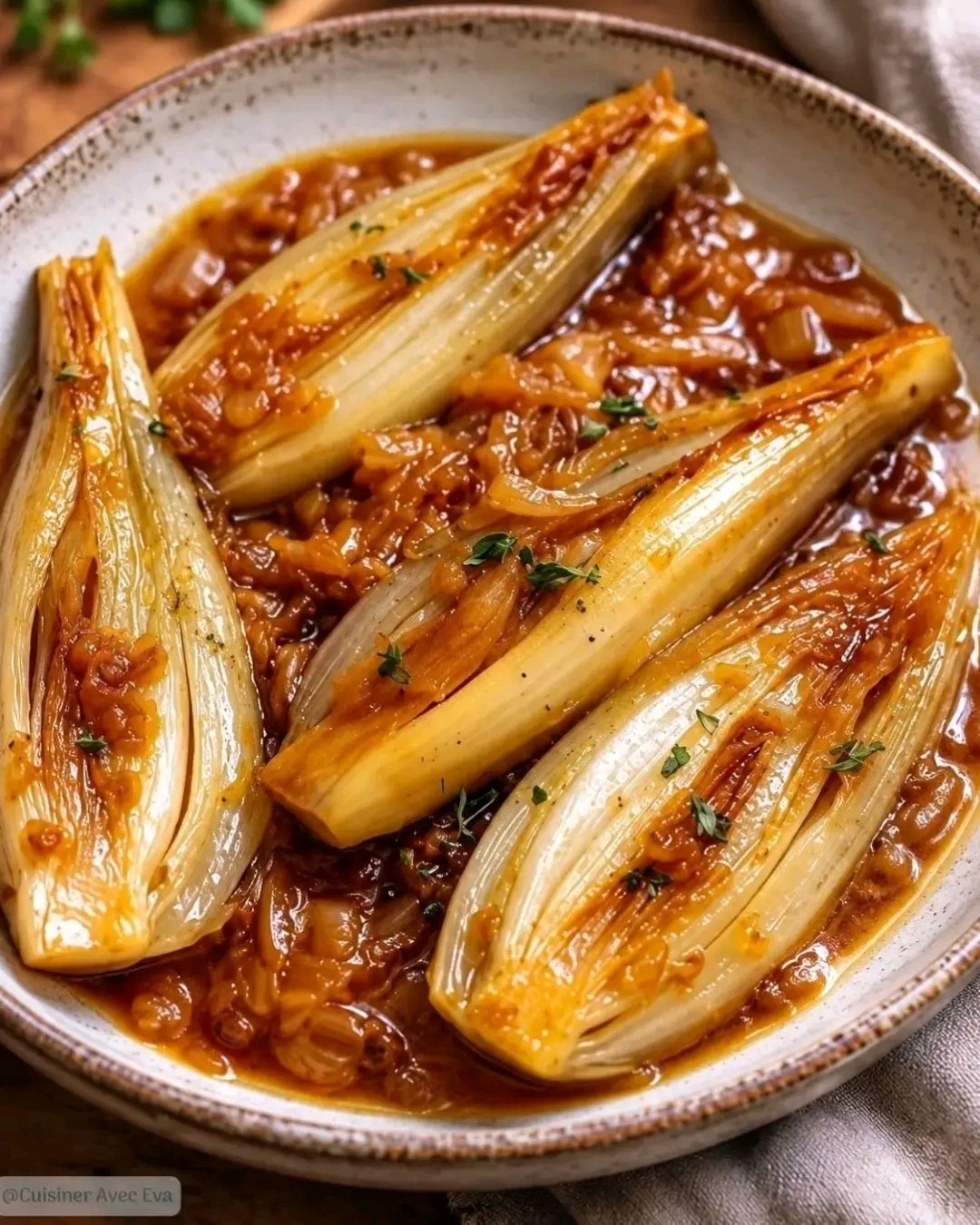
Braised Endives with Caramelized Onions
Introduction
Braised Endives with Caramelized Onions are an elegant yet wonderfully simple side dish that transforms humble vegetables into something tender, flavorful, and comforting. The natural slight bitterness of endives softens during cooking, while slowly softened onions add sweetness and depth. A little thyme and fresh herbs complete the dish beautifully.
With only a handful of ingredients and about 30 minutes of cooking time, this recipe is ideal for a weeknight meal but refined enough for a special dinner.
Origin
Endives, particularly Belgian endives, are strongly associated with Belgian and French cuisine. Braising is a classic European cooking technique in which vegetables are gently cooked with a small amount of liquid until tender. This method is especially well suited to endives because it mellows their bitterness while preserving their delicate texture.
The combination of endives, onions, butter or olive oil, herbs, and broth reflects the simplicity of traditional French home cooking, where quality ingredients and gentle preparation create flavorful dishes without complicated techniques.
Cultural Significance
Endives are a familiar ingredient in French cooking and appear in everything from fresh salads to gratins and slow-cooked vegetable preparations. Braised endives are particularly appreciated as a seasonal accompaniment to roasted meats, poultry, and fish.
Adding onions brings a comforting sweetness that balances the characteristic flavor of endives. The result is a dish that feels both rustic and sophisticated—a wonderful example of how traditional cooking can make vegetables the star of the plate.
Ingredients Quantity
Serves: 4
Preparation: 10 minutes
Cooking: 30 minutes
Difficulty: Easy
4 endives
2 onions, thinly sliced
2 tablespoons butter or olive oil
350 ml vegetable broth or water
1 teaspoon dried thyme
1 teaspoon honey, optional
Salt, to taste
Freshly ground black pepper, to taste
1 tablespoon fresh parsley or chives, finely chopped
Optional Additions
A squeeze of fresh lemon juice for brightness
1 teaspoon Dijon mustard stirred into the cooking liquid
A small splash of white wine for additional depth
A pinch of garlic powder or 1 minced garlic clove
A little grated Parmesan for serving
Toasted walnuts or hazelnuts for a pleasant crunch
A few fresh thyme leaves instead of dried thyme
Tips for Success
Choose firm endives: Look for compact, pale heads with fresh-looking leaves.
Remove the bitter core: Cutting out a small portion of the bottom core can help reduce bitterness.
Cook the onions gently: Give them time to soften and lightly caramelize rather than browning them too aggressively.
Avoid excessive liquid: The endives should braise gently rather than boil.
Turn the endives occasionally: This helps them cook evenly and absorb the flavorful broth.
Taste before adding honey: Well-cooked endives can become naturally sweet, so the honey may not be necessary.
Finish with fresh herbs: Parsley or chives add freshness and contrast to the rich, tender vegetables.
Instructions
1. Prepare the endives: Trim the bottoms and remove any damaged outer leaves. If desired, cut a small V-shaped piece from the core to reduce bitterness.
2. Soften the onions: Heat the butter or olive oil in a large skillet or sauté pan over medium-low heat. Add the sliced onions and cook for about 5–7 minutes, stirring occasionally, until soft and lightly golden.
3. Add the endives: Place the endives in the pan. Cook for 2–3 minutes, gently turning them so they begin to take on a little color.
4. Add the broth and seasonings: Pour in the vegetable broth or water. Add the thyme, a little salt, and black pepper. If using honey, stir it into the liquid.
5. Braise: Cover the pan and simmer gently for approximately 20 minutes, turning the endives once or twice during cooking.
6. Reduce the liquid: Remove the lid during the final few minutes and allow some of the cooking liquid to evaporate. The onions should be soft and glossy, while the endives should be very tender.
7. Finish and serve: Taste and adjust the seasoning. Sprinkle with fresh parsley or chives and serve warm.
Description
These braised endives are soft, silky, and delicately sweet, with tender onions providing a rich contrast to the mild bitterness of the vegetables. Thyme gives the dish a subtle herbal character, while fresh parsley or chives brighten every bite.
They make an excellent accompaniment to roasted chicken, grilled fish, beef, pork, or a simple grain-based meal.
Nutritional Information
Approximate per serving, assuming olive oil and no optional honey; values vary according to ingredients and portion size.
Calories: 110–140 kcal
Protein: 2–3 g
Carbohydrates: 14–17 g
Fiber: 5–6 g
Fat: 6–8 g
Sugar: 7–9 g
Sodium: Depends primarily on the broth and added salt
Endives and onions provide fiber and a variety of vitamins, minerals, and plant compounds, making this a nutrient-conscious way to add more vegetables to a meal.
Conclusion
Braised Endives with Caramelized Onions prove that a simple vegetable side dish can be deeply satisfying. Gentle braising creates a tender texture, while sweet onions and aromatic thyme balance the distinctive flavor of endives. The recipe is easy enough for everyday cooking and elegant enough for entertaining.
Recommendation
Serve these endives alongside roasted chicken, baked salmon, grilled steak, or pork tenderloin. For a lighter vegetarian meal, pair them with lentils, white beans, quinoa, or crusty whole-grain bread.
For an especially beautiful presentation, arrange the whole braised endives on a serving platter, spoon the caramelized onions over the top, and finish with fresh herbs and a small drizzle of olive oil.
Embracing Healthful Indulgence
This recipe is a lovely reminder that healthy cooking does not have to mean sacrificing flavor. Endives and onions provide natural sweetness, fiber, and satisfying texture, while a modest amount of olive oil or butter adds richness.
For an even lighter version, use olive oil and skip the honey—the onions and slow cooking provide plenty of natural sweetness. With its vegetable-forward ingredients and simple preparation, this dish offers an elegant form of healthful indulgence that can complement almost any balanced meal.