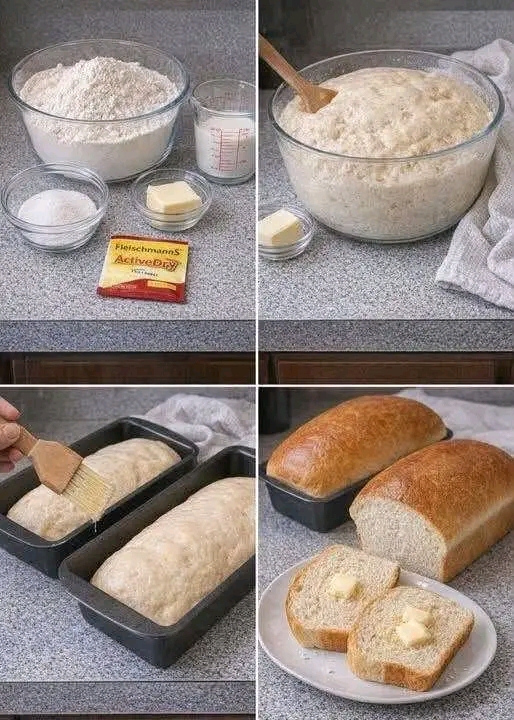
Foolproof Homemade Soft Bread
Introduction
There is something incredibly satisfying about baking your own bread. This Foolproof Homemade Soft Bread produces a beautifully tender loaf with a golden crust, soft interior, and irresistible buttery aroma.
Made with simple pantry staples, this recipe is perfect for sandwiches, toast, breakfast, or simply tearing off a warm slice and spreading it with butter. Once you smell it baking, you may find yourself wondering why you ever bought bread from the store!
Origin
Homemade yeast bread has been prepared in countless forms for centuries, with recipes evolving according to local ingredients, climates, and baking traditions. The combination of milk, butter, yeast, and flour used here creates a soft enriched bread similar to the tender sandwich loaves popular in many home kitchens.
The recipe uses a straightforward yeast dough, making it approachable even for beginning bread bakers.
Cultural Significance
Freshly baked bread has long represented comfort, hospitality, and home. In many families, the smell of bread baking in the kitchen is associated with weekends, family breakfasts, holidays, and homemade meals.
This loaf continues that tradition by turning inexpensive everyday ingredients into something warm, fragrant, and meant to be shared.
Ingredients Quantity
– 1 cup (240 ml) warm milk
– ½ cup (120 ml) warm water
– 2¼ teaspoons (7 g) active dry yeast
– ¼ cup (50 g) granulated sugar
– 2 tablespoons (28 g) unsalted butter, melted
– 1 teaspoon salt
– 4–4½ cups (500–565 g) all-purpose flour
– Additional melted butter for brushing, optional
Optional Additions
– 1 tablespoon honey instead of some or all of the sugar
– 1 teaspoon garlic powder for savory bread
– 1–2 tablespoons dried herbs
– Sesame or poppy seeds for the top
– 2 tablespoons milk powder for extra tenderness
– A tablespoon of olive oil for added richness
Tips for Success
– Check the yeast: The milk and water should be warm, not hot. Excessive heat can damage the yeast.
– Add flour gradually: You may not need the full 4½ cups. Stop when the dough becomes soft and slightly tacky rather than dry.
– Knead properly: Kneading develops gluten and gives the loaf its soft, elastic structure.
– Give the dough enough time: Rising depends on room temperature, so use the dough’s appearance rather than the clock alone.
– Avoid over-flouring: Too much flour is one of the easiest ways to make homemade bread dense and dry.
– Brush with butter: Brushing the hot loaf with melted butter creates a soft, flavorful crust.
Instructions
1. Activate the yeast: Combine the warm milk, warm water, sugar, and active dry yeast in a large bowl. Stir gently and let stand for about 5–10 minutes, until the yeast becomes foamy.
2. Add the butter and salt: Stir in the melted butter and salt.
3. Add the flour: Add 4 cups of flour gradually, mixing until a soft dough forms. Add additional flour, a little at a time, only if the dough is excessively sticky.
4. Knead: Transfer the dough to a lightly floured surface and knead for approximately 8–10 minutes, until smooth and elastic. You can also use a stand mixer with a dough hook.
5. First rise: Place the dough in a lightly greased bowl. Cover and let it rise in a warm, draft-free place for about 1–1½ hours, or until doubled in size.
6. Shape: Gently press the air out of the dough. Shape it into a loaf and place it in a greased 9×5-inch loaf pan.
7. Second rise: Cover loosely and let the dough rise again for approximately 30–45 minutes, until it becomes noticeably puffy.
8. Preheat the oven: Heat the oven to 350°F (175°C).
9. Bake: Bake for approximately 30–35 minutes, until the loaf is golden brown and sounds hollow when tapped.
10. Finish with butter: Remove the loaf from the oven and brush the top generously with melted butter while it is still warm.
11. Cool: Allow the bread to cool for at least 20–30 minutes before slicing. For the softest texture, resist cutting it immediately after baking.
Description
This homemade bread has a soft, fluffy interior surrounded by a lightly golden crust. Milk and butter give the crumb a tender texture and pleasant richness, while the yeast provides that classic fresh-baked aroma.
Served warm with butter, it is simple, comforting, and incredibly satisfying. It is also sturdy enough for sandwiches and toast.
Nutritional Information
Approximate per slice, assuming 12 slices and excluding additional butter:
– Calories: 175–190 kcal
– Protein: 5 g
– Carbohydrates: 31–34 g
– Fat: 4–5 g
– Saturated Fat: 2–3 g
– Fiber: 1 g
– Sugar: 4–5 g
– Sodium: 190–220 mg
Actual nutrition will vary according to the exact amount of flour used and the size of each slice.
Conclusion
This soft homemade bread is proof that you don’t need complicated ingredients or advanced baking skills to make a delicious loaf. The dough is simple, forgiving, and versatile, while the combination of milk and butter creates an especially tender crumb.
Fresh from the oven, it is difficult to beat the aroma and texture of homemade bread.
Recommendation
Slice it while still slightly warm and serve with plenty of butter. It is also excellent with jam, honey, eggs, cheese, or alongside soup.
For sandwiches, allow the loaf to cool completely before slicing so the crumb has time to set properly.
If you have leftovers, toast them the next morning—the buttery flavor becomes even more delicious when lightly browned.
Embracing Healthful Indulgence
Homemade bread allows you to control exactly what goes into your loaf. For a more wholesome variation, replace up to half of the all-purpose flour with whole-wheat flour, add a tablespoon of seeds, or reduce the sugar slightly.
Bread can absolutely be part of a balanced diet. The key is enjoying it thoughtfully, choosing nourishing toppings, and appreciating the quality and freshness of a loaf made in your own kitchen.