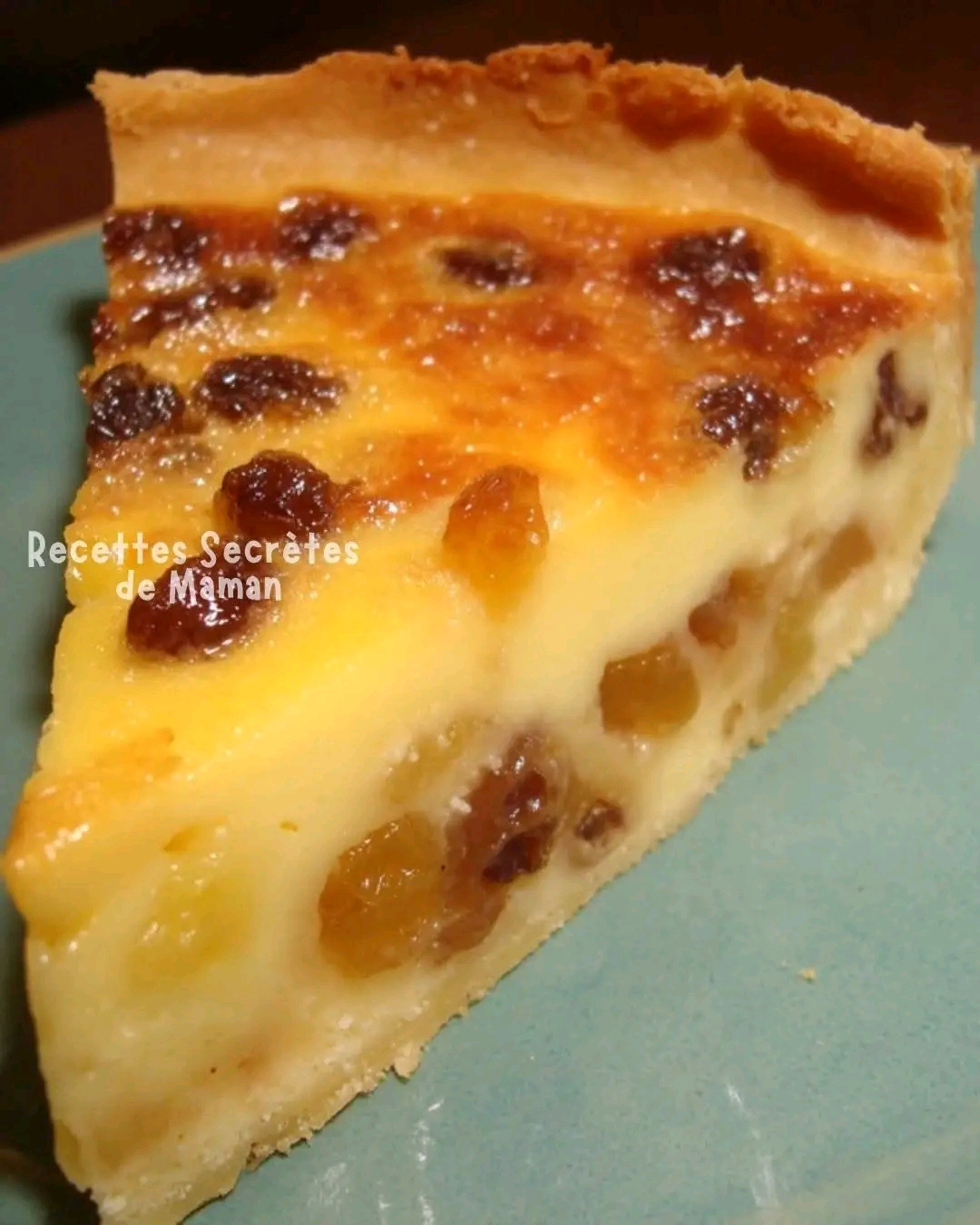
Flan Pâtissier au Rhum et Raisins : Crémeux & Parfumé
Introduction
Le flan pâtissier au rhum et raisins est un dessert généreux qui associe une pâte sablée croustillante à une crème pâtissière particulièrement fondante. Les raisins secs, préalablement macérés dans le rhum, apportent de petites touches fruitées et parfumées à chaque bouchée. Facile à préparer et idéal à partager, ce flan transforme des ingrédients simples en un dessert élégant et réconfortant.
Origin
Le flan pâtissier est un grand classique de la pâtisserie française, apprécié depuis longtemps dans les boulangeries et les foyers. Sa garniture rappelle la douceur d’une crème pâtissière cuite, tandis que la pâte apporte une agréable texture contrastée. Cette version au rhum et aux raisins s’inscrit dans la tradition des desserts familiaux français où les fruits secs et les spiritueux sont utilisés pour intensifier les arômes.
Cultural Significance
Le flan pâtissier évoque la pâtisserie traditionnelle, les goûters familiaux et les desserts préparés pour recevoir. Sa simplicité explique en grande partie sa popularité : il peut être préparé à l’avance, découpé facilement et servi aussi bien après un repas qu’à l’heure du café. L’association du rhum et des raisins secs lui donne une note plus festive et rappelle certains desserts classiques aux fruits macérés.
Ingredients Quantity
For 8–10 servings:
1 pâte sablée, environ 250–300 g
5 large eggs
150 g granulated sugar
100 g cornstarch (Maïzena)
2 sachets vanilla sugar
100 g raisins
60–80 ml dark or amber rum, for soaking the raisins
1 liter semi-skimmed milk
1 teaspoon vanilla extract, optional
1 small pinch of salt
Butter and a little flour, if needed, for preparing the pan
Optional Additions
Orange zest: Adds a fresh citrus aroma that pairs beautifully with rum.
Cinnamon: A small pinch gives the flan a warm, comforting character.
Vanilla bean: Replace vanilla sugar with the seeds from one vanilla pod for a more intense flavor.
Apricot glaze: Brush a very thin layer over the cooled flan for a beautiful finish.
Almonds: A tablespoon or two of finely chopped toasted almonds can add texture.
Extra raisins: Increase the quantity slightly if you love a fruitier flan.
Tips for Success
Soak the raisins well: Let them macerate in rum for at least 30 minutes. For a stronger flavor, soak them several hours in the refrigerator.
Drain excess rum: Drain the raisins before adding them to the custard so the mixture does not become too liquid.
Avoid lumps: Whisk the cornstarch with the sugar and eggs before gradually incorporating the milk.
Heat gently: Cook the custard over medium-low heat while stirring constantly.
Use a well-chilled pastry: A cold pastry crust is easier to handle and helps maintain a neat shape.
Cool completely: The flan continues to set as it cools. Refrigerating it for several hours makes slicing much easier.
Don’t overbake: The center should be set but still have a slight, delicate wobble when the flan comes out of the oven.
Instructions
1. Prepare the Raisins
Place the raisins in a small bowl and pour the rum over them. Let them soak for at least 30 minutes. Drain them well before using.
2. Prepare the Pastry
Preheat the oven to 180°C (350°F).
Line a round tart or cake pan, approximately 24–26 cm in diameter, with the pâte sablée. Press it gently against the bottom and sides. Prick the base lightly with a fork.
For an especially crisp base, chill the prepared crust for about 15 minutes before filling.
3. Make the Custard
In a large saucepan or mixing bowl, whisk together the eggs, sugar, vanilla sugar, cornstarch and salt until smooth.
Gradually pour in the milk while whisking continuously to prevent lumps.
Transfer the mixture to a saucepan if you mixed it in a bowl. Heat over medium-low heat, stirring constantly with a whisk.
Continue cooking until the mixture thickens into a smooth, creamy custard. Do not allow it to boil aggressively.
Remove from the heat and stir in the vanilla extract, if using.
4. Add the Raisins
Fold the drained rum-soaked raisins into the warm custard, distributing them evenly.
5. Fill the Pastry
Pour the custard over the prepared pastry crust. Smooth the surface gently with a spatula.
6. Bake
Bake for approximately 40–50 minutes, depending on your oven and pan.
The surface should become beautifully golden, while the center should remain slightly soft and wobbly.
If the top browns too quickly, loosely cover it with aluminum foil during the final part of baking.
7. Cool and Chill
Remove the flan from the oven and let it cool completely at room temperature.
Refrigerate for at least 4 hours, preferably overnight, before unmolding and slicing.
Serve chilled or allow it to sit at room temperature for 15–20 minutes before serving for an even creamier texture.
Description
This flan pâtissier has a wonderfully creamy, silky interior enclosed in a delicate pastry crust. The rum-soaked raisins become plump and tender during baking, releasing their warm, fruity aroma into the custard. Vanilla provides a gentle sweetness, while the rum adds sophistication without overpowering the classic flavor of the flan.
Nutritional Information
Approximate per serving, assuming 10 servings:
Calories: 300–340 kcal
Carbohydrates: 40–45 g
Protein: 7–8 g
Fat: 11–14 g
Sugars: 22–27 g
Fiber: 1–2 g
Values vary depending on the pastry, milk, amount of rum retained by the raisins and portion size.
Conclusion
Flan pâtissier au rhum et raisins is a beautiful combination of traditional French pastry and rich, aromatic flavors. Its creamy custard, tender raisins and crisp pastry make it an irresistible dessert for family meals, afternoon coffee or special occasions.
Recommendation
For the best result, prepare the flan the day before serving. The overnight chilling period allows the custard to become firm enough to slice beautifully while keeping its luxurious creamy texture. Pair it with a cup of coffee, tea or a lightly sweetened infusion.
Embracing Healthful Indulgence
Enjoying a rich dessert can be part of a balanced approach to eating. Serve moderate slices and savor the contrast between the crisp pastry, silky custard and fragrant raisins rather than rushing through each bite. You can also make the dessert slightly lighter by using reduced-fat milk and keeping the pastry layer relatively thin, while still preserving the comforting character of this classic-inspired flan.