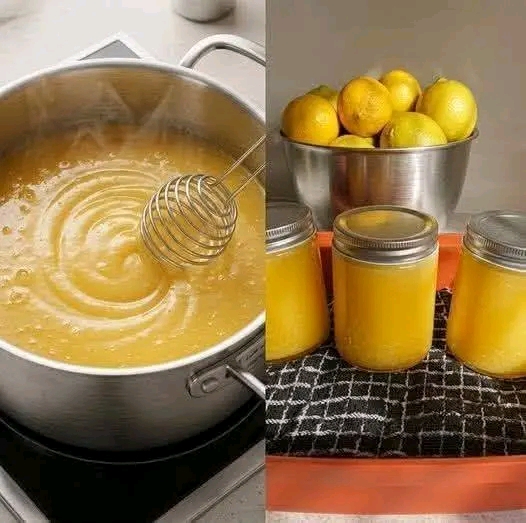
Homemade Lemon Curd
Introduction
There is something irresistible about homemade lemon curd. Bright, silky, buttery, and bursting with fresh citrus flavor, it transforms simple ingredients into a luxurious spread. This recipe is wonderfully versatile and tastes even better when made from freshly squeezed lemons.
Origin
Lemon curd became popular in Britain during the late 19th and early 20th centuries. Early versions were made by gently thickening lemon juice with eggs and sugar and were commonly served with bread, scones, and afternoon tea. Modern recipes often include butter for an especially smooth and creamy texture.
Cultural Significance
Lemon curd is closely associated with British baking and afternoon tea traditions. Today, it has become a favorite homemade preserve around the world, appearing in cakes, tarts, pastries, cookies, pancakes, and breakfast spreads.
Ingredients Quantity
½ cup fresh lemon juice, preferably from about 3–4 lemons
1 tablespoon finely grated lemon zest
¾ cup granulated sugar
3 large eggs
½ cup unsalted butter, cut into small pieces
1 teaspoon vanilla extract
Pinch of salt
Optional Additions
Extra lemon zest for a stronger citrus flavor
½ teaspoon vanilla bean paste
A few drops of orange juice for a softer citrus flavor
Fresh berries for serving
A tablespoon of heavy cream for an even richer finish
Tips for Success
Always use fresh lemon juice for the brightest flavor.
Strain the lemon juice and finished curd if you want an exceptionally smooth texture.
Cook over medium-low heat and stir continuously to prevent the eggs from scrambling.
Don’t let the curd boil.
The curd will thicken further as it cools, so don’t worry if it seems slightly loose while hot.
Use a nonreactive saucepan, such as stainless steel, because acidic lemon juice can react with some metals.
Instructions
1. In a medium saucepan, whisk together the eggs, sugar, lemon juice, lemon zest, and salt.
2. Place the saucepan over medium-low heat.
3. Add the butter pieces and whisk continuously as the mixture gently cooks.
4. Continue stirring for approximately 7–10 minutes, until the mixture thickens enough to coat the back of a spoon. For food safety, cook egg-based curd to about 170°F (77°C) while avoiding a boil.
5. Remove from the heat and stir in the vanilla.
6. Strain the curd through a fine-mesh sieve into a clean bowl or jar for an ultra-smooth consistency.
7. Cover the surface directly with plastic wrap or a lid and refrigerate until completely chilled.
8. Serve on toast, scones, pancakes, waffles, yogurt, or use as a filling for cakes and pastries.
Description
This lemon curd is wonderfully creamy with a perfect balance of sweet, tangy, buttery, and citrusy flavors. Its vibrant yellow color and silky texture make it feel like a special dessert even when spread on something as simple as toast.
Nutritional Information
Estimated per 1 tablespoon serving:
Calories: approximately 75–85
Carbohydrates: approximately 8 g
Sugars: approximately 7 g
Fat: approximately 5 g
Protein: approximately 1 g
Nutritional values vary depending on the exact ingredients and serving size.
Conclusion
Homemade Lemon Curd is proof that a handful of everyday ingredients can create something absolutely spectacular. Once you make it yourself, you may find yourself looking for excuses to put it on everything!
Recommendation
Try it with warm scones, buttery toast, croissants, pancakes, waffles, cheesecake, or fresh berries. It also makes a beautiful filling for lemon cakes, cupcakes, and tarts.
Embracing Healthful Indulgence
Lemon curd is naturally an indulgent treat because it contains sugar, eggs, and butter, but it doesn’t need to be avoided. Enjoying a small portion alongside fruit, whole-grain toast, or plain yogurt can make it part of a balanced eating pattern. The best approach is to savor every spoonful rather than needing a large amount.