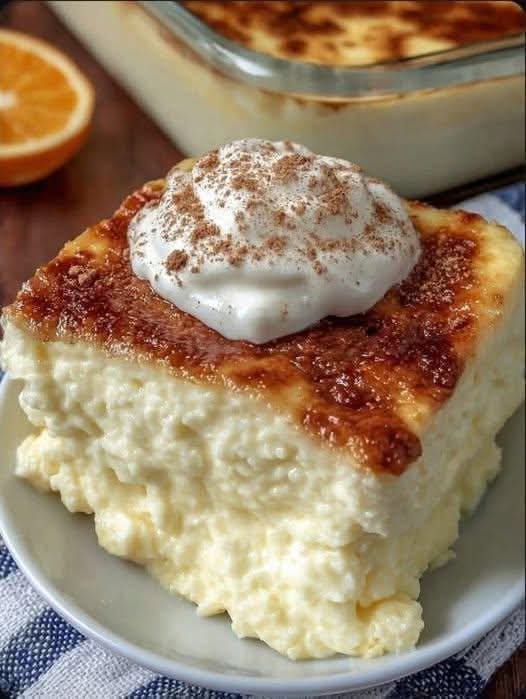
Here is a comprehensive guide to making Silky Amish Baked Custard, covering everything from its rich history to its nutritional profile.
Introduction: A Taste of Simple Comfort
Imagine a dessert so smooth it feels like silk on your tongue, with a gentle sweetness that whispers of vanilla and warm nutmeg. This is Amish Baked Custard, a timeless classic that embodies the principle of turning simple, fresh ingredients into something truly magical. Unlike fancy pastries or complex cakes, this custard relies on the perfect harmony of eggs, milk, and sugar, transformed by gentle heat into a creamy, soul-satisfying treat.
Born from the resourceful kitchens of Amish communities, this dessert is the epitome of “Pennsylvania Dutch” hospitality—proof that you don’t need extravagance to create a memorable end to a meal. Whether served warm on a cold evening or chilled on a summer afternoon, this custard is more than a dessert; it is a warm hug in a ramekin.
History: The Heritage of a Humble Dessert
The roots of Amish Baked Custard lie deep in the traditions of 19th-century America. Amish and Mennonite communities, particularly those settling in Pennsylvania and the Midwest, valued frugality and simplicity. They created “desperation pies” and simple custards to make use of plentiful farm-fresh eggs and milk.
Unlike the egg-less “Sugar Cream Pie” (another regional favorite), baked custard proudly showcases the bounty of the hen house. It was a standard dish at “church suppers” and family gatherings, celebrated not for its complexity but for its reliability and nourishing qualities. This old-fashioned custard represents a direct link to a time when cooking was intuitive, and desserts were made by feel, without electric mixers—just a whisk, a bowl, and a gentle oven.
Benefits: Why You Should Love This Dessert
Indulging in this creamy custard comes with surprising perks:
· High in Protein: Thanks to the eggs, this dessert offers a significant protein boost compared to cakes or cookies, helping with satiety.
· Nutrient Dense: Milk provides essential calcium and Vitamin D, while eggs contribute Vitamin B12 and healthy fats.
· Controlled Sweetness: When you make it at home, you control the sugar. You can easily reduce the 1/2 cup or substitute with natural sweeteners like honey or maple syrup.
· Digestible Comfort: Because it is soft and smooth, it is often recommended for those recovering from illness or needing a gentle, nutrient-rich food.
Nutrition: Understanding the Profile
The nutritional content of Silky Amish Baked Custard will vary slightly based on the milk fat content (whole milk vs. heavy cream). Based on a standard serving (approximately 1/2 cup) made with whole milk and eggs, you can expect roughly:
· Calories: 180-220
· Protein: 6-8g
· Fat: 8-11g
· Carbohydrates: 20-24g
· Sugar: 15-18g
Who Loves Amish Baked Custard?
The lovers of this dish are as diverse as its history. Picky eaters love its mild, non-threatening flavor. Baking beginners love it because it is almost foolproof when following the water bath method. Nostalgic eaters adore the way the scent of nutmeg and vanilla transports them to their grandmother’s kitchen. Additionally, health-conscious dessert fans love that they can enjoy a rich-tasting treat that contains real, whole ingredients without preservatives.
The Big Recipe: Classic Amish Baked Custard
This recipe focuses on the classic Amish baked custard method using a water bath (bain-marie) to ensure the perfect, wobbly texture. Note: While some modern variations use sweetened condensed milk, this recipe sticks to the traditional “whole milk & cream” base for the absolute best silky texture.
Prep Time: 10 minutes
Cook Time: 35-40 minutes
Chill Time: 2 hours (optional)
Servings: 6 (6-ounce ramekins)
Ingredients: The Simple Pantry Staples
· 2 cups whole milk (room temperature)
· 1 cup heavy cream (or half-and-half for a lighter version)
· 3 large eggs (room temperature)
· 1/2 cup granulated sugar
· 1 teaspoon pure vanilla extract (essential for that warm flavor)
· 1/4 teaspoon salt
· Freshly grated nutmeg (for dusting)
Method & Formation: Step-by-Step to Perfection
1. Preparation: Preheat your oven to 325°F (160°C). Arrange six 6-ounce ramekins inside a large roasting pan or 9×13 baking dish.
2. Heat the Dairy: In a saucepan, combine the whole milk and heavy cream. Heat over medium-low heat just until steam rises and small bubbles form around the edge. Do not boil, or the milk may scald. Remove from heat.
3. Whisk the Base: In a large mixing bowl, whisk the eggs, sugar, salt, and vanilla extract until the mixture is slightly frothy and the sugar has mostly dissolved (about 1 minute).
4. Tempering (The Critical Step): This prevents scrambling. Slowly pour a thin stream of the hot milk into the egg mixture while whisking constantly. Once you’ve added about 1/4 of the milk, you can pour the rest in a steady stream, whisking all the while.
5. Strain: For that signature silky texture, pour the custard base through a fine-mesh sieve into a large measuring cup or pitcher. This catches any cooked egg bits or foam.
6. Assemble: Pour the custard evenly into the 6 ramekins. Grate fresh nutmeg over the tops.
7. The Water Bath (Bain-Marie): Place the roasting pan with the ramekins into the oven. Carefully pour very hot water into the roasting pan until it reaches halfway up the sides of the ramekins.
8. Bake: Bake for 30 to 40 minutes. The custard is done when the edges are fully set but the center still jiggles slightly like Jell-O when you nudge the pan. (A knife inserted near the edge should come out clean).
9. Cool: Carefully remove ramekins from the water bath. Let them cool on a wire rack. Serve warm, or refrigerate for at least 2 hours to serve cold.
Tips for Foolproof Results from Lovers of Baking
· Room Temperature is Key: Cold eggs and cold milk can shock the hot milk and cause uneven cooking. Let your ingredients sit out for 30 minutes before starting.
· Trust the Jiggle: Do not overbake! The custard will continue to cook from residual heat as it cools. If the center is completely firm in the oven, it will be rubbery later.
· The Sieve Secret: Even if you whisk perfectly, an egg white strand might sneak in. Straining is the non-negotiable step for creamy custard.
Conclusion: The Legacy of the Silky Custard
Amish Baked Custard is proof that perfection lies in simplicity. It is a dessert that asks for very little—just eggs, milk, patience, and love—and repays you tenfold with a spoonful of pure, golden comfort. It has lasted for centuries not because it is trendy, but because it works. Whether you are feeding a family or just treating yourself, this old-fashioned dessert delivers a moment of quiet, blissful satisfaction.
Recommended for you: If you love this, try making Creme Brulee (the French cousin with a crispy sugar top) or Rice Pudding for another creamy, nostalgic dessert.