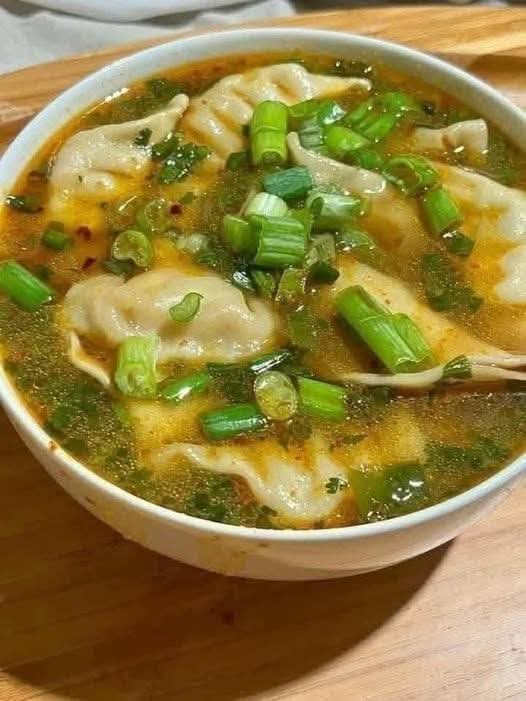
Here is a comprehensive guide to Wonton Soup, covering its rich history, recipe, nutritional benefits, and cultural significance.
☁️ Introduction: The Comfort of Swallowing Clouds
Wonton Soup is a beloved Chinese dish featuring delicate dumplings served in a clear, savory broth. The name “wonton” translates to “swallowing clouds” in Cantonese, a poetic reference to the way the thin-skinned dumplings float ethereally in the soup. It is the ultimate comfort food: a simple, hearty bowl that is satisfying in any season, whether as a light lunch, a warming winter meal, or a late-night snack.
📜 History: From Ancient Medicine to Global Phenomenon
The history of Wonton Soup is a long one, woven with threads of legend and tradition.
· Ancient Origins & The Han Dynasty: The origins of wontons date back over 1,800 years to the Han Dynasty era, where they were initially prepared for ancestor worship rituals as offerings to spirits.
· Medicinal Roots: According to legend, the famous physician Zhang Zhongjing created the first wontons during a harsh winter. He stuffed small pieces of dough with mutton, chili, and medicinal herbs to help the poor prevent frostbite, handing them out as a warming remedy.
· Cantonese Development: The wontons we often know today (shrimp-filled in a light broth) first appeared in the Pearl River Delta port of Guangzhou during the Tang Dynasty (618–907 AD). A street vendor named Mak Woon-chi is credited with popularizing wonton noodle soup, which later achieved star status in Hong Kong.
· Name & Evolution: The name evolved from the ancient Chinese word for “chaos” (混沌), as the dumplings were seen as a sealed bun without the “seven orifices.” Over time, the radical was changed to the food radical, becoming 餛飩 (wonton).
🥟 Wonton Soup: The Big Recipe
This recipe yields a classic, restaurant-quality bowl of Wonton Soup that is surprisingly easy to make at home.
🧾 Ingredients
For the Wonton Filling:
· 1/2 lb (225g) ground pork (with a bit of fat for moisture)
· 1/2 cup raw shrimp, finely chopped
· 2 tbsp finely chopped green onion
· 1/2 tbsp grated ginger
· 1 egg
· 1 tbsp oyster sauce
· 1/2 tbsp sesame oil
· 1/2 tsp black or white pepper
· Salt to taste
For the Soup & Assembly:
· 1/2 lb (225g) wonton wrappers (square, thin ones)
· 6-8 cups high-quality chicken or pork broth
· A small bunch of leafy greens (bok choy, choy sum, or lettuce)
· For the Mild Broth Base (per bowl): 1 tsp dried sea shrimp, 1 tsp sesame oil, 1 tsp soy sauce, chopped green onions
· For the Spicy Sichuan Version (per bowl): 1 tbsp chili oil, 1 tsp black vinegar, 1 tsp soy sauce, 1 tsp minced garlic, chopped spring onion
👨🍳 Instructions & Methods
1. Prepare the Filling: In a bowl, combine the ground pork, chopped shrimp, green onion, ginger, egg, oyster sauce, sesame oil, pepper, and salt. Mix thoroughly until well-combined. For a smoother, more traditional paste-like texture, you can pulse the ingredients (except the shrimp) in a food processor before hand-mixing in the shrimp.
2. Wrap the Wontons (The “Cloud” Method): Lay a wonton wrapper flat on a clean surface. Place about 1 teaspoon of filling in the center. Dip your finger in water and moisten all four edges of the wrapper. Fold the wrapper in half diagonally to form a triangle, pressing firmly to seal around the filling. Then, take the two opposite corners of the triangle and bring them together, overlapping them slightly, and press to seal. This creates the classic “nurse’s cap” shape.
3. Prepare the Soup Base: While wrapping, bring your broth to a gentle simmer in a large pot. For the most authentic flavor, enhance the broth with slices of ginger, a few dashes of soy sauce, and a splash of Shaoxing wine.
4. Cook the Wontons: Bring a separate large pot of water to a rolling boil. Carefully drop the wontons in and cook for about 5 minutes, or until they float to the surface and the wrapper is tender.
5. Assemble the Bowl: While the wontons cook, place your desired “sauce for mild/spicy version” ingredients into individual serving bowls. Ladle a small amount of the hot broth into each bowl to dissolve the seasonings. Use a slotted spoon to transfer the cooked wontons into the bowls. Then, ladle more hot broth over them.
6. Finish: Blanch the leafy greens in the hot wonton water for the last minute, then add them to the bowls. Garnish with a final sprinkle of green onions and a few drops of sesame oil.
🌏 Regional Variations & Lovers
Wonton Soup is cherished worldwide, with countless regional variations that highlight local tastes.
· Cantonese (Hong Kong): Features shrimp and pork-filled wontons served with thin egg noodles in a light, supreme broth (shang tang). This is a hallmark of a skilled chef’s talent.
· Sichuan (Red Oil): Known as “Chao Shou,” these wontons are served in a mouth-numbing, spicy chili oil broth (hong you), often with black vinegar and garlic.
· Shanghai: Filling often includes minced pork and bok choy, sometimes with the wild green called “shepherd’s purse.” The broth is often a richer, thick bone broth.
· Global Lovers: This dish has a massive global fanbase. From Thailand (with egg noodles and fried shallots) to Vietnam (with lime and herbs), it’s a staple on Chinese restaurant menus worldwide. Its lovers are anyone seeking a deeply savory, warming, and satisfying meal.
🩺 Health & Nutritional Benefits
Wonton Soup is not only delicious but can be a balanced and nutritious meal, especially when prepared with lean proteins and plenty of vegetables.
· Moderate Calories: A single serving (approx. 241g) contains around 213 calories, with a calorie breakdown of roughly 11% fat, 60% carbs, and 29% protein. A 100g serving is about 79 calories.
· High-Quality Protein: It provides a good source of lean protein (approx. 15.7g per serving) from the pork and shrimp, which is essential for muscle repair and satiety.
· Rich in Essential Minerals: A single serving provides significant amounts of Sodium (1069mg), Potassium (189mg), and Cholesterol (36mg). Some versions can be a good source of iron.
· Customizable for Health: The nutritional profile can be easily improved. Using lean ground meat, reducing the salt in the broth, and loading the bowl with fibrous vegetables like bok choy or spinach will increase the vitamin and mineral content while keeping it low in calories.
✍🏻 Conclusion
From its legendary origins as a medicinal soup to its modern status as a global comfort food, Wonton Soup is a culinary masterpiece of simplicity and depth. Whether you prefer the classic, cloud-like dumplings in a light broth or the fiery kick of a Sichuan red oil version, this dish is a testament to the rich, evolving tradition of Chinese cuisine.
I hope this guide helps you make a delicious pot of Wonton Soup at home. If you try the recipe, I would love to hear about your experience!