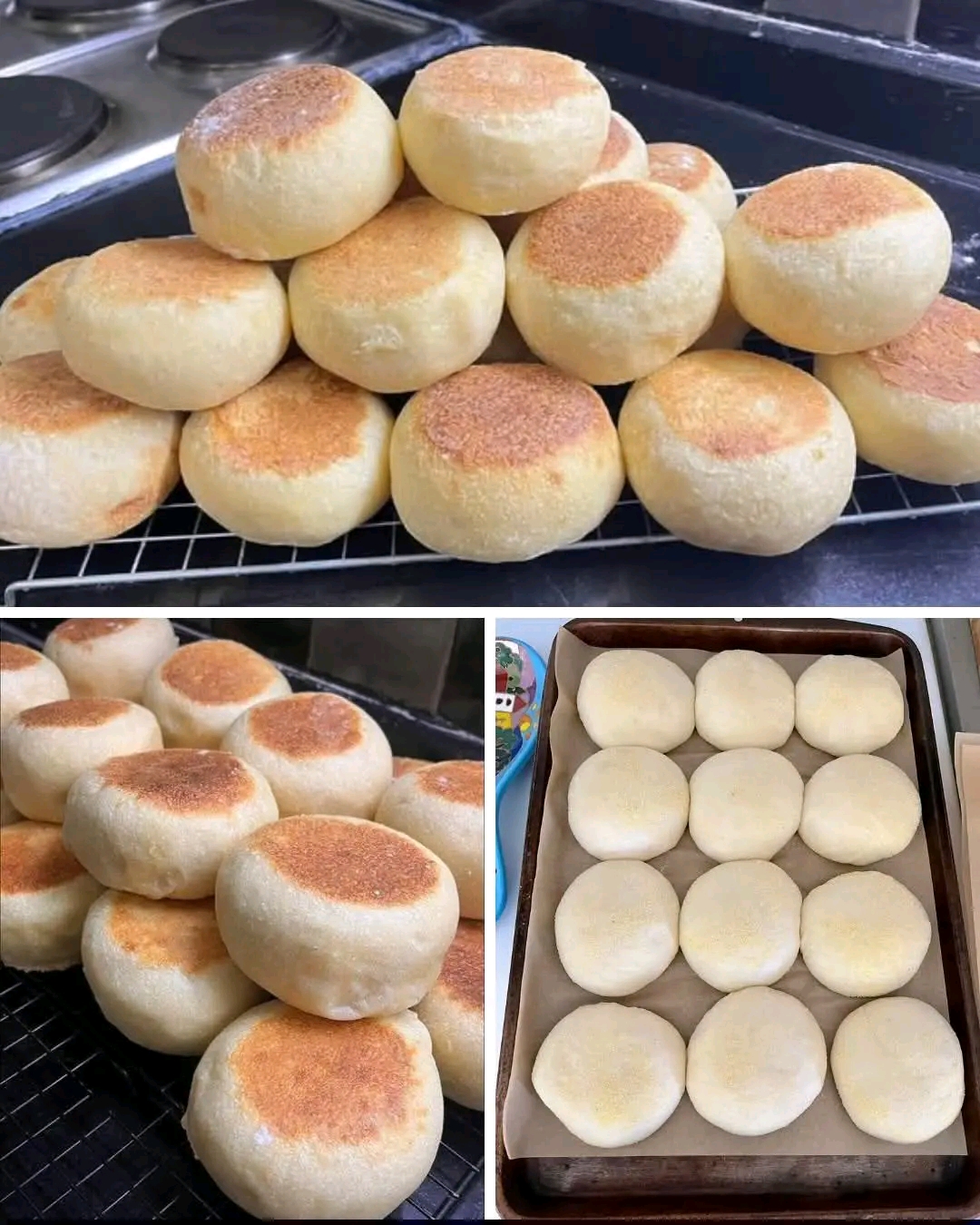
Homemade English Muffins
Introduction
There’s something incredibly satisfying about baking your own English muffins from scratch. With their signature nooks and crannies, soft interior, and lightly crisped exterior, homemade versions far surpass store-bought ones in flavor and freshness. Even if your first attempt isn’t picture-perfect, the taste alone will convince you they’re worth making again—and again.
Ingredients & Quantities
2 ¼ teaspoons (1 packet) active dry yeast
1 cup warm milk (about 40–43°C / 105–110°F)
1 tablespoon sugar
2 tablespoons butter (melted)
1 teaspoon salt
3 cups all-purpose flour
Cornmeal (for dusting)
Instructions
1. Activate the Yeast
In a bowl, combine warm milk, sugar, and yeast. Let sit for 5–10 minutes until foamy.
2. Make the Dough
Add melted butter and salt to the yeast mixture. Gradually mix in the flour until a soft dough forms.
3. Knead
Knead the dough on a floured surface for about 8–10 minutes until smooth and elastic.
4. First Rise
Place dough in a greased bowl, cover, and let it rise for 1–1.5 hours until doubled in size.
5. Shape the Muffins
Roll out dough to about 1.5 cm (½ inch) thick. Cut into rounds using a cutter or glass.
6. Second Rise
Place rounds on a cornmeal-dusted tray. Cover and let rise again for 30–45 minutes.
7. Cook on Griddle
Heat a skillet or griddle over low-medium heat. Cook muffins for 5–7 minutes per side until golden brown and cooked through.
8. Cool & Split
Let cool slightly, then split with a fork to reveal the classic texture.
Origin and Cultural Significance
English muffins originated in the United Kingdom but became especially popular in the United States thanks to English immigrant baker Samuel Bath Thomas in the late 1800s. Unlike traditional British muffins baked in ovens, these are griddle-cooked, making them unique. They’re a breakfast staple and a key base for dishes like Eggs Benedict.
Description
These muffins are soft, chewy, and slightly tangy with a crisp, golden crust. Inside, they feature airy pockets that perfectly hold butter, jam, or honey. Their rustic look is part of their charm—each batch has its own personality.
Optional Additions
Whole wheat flour (replace up to 50% for a healthier twist)
Honey or maple syrup instead of sugar
Add-ins like raisins or dried cranberries
Herbs or cheese for savory muffins
Tips for Success
Cook low and slow: Too much heat will burn the outside before the inside cooks.
Use a ring mold for uniform shape if desired.
Don’t skip the second rise—it helps create those signature air pockets.
Split with a fork, not a knife, to preserve texture.
Nutritional Information (Approx. per muffin)
Calories: 150–180
Carbohydrates: 28–32g
Protein: 4–6g
Fat: 2–4g
Fiber: 1–2g
Conclusion
Your first attempt at English muffins is already a big success—because flavor beats appearance every time. With a little practice, you’ll master both. Homemade muffins offer a freshness and texture you simply can’t buy.
Recommendation
Toast them lightly and serve with butter and honey for a simple treat, or elevate them into breakfast sandwiches. Make a batch and freeze extras—they reheat beautifully.
Embracing Healthful Indulgence
Homemade English muffins let you control ingredients, reduce preservatives, and experiment with healthier variations. They strike a perfect balance between comfort food and mindful eating—proving that indulgence can still be wholesome and satisfying.