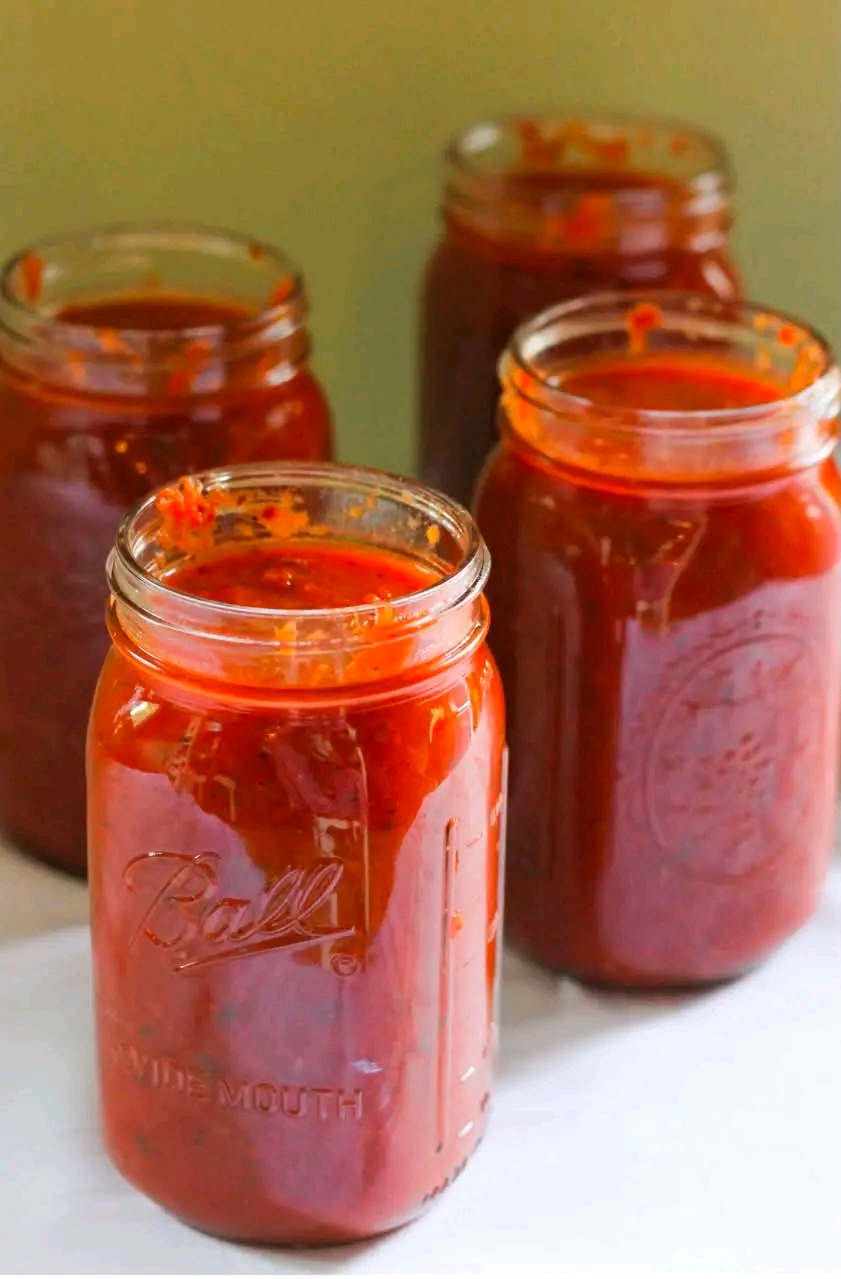
Bold Italian-Style Spaghetti Sauce for Canning
Introduction
A rich homemade spaghetti sauce is one of those pantry staples that brings the comforting flavors of Italian cooking straight to the dinner table. This version is deeply savory, aromatic, and tomato-forward, with garlic, onion, herbs, and olive oil creating a delicious base. Because canning is involved, food safety is essential: use a tested recipe and follow its processing instructions exactly rather than improvising the acidity or processing time.
Origin
Tomato-based pasta sauces are strongly associated with Italian cuisine, although tomatoes themselves originated in the Americas and became established in European cooking after the 16th century. Italian cooks developed countless regional tomato sauces, using ingredients such as garlic, onions, basil, oregano, and olive oil.
Cultural Significance
Spaghetti sauce represents the warmth of Italian family cooking and the tradition of preparing flavorful meals from simple ingredients. Homemade tomato sauce is also closely connected with preserving the summer tomato harvest for use throughout the year.
Ingredients Quantity
For a tested canning recipe, quantities and processing times must come from an approved source. The following ingredient profile can be used as a flavor guide, but it should not be treated as a validated canning formula:
8 cups peeled, crushed tomatoes
1½ cups finely chopped onion
4 cloves garlic, minced
1½ cups finely chopped bell pepper
2 tablespoons olive oil
2 teaspoons dried oregano
1 teaspoon dried basil
1 teaspoon salt, or according to a tested recipe
½ teaspoon black pepper
1 teaspoon sugar, optional, to balance acidity
For actual shelf-stable storage, choose a tested recipe from a recognized home-canning authority such as the USDA Complete Guide to Home Canning or the National Center for Home Food Preservation. The NCHFP specifically recommends using tested recipes and following the specified ingredient proportions and processing procedures.
Optional Additions
For refrigerated or frozen sauce, you can customize the flavor with:
Fresh basil
Red pepper flakes
Mushrooms
Italian parsley
A small amount of grated Parmesan when serving
Ground beef or Italian sausage, added when preparing the sauce for immediate consumption
For canning, however, do not add extra vegetables, meat, oil, or other low-acid ingredients to a tested recipe unless the recipe specifically permits them, because changing the formulation can affect processing safety.
Tips for Success
Choose ripe, flavorful tomatoes and remove excess water if the recipe calls for it. Simmering develops a richer flavor and thicker consistency.
Most importantly, don’t rely on a random recipe’s instructions for shelf-stable canning. Tomato sauces can vary significantly in acidity, density, and ingredients. Use a research-tested recipe with the specified acidification, jar size, headspace, processing method, and processing time. The NCHFP provides tested tomato and spaghetti-sauce preservation guidance.
Instructions
For Flavor Development
1. Wash and prepare the vegetables.
2. Sauté the onion and garlic in the prescribed amount of oil until softened.
3. Add the prepared tomatoes and seasonings.
4. Bring the mixture to a gentle simmer.
5. Cook until the sauce reaches the consistency specified by your tested recipe.
6. Taste and adjust seasoning only where the tested recipe allows.
7. If serving immediately, finish with fresh basil or Parmesan if desired.
For Canning
Follow the exact processing instructions of your chosen tested canning recipe, including the required acidification, jar preparation, headspace, processing method, processing time, and altitude adjustment. Do not substitute a slow cooker, oven, dishwasher, or improvised water-bath method for the tested process.
Description
The finished sauce should be thick, aromatic, and intensely tomato-forward, with savory onion and garlic and a gentle herbal character. It is wonderful over spaghetti, penne, lasagna, stuffed shells, or other pasta dishes.
Nutritional Information
For a basic tomato-and-vegetable sauce, ½ cup may provide approximately:
Calories: 70–100 kcal
Protein: 2–3 g
Carbohydrates: 10–14 g
Fiber: 2–3 g
Fat: 3–5 g
Sodium: 200–400 mg
Actual nutrition will vary substantially according to the tested recipe, particularly the amount of oil and salt used.
Conclusion
A homemade Italian-style spaghetti sauce can be both delicious and practical, especially when you have an abundant tomato harvest. The key distinction is between making sauce and preserving sauce safely. A recipe can taste excellent without being suitable for shelf-stable canning.
Recommendation
For a sauce intended for pantry storage, I strongly recommend starting with a research-tested canning recipe rather than modifying a favorite family recipe. The National Center for Home Food Preservation provides tested guidance for tomato-based sauces and preservation methods.
If you want a richer, meatier or more vegetable-heavy sauce, prepare those additions when you open the safely canned plain sauce rather than changing the canning formula.
Embracing Healthful Indulgence
Homemade tomato sauce makes it easy to build a flavorful meal around vegetables, herbs, and wholesome ingredients. Serve it over whole-grain pasta and add plenty of vegetables, beans, or lean protein for a satisfying meal.