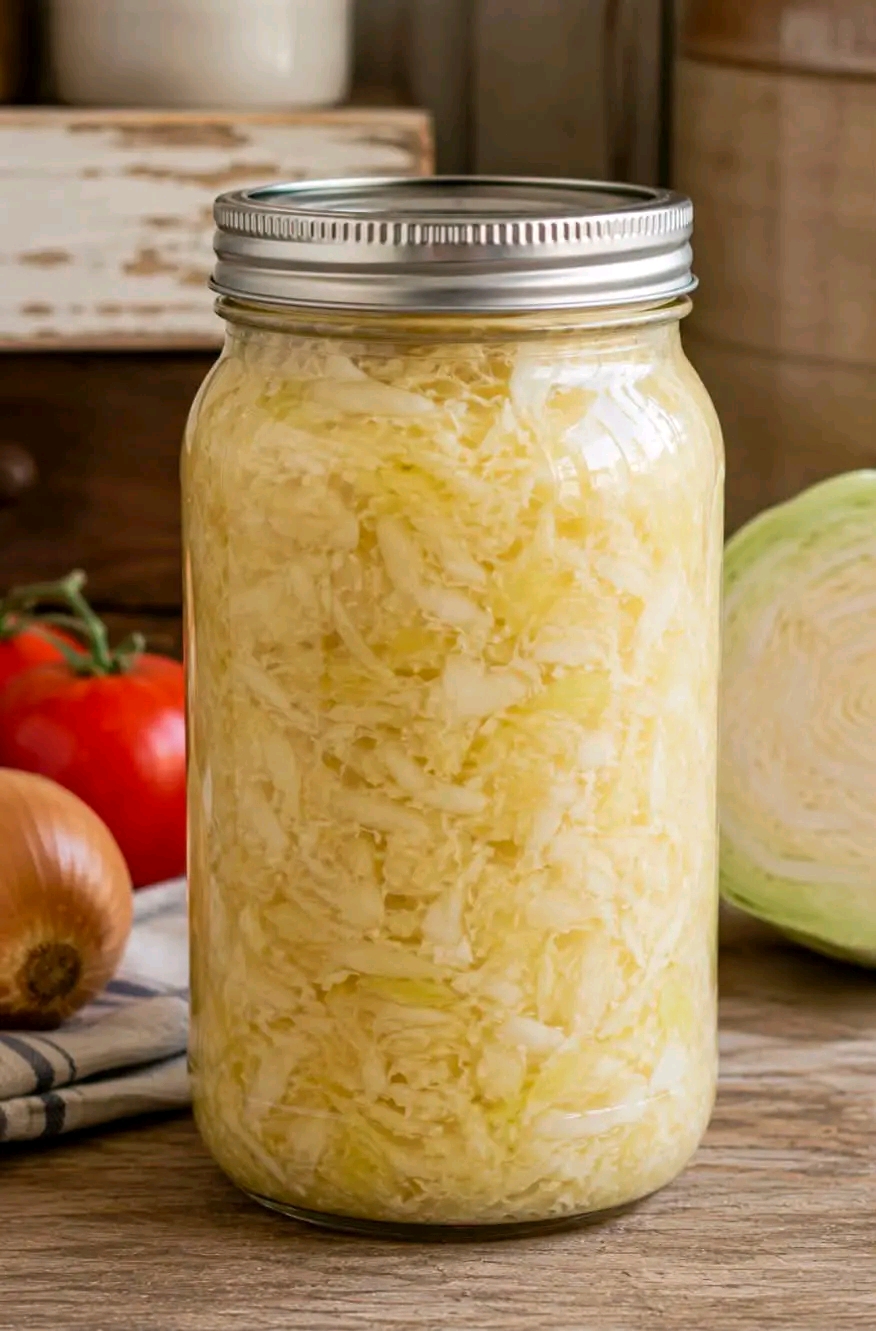
Sauerkraut
Introduction
Sauerkraut is a classic fermented cabbage dish celebrated for its tangy flavor, crisp texture, and remarkable shelf life. Made with just cabbage, salt, and time, this traditional recipe transforms simple ingredients into a probiotic-rich condiment that pairs beautifully with meats, sandwiches, salads, and hearty meals. Homemade sauerkraut is easy to prepare and offers a fresher, more vibrant taste than many store-bought varieties.
Origin
Sauerkraut has ancient roots dating back more than 2,000 years. While fermented cabbage was first prepared in China, the version most people know today became closely associated with Germany and Central Europe. The German word Sauerkraut literally means “sour cabbage,” reflecting its naturally fermented, pleasantly tart flavor.
Cultural Significance
Sauerkraut has long been a staple in German, Polish, Austrian, and Eastern European cuisines. It has traditionally been valued not only for its flavor but also for its ability to preserve vegetables through the winter months. Today, it remains a favorite accompaniment to sausages, pork, sandwiches, and holiday meals while also gaining popularity among health-conscious eaters for its probiotic benefits.
Ingredients
Quantity
2 pounds (900 g) green cabbage
1 cup filtered water
1 tablespoon plus 1 teaspoon pickling salt
Optional Additions
1 teaspoon caraway seeds for traditional flavor
1 teaspoon mustard seeds
1–2 cloves garlic, sliced
1 teaspoon black peppercorns
1 small grated carrot for mild sweetness
Juniper berries for a classic European touch
Thinly sliced onion for extra flavor
Tips for Success
Use fresh, firm cabbage for the best texture.
Always use non-iodized pickling or sea salt, as iodized salt may interfere with fermentation.
Keep the cabbage fully submerged beneath the brine throughout fermentation.
Ferment in a cool location, ideally between 65–72°F (18–22°C).
Taste after two weeks and continue fermenting if you prefer a stronger, tangier flavor.
Use clean, sanitized jars and utensils to prevent contamination.
Refrigerate once fermentation reaches your preferred taste to slow the process.
Instructions
1. Dissolve 1 teaspoon of pickling salt in 1 cup of filtered water and set aside.
2. Remove the cabbage core and slice the cabbage into very thin shreds.
3. Place the cabbage into a large mixing bowl.
4. Sprinkle the remaining 1 tablespoon of pickling salt over the cabbage.
5. Massage the cabbage for several minutes until it begins releasing liquid.
6. Cover the bowl and let it rest for 1 hour.
7. Toss and squeeze the cabbage again to release additional liquid.
8. Firmly pack the cabbage into a clean 1-quart jar, pressing it down to remove air pockets and leaving about 2 inches of headspace.
9. Pour the cabbage’s natural liquid into the jar. If needed, add the prepared saltwater so the cabbage is completely submerged.
10. Place a fermentation spring or weight on top to keep the cabbage beneath the brine.
11. Seal the jar with a fermentation lid or loose-fitting lid.
12. Store in a cool, dark place for approximately 2 weeks.
13. Taste the sauerkraut. If you prefer a stronger fermented flavor, continue fermenting for several more days or weeks.
14. Once it reaches your desired flavor, refrigerate for up to 6 months.
Yield: 1 quart
Description
This homemade sauerkraut is crisp, tangy, and naturally fermented with a pleasantly sour flavor that develops over time. Its crunchy texture and bright acidity make it a versatile addition to sandwiches, sausages, grain bowls, salads, and roasted meats while providing naturally occurring beneficial bacteria.
Nutritional Information
Per serving (approximately ½ cup):
Calories: 15
Protein: 1 g
Carbohydrates: 3 g
Dietary Fiber: 2 g
Total Fat: 0 g
Sodium: 350–450 mg
Vitamin C: Approximately 20% of the Daily Value
Vitamin K: Approximately 15% of the Daily Value
Naturally occurring probiotics (when unpasteurized)
Nutrition values are approximate and may vary depending on fermentation time and serving size.
Conclusion
Homemade sauerkraut is an easy and rewarding fermentation project that requires only a few ingredients and minimal effort. With patience, you’ll create a flavorful, nutritious condiment that can enhance countless meals while preserving cabbage naturally.
Recommendation
Serve sauerkraut alongside grilled sausages, roasted pork, burgers, Reuben sandwiches, baked potatoes, grain bowls, or salads. It also adds a delicious tangy contrast to rich dishes and makes a healthy everyday side packed with flavor.
Embracing Healthful Indulgence
Sauerkraut is a wonderful example of how simple, traditional foods can support a balanced lifestyle. Naturally low in calories and rich in fiber, vitamins, and beneficial probiotics, it offers both exceptional flavor and nutritional value. Enjoying homemade fermented foods like sauerkraut is a delicious way to add wholesome goodness to everyday meals while celebrating time-honored culinary traditions.