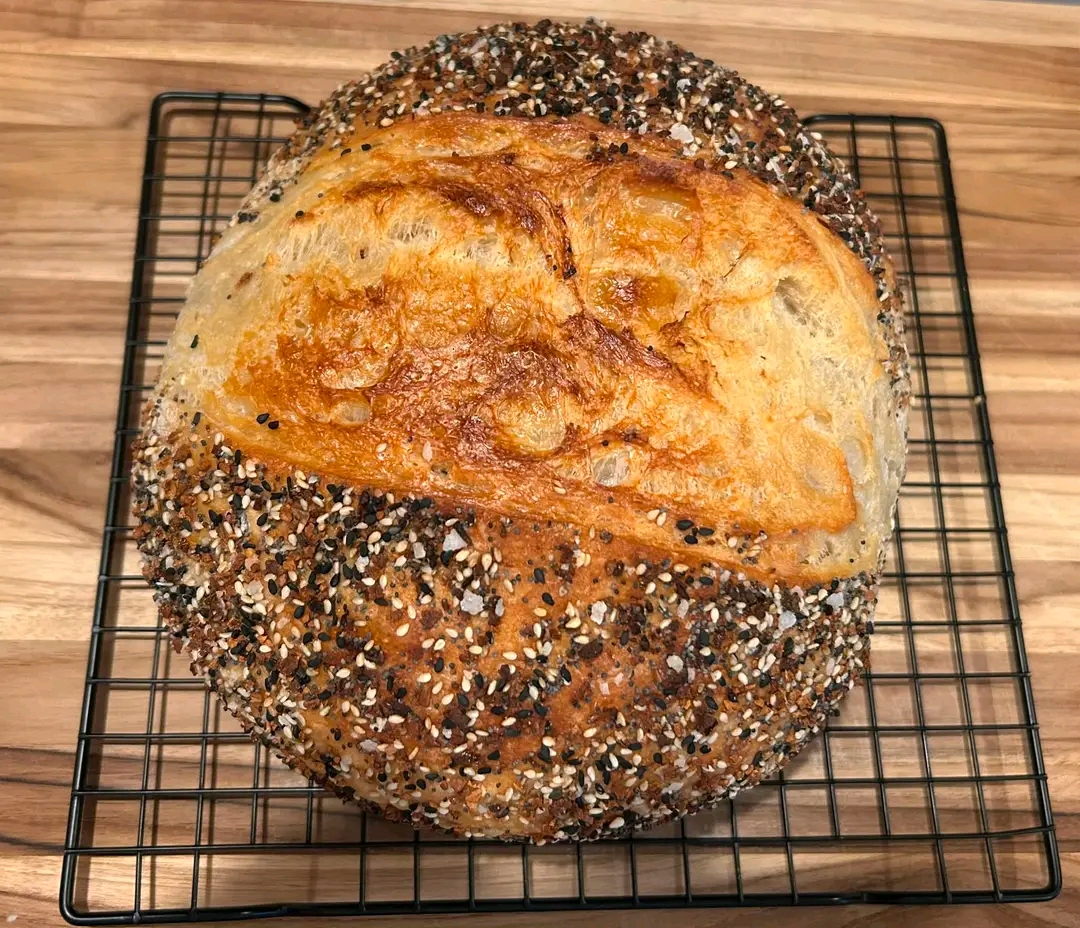
Rustic Artisan Sourdough Bread
Introduction
There is something incredibly satisfying about baking sourdough bread from scratch. Every loaf tells a story of patience, fermentation, and craftsmanship. Learning how to score sourdough is an essential step in creating beautiful artisan loaves with excellent oven spring. Proper scoring allows the expanding gases inside the dough to escape in a controlled way, producing an attractive ear and a well-risen loaf.
Origin
Sourdough bread is one of the oldest forms of leavened bread, dating back thousands of years to ancient civilizations such as Egypt. Before commercial yeast existed, naturally occurring wild yeast and beneficial bacteria fermented flour and water to create flavorful, nutritious bread. Today, sourdough remains a favorite among artisan bakers worldwide for its rich flavor, chewy texture, and traditional baking methods.
Cultural Significance
Across many cultures, sourdough represents heritage, sustainability, and the art of slow food. Home bakers often pass their sourdough starters through generations, creating unique loaves that reflect local ingredients and family traditions. Mastering techniques like shaping and scoring has become a rewarding milestone for both beginner and experienced bakers.
Ingredients
Dough
500 g bread flour
350 g water (70% hydration)
100 g active sourdough starter
10 g fine sea salt
For Dusting
Rice flour or bread flour
Ingredient Quantities
Ingredient Quantity
Bread flour 500 g
Water 350 g
Active sourdough starter 100 g
Fine sea salt 10 g
Rice flour (optional) As needed
Optional Additions
Whole wheat flour for a nuttier flavor
Rye flour for deeper complexity
Mixed seeds for extra texture
Herbs such as rosemary or thyme
Roasted garlic
Shredded cheese
Dried cranberries and walnuts
Tips for Success
Ensure your starter is active and doubles before baking.
Build good surface tension during shaping.
Cold-proof the dough for easier scoring.
Use a razor-sharp lame or bread blade.
Hold the blade at about a 30–45° angle for an attractive ear.
Make one confident, continuous cut instead of several shallow cuts.
A score approximately ½ inch (1–1.5 cm) deep usually provides enough room for expansion.
Bake with plenty of steam during the first 20 minutes.
If your loaf bursts elsewhere, the score may have been too shallow or too short.
Instructions
1. Mix the flour and water until no dry flour remains and let rest for 30–60 minutes.
2. Add the sourdough starter and salt, mixing thoroughly.
3. Perform stretch-and-folds every 30 minutes for about 2 hours.
4. Allow the dough to bulk ferment until it has increased by roughly 40–60%.
5. Shape the dough tightly into a round or oval loaf.
6. Place in a floured banneton and refrigerate overnight.
7. Preheat the oven and Dutch oven to 475°F (245°C).
8. Turn the dough onto parchment paper.
9. Dust lightly with flour if desired.
10. Score one long slash along the loaf at a slight angle, about ½ inch (1–1.5 cm) deep.
11. Bake covered for 20 minutes.
12. Remove the lid and continue baking for 20–25 minutes until deeply golden brown.
13. Cool completely before slicing.
Description
This rustic artisan sourdough features a crisp, crackling crust, an airy open crumb, and the complex tangy flavor that develops through natural fermentation. Proper scoring enhances both the loaf’s appearance and its oven spring, producing the classic artisan ear that many bakers strive to achieve.
Nutritional Information
Per slice (based on 12 slices):
Calories: 165
Protein: 5 g
Carbohydrates: 33 g
Fat: 1 g
Fiber: 2 g
Sugar: 0 g
Sodium: 195 mg
Values are approximate and may vary depending on ingredients and slice size.
Conclusion
Scoring is a skill that improves with practice. Even experienced sourdough bakers continue refining their technique with every bake. If your loaf rose well and opened along the score, you’re making great progress. Small adjustments to blade angle, depth, and confidence will lead to even better oven spring over time.
Recommendation
For beginners, keep your scoring simple with one long slash rather than decorative patterns. Bake consistently using the same recipe so you can evaluate how each change in scoring affects the final loaf. Taking notes and photos of every bake is one of the fastest ways to improve.
Embracing Healthful Indulgence
Homemade sourdough is more than delicious—it celebrates traditional baking, natural fermentation, and wholesome ingredients. Every loaf is an opportunity to learn, improve, and enjoy bread crafted with care. Whether your ear is dramatic or subtle, each bake brings valuable experience and the rewarding aroma of fresh artisan bread.