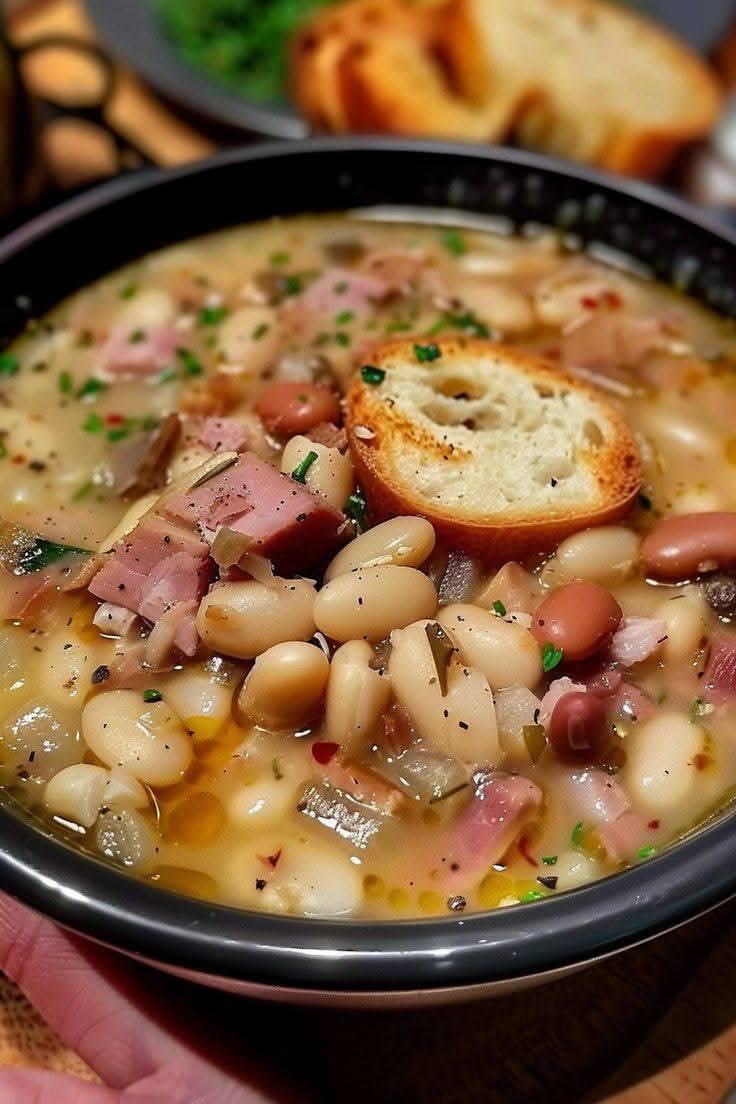
Ham & Bean Soup: A Hearty Classic
Introduction
Few dishes embody comfort food like a steaming bowl of ham and bean soup. Rich, smoky, and deeply satisfying, this soup has warmed kitchens for centuries. Born from frugal necessity, it transforms humble ingredients—dried beans, a ham bone or leftover ham, aromatic vegetables—into a meal that feels like a hug in a bowl. Whether you’re chasing away winter chill or using up holiday ham, this recipe delivers robust flavor and silky texture. Below you’ll find a complete guide, from its storied past to its nutritional strengths, plus everything you need to make it perfectly.
Ingredients
(Yields 6–8 servings)
· 2 cups white beans (canned, drained & rinsed, or cooked from dry)
· 1 cup pinto beans (canned, drained & rinsed, or cooked from dry)
· 1½ cups ham, diced (smoked ham hock or leftover baked ham works beautifully)
· 1 small onion, chopped
· 2 garlic cloves, minced
· 4 cups chicken broth (low-sodium preferred)
· 1 tsp dried thyme (or 3 sprigs fresh)
· Salt + black pepper to taste
· Fresh parsley, chopped (for garnish)
· Toasted bread (for serving – crusty sourdough or baguette)
Optional additions: 1 bay leaf, 1 diced carrot, 1 celery stalk, a splash of apple cider vinegar.
Instructions
1. Prep ingredients – If using dried beans, soak 1 cup each white and pinto beans overnight, then boil until tender (about 1–1.5 hours). Drain. Canned beans are a convenient shortcut.
2. Sauté aromatics – In a large Dutch oven or soup pot over medium heat, warm 1 tbsp oil or butter. Add chopped onion and cook 3–4 minutes until translucent. Add minced garlic and cook 1 minute more.
3. Brown the ham – Add diced ham to the pot. Cook 3–5 minutes, stirring occasionally, until edges turn golden and fragrant.
4. Build the broth – Pour in chicken broth, scraping up any browned bits from the bottom. Add thyme, a pinch of pepper (hold salt until later – ham is often salty), and optional bay leaf.
5. Add beans – Stir in both white and pinto beans. Bring to a boil, then reduce heat to low. Simmer uncovered for 20–25 minutes, stirring occasionally.
6. Thicken (optional) – For a creamier soup, mash about 1 cup of beans against the side of the pot with a spoon, or use an immersion blender for 2–3 pulses.
7. Season & finish – Taste and add salt if needed (usually little to none). Adjust pepper. Remove bay leaf if used.
8. Serve – Ladle into bowls, garnish with fresh parsley, and serve with toasted bread for dipping.
Methods (Cooking Techniques)
This recipe relies on three core methods:
· Sautéing – Sweating onion and garlic in fat releases their natural sugars and builds a flavor base. Browned ham adds umami and smokiness.
· Deglazing – Adding cold broth to a hot pan lifts the fond (browned bits) – the secret to deep, savory broth.
· Simmering – Gentle, prolonged heat allows beans to absorb ham’s smoky essence while starch from beans naturally thickens the liquid.
Alternative methods:
· Slow cooker – Sauté onion, garlic, and ham first, then transfer to slow cooker with beans and broth. Cook on low 6–8 hours.
· Pressure cooker – Sauté in the Instant Pot, then cook at high pressure 20 minutes (dried beans) or 5 minutes (canned).
History
Ham and bean soup traces its lineage to peasant cooking across Europe and the Americas. In ancient Rome, a dish of beans cooked with salted pork belly (pultes fabaciae) appeared in Apicius’s cookbook. European colonists brought dried beans and salt-cured ham to the New World, where Native American knowledge of bean cultivation merged with European slow-simmering techniques.
By the 18th century, ham and bean soup was a staple in New England and the Southern United States. It was a thrifty Sunday supper – the leftover ham bone from Saturday’s dinner would be boiled for hours with a pot of beans, creating a meal that stretched meat into many servings. The tradition of “bean hole cooking” (baking beans in a sealed pot buried with coals) also influenced the dish. Today, it remains a beloved comfort food, especially after Easter or Thanksgiving when ham is abundant.
Benefits
· High protein – Ham provides complete animal protein; beans add plant protein, supporting muscle repair and satiety.
· Rich in fiber – One cup of beans offers ~15g fiber, aiding digestion, blood sugar control, and cholesterol reduction.
· Low in fat – Lean ham and no heavy cream keep this soup heart-healthy when consumed in moderation.
· Vitamin & mineral boost – Beans supply iron, magnesium, folate, and potassium; ham contributes B vitamins (B1, B6, B12) and zinc.
· Hydrating – Broth-based soups help maintain fluid balance, especially in cold weather.
· Budget-friendly – Transforms inexpensive pantry staples into a filling, nutrient-dense meal.
Formation (How the Soup Comes Together)
“Formation” here refers to the chemical and physical processes that turn separate ingredients into a cohesive dish:
· Starch gelatinization – Beans release amylose and amylopectin into the broth as they break down, creating natural body without flour.
· Fat‑water emulsion – Smoked ham’s small amount of rendered fat disperses and clings to bean starches, carrying smoky flavor throughout.
· Maillard reaction – Browning the ham and onions creates hundreds of aroma compounds (furans, pyrazines) that give the soup its savory depth.
· Osmotic balance – Salt from ham and broth slowly penetrates bean interiors, seasoning them from the inside out.
· Collagen breakdown – If you use a ham hock, connective tissue melts into gelatin, adding silky mouthfeel.
The result is a harmonious soup where every spoonful tastes of smoke, earth, and sweetness – greater than the sum of its parts.
Conclusion (First)
Ham and bean soup is the ultimate example of culinary alchemy: cheap, leftover ingredients transformed into a luxurious, soul-warming dish. It requires almost no special skill – just patience and a willingness to let time do the work. Whether you follow the stovetop method or use a slow cooker, you’ll end up with a pot of golden, smoky goodness that tastes even better the next day.
Lovers (First)
Who adores ham and bean soup?
· Home cooks on a budget – It stretches a small amount of ham into multiple meals.
· Cold‑weather warriors – Skiers, snow shovelers, and anyone facing frost finds solace in its warmth.
· Leftover enthusiasts – Post‑holiday ham becomes a hero ingredient.
· Bean aficionados – The creamy‑to‑firm texture of white and pinto beans together is a textural delight.
· Meal‑preppers – It freezes beautifully and only improves with reheating.
· Regional food lovers – New England, the South, and the Midwest all claim their own version, each fiercely defended.
Methods (Second – Advanced Tips)
Taking your soup from good to great? Try these professional methods:
· Bean brining – Soak dried beans overnight in salted water (1 tbsp salt per quart). This seasons them and helps skins stay intact during long simmering.
· Roux or slurry – For a thicker, stew‑like consistency, whisk 1 tbsp flour into the sautéed ham before adding broth, or mix cornstarch with cold water and stir in at the end.
· Smoke layering – Add a pinch of smoked paprika or a few drops of liquid smoke if your ham isn’t strongly smoky.
· Acid finishing – A teaspoon of apple cider vinegar or lemon juice stirred in just before serving brightens all the savory notes.
· Bone‑in technique – Use a leftover ham bone instead of diced ham. Simmer it with the beans for 2+ hours, then remove, pick off any meat, and return it to the pot.
Nutrition (Per serving, approx.)
Based on 8 servings using canned beans, low‑sodium broth, and 1½ cups ham
Nutrient Amount
Calories 310
Protein 22 g
Total Fat 6 g
Saturated Fat 1.5 g
Carbohydrates 40 g
Fiber 12 g
Sugars 3 g
Sodium 680 mg
Potassium 820 mg
Iron 3.5 mg (20% DV)
Calcium 80 mg (8% DV)
Note: Sodium can be reduced by using no‑salt beans, homemade broth, and rinsing ham or opting for a low‑sodium ham hock.
Conclusion (Second)
Ham and bean soup isn’t trendy or flashy – it’s timeless. It reminds us that the most delicious meals often arise from scarcity, patience, and a little fire. Every culture has a variation; every family has a memory attached to a steaming bowl. This recipe honors that legacy while being adaptable to your own pantry and taste. Make a big pot, share it with people you love, and watch how quickly it disappears.
Lovers (Second – In Their Own Words)
“I grew up on this soup. My grandmother used a ham bone that had been in the freezer since Christmas. She never measured anything, and it was always perfect.”
— Maria, Pennsylvania
“As a vegetarian, I swap the ham for smoked tofu and add a dash of liquid smoke. The beans are so creamy – I crave it weekly.”
— David, Oregon
“We serve this every New Year’s Day for good luck. The white beans symbolize coins, the ham represents prosperity. It works every time.”
— Southern Living reader
“I’m a firefighter. We make this in the station on cold nights – it’s cheap, feeds a crew of six, and sticks to your ribs for the next call.”
— Tom, Chicago
From frugal farmsteads to modern city kitchens, ham and bean soup continues to earn its devoted following. Try it once, and you’ll join the ranks of its lovers too.
Enjoy your big, beautiful bowl of history, health, and heart.