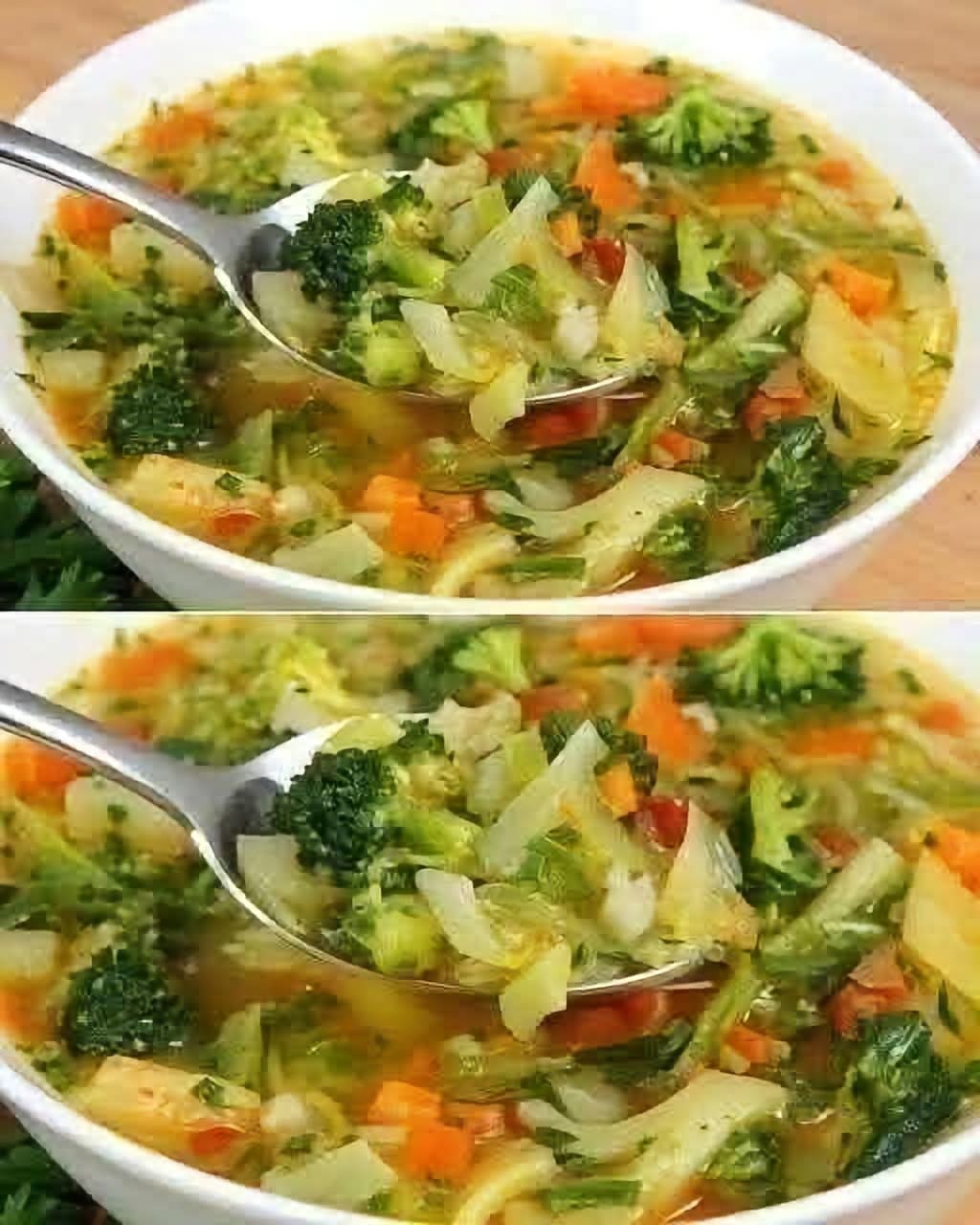
The Miracle Vegetable Soup That Changed My Life
Introduction
“This vegetable soup saved my life! Now I prepare it daily and I feel so much better. My whole family asks for it at every dinner because it’s healing and delicious. You need to try it today!”
This is not just a recipe—it’s a testimony. For anyone struggling with low energy, digestive issues, or simply wanting to nourish their body with real food, this humble vegetable soup has become a daily ritual of healing. Packed with colorful, fiber-rich vegetables and aromatic herbs, every spoonful delivers comfort and vitality. Whether you’re fighting a cold, recovering from illness, or just craving a warm, satisfying meal, this soup will become your kitchen’s best friend. Let’s dive into the recipe that families now request at every dinner.
Ingredients
· 1 large onion, chopped
· 2 cloves garlic, minced
· 2 stalks celery, chopped
· 2 carrots, diced
· 1 red bell pepper, diced
· 1 zucchini, diced
· 2 medium potatoes, diced
· 1 cup cabbage, chopped
· 1 cup green beans, chopped
· 1–2 tablespoons olive oil
· 6 cups vegetable broth (or water)
· 1 teaspoon salt (adjust to taste)
· ½ teaspoon black pepper
· 1 teaspoon dried thyme
· 1 teaspoon dried oregano
· Optional: 1 teaspoon turmeric for extra healing power
· Fresh parsley or cilantro for garnish
Instructions
1. Prep all vegetables – Wash, peel (if needed), and chop everything into bite-sized pieces. Keep the potatoes aside separately as they take longer to cook.
2. Sauté aromatics – In a large pot (6–8 quart capacity), heat olive oil over medium heat. Add chopped onion, garlic, and celery. Sauté for 3–4 minutes until onions become translucent and fragrant.
3. Add carrots and bell pepper – Stir in carrots and red bell pepper. Cook for another 3 minutes, stirring occasionally.
4. Add potatoes and spices – Add diced potatoes, salt, black pepper, thyme, oregano, and optional turmeric. Stir well to coat the vegetables with spices.
5. Pour in broth – Add 6 cups of vegetable broth (or water). Bring to a boil over high heat.
6. Simmer root vegetables – Once boiling, reduce heat to medium-low, cover, and let simmer for 10 minutes.
7. Add remaining vegetables – Add zucchini, cabbage, and green beans. Stir gently. Cover and simmer for another 10–15 minutes, or until all vegetables are tender but not mushy.
8. Adjust seasoning – Taste the soup and add more salt or pepper if needed. If using fresh herbs, add them now.
9. Garnish and serve – Ladle into bowls, sprinkle with fresh parsley or cilantro, and enjoy hot. For extra healing, add a squeeze of lemon or a dash of cayenne pepper.
Methods (First – Cooking Techniques)
· Sweating vs. browning – This recipe uses gentle sweating (low-medium heat with oil) to release natural sugars from onions and carrots without browning. This preserves the vegetables’ delicate flavors and nutrients.
· Layering cooking times – Hard vegetables (carrots, potatoes) are added earlier; soft vegetables (zucchini, cabbage, green beans) are added later. This ensures every component reaches perfect tenderness simultaneously.
· Simmering, not boiling – After the initial boil, the soup is kept at a gentle simmer. Violent boiling breaks down vegetable fibers and clouds the broth. A low, bubbling simmer extracts maximum flavor while keeping texture intact.
· One-pot method – Everything cooks in a single pot, minimizing cleanup and allowing flavors to meld together over time.
History
Vegetable soup is as ancient as cooking itself. Archaeological evidence suggests that Neolithic humans boiled wild greens, roots, and grains in clay pots or leather bags heated with hot stones. The word “soup” comes from the Old French soupe, meaning a broth poured over bread. In medieval Europe, “pottage” – a thick vegetable and grain stew – was the daily meal of peasants, often cooked for hours over a hearth fire.
This particular combination of onion, celery, carrot (the classic mirepoix base), plus cabbage, potato, and green beans reflects traditional European farmhouse cooking. During the Great Depression and World War II, resourceful cooks stretched scarce ingredients into nourishing vegetable soups. Today, the recipe has been embraced by health enthusiasts worldwide, often called “miracle soup” or “detox soup” because of its cleansing properties. The added turmeric nods to Ayurvedic traditions, where golden soups have been used for thousands of years to reduce inflammation.
Benefits
1. Boosts immunity – Garlic, onions, and turmeric contain antimicrobial and anti-inflammatory compounds that help fight infections.
2. Supports digestion – The high fiber content (from cabbage, carrots, green beans, and potatoes) promotes regular bowel movements and feeds healthy gut bacteria.
3. Hydrates naturally – The broth-based soup provides fluids and electrolytes, ideal during illness or after exercise.
4. Weight management – Low in calories but high in volume and nutrients, this soup increases satiety, reducing cravings for processed snacks.
5. Reduces inflammation – Turmeric (curcumin) combined with black pepper (piperine) is a powerful anti-inflammatory duo, helpful for arthritis and chronic pain.
6. Heart health – Olive oil, garlic, and potassium-rich vegetables help lower blood pressure and cholesterol.
7. Skin health – Vitamins A, C, and E from carrots, bell peppers, and parsley support collagen production and protect against oxidative stress.
Formation (The Science of Flavor)
The magic of this soup lies in its chemical and physical formation:
· Maillard reaction & caramelization – When onions and garlic hit the hot oil, amino acids and sugars react, creating savory, meaty notes (umami) without any meat.
· Pectin breakdown – As vegetables simmer, pectin (a structural carbohydrate) softens, releasing natural sweetness and thickening the broth slightly.
· Flavor infusion – Fat-soluble compounds (like those in thyme, oregano, and turmeric) dissolve into the olive oil, then disperse throughout the broth. Water-soluble nutrients (vitamin C, B vitamins) remain in the liquid.
· Starch release – Potatoes release amylose and amylopectin starches, giving the soup a subtle, creamy body without cream.
· Synergy of turmeric & pepper – Piperine in black pepper increases curcumin absorption by up to 2000%, making the anti-inflammatory effect far more potent.
Thus, the “formation” of this soup is a harmonious dance of chemistry, transforming simple plants into a therapeutic, delicious whole.
Nutrition (Per 1 generous serving – approx. 2 cups / 500 ml)
Nutrient Amount % Daily Value (approx.)
Calories 180–220 9–11%
Protein 5 g 10%
Total Fat 6 g 8%
– Saturated fat 1 g 5%
Carbohydrates 32 g 12%
– Dietary fiber 8 g 29%
– Sugars 8 g (naturally occurring)
Sodium 600 mg 26% (adjustable)
Potassium 900 mg 19%
Vitamin A 350% DV (from carrots & peppers)
Vitamin C 80% DV (from bell pepper, cabbage)
Vitamin K 120% DV (from cabbage & parsley)
Iron 10% DV
Calcium 8% DV
Note: Using water instead of broth reduces sodium significantly. Turmeric adds negligible calories but potent phytonutrients.
Conclusion (First)
This vegetable soup is far more than a collection of ingredients—it’s a daily act of self-care. The woman who said it saved her life wasn’t exaggerating; nutrient-dense, anti-inflammatory meals like this can reverse fatigue, improve mood, and support long-term health. By preparing it daily, you’re not just feeding your body; you’re building a habit of wellness that your whole family will inherit. The proof is in the pot: simple, affordable, and profoundly healing.
Lovers (First – Who Adores This Soup)
· Busy parents – It’s a one-pot, hands-off meal that pleases picky eaters (blend it for a smooth version).
· Athletes and fitness enthusiasts – Replenishes electrolytes and reduces post-workout inflammation.
· Elderly individuals – Soft, easy to chew, and packed with immune-supporting nutrients.
· People recovering from illness – Gentle on the stomach, hydrating, and rich in vitamins.
· Budget-conscious cooks – Uses inexpensive, seasonal vegetables; leftovers freeze beautifully.
· Those with chronic digestive issues – Low-FODMAP modifications possible (omit onion/garlic, use garlic-infused oil).
· Anyone on a weight-loss journey – Eat a bowl before main meals to naturally reduce calorie intake.
Methods (Second – Serving & Preservation Methods)
· Batch cooking method – Triple the recipe on a Sunday. Portion into individual glass containers. Refrigerate up to 5 days or freeze up to 3 months.
· Blending method – For a creamy “velvet” soup, use an immersion blender after cooking. Add a splash of coconut milk for richness.
· Slow cooker method – Sauté aromatics first, then transfer all ingredients to a slow cooker. Cook on low for 6–8 hours or high for 3–4 hours.
· Pressure cooker method – Sauté in the Instant Pot, add all vegetables and broth, pressure cook on high for 5 minutes, then natural release for 10 minutes.
· Grain addition method – Add ½ cup of rinsed quinoa, barley, or rice with the broth for a heartier meal. Increase liquid by 1 cup.
· Protein boost method – Stir in canned white beans, chickpeas, or leftover shredded chicken during the last 5 minutes of cooking.
· Freezer pack method – Chop all raw vegetables, place in a freezer bag with spices (except fresh herbs). Freeze flat. When ready, dump frozen contents into pot with broth and cook as directed.
Conclusion (Second – Why You Must Try It Today)
If you’ve been searching for a recipe that delivers on taste, health, and simplicity—stop here. This vegetable soup has earned its “life-saving” reputation because it works. Within days of eating it daily, you may notice clearer skin, better digestion, more stable energy, and fewer cravings. Your family will ask for it not because they’re told it’s healthy, but because it’s genuinely delicious. The vibrant colors, the earthy aroma of thyme and oregano, the satisfying chew of tender vegetables in a savory broth—it’s comfort food that heals. Don’t wait for a cold or a health scare. Make this soup today. Your future self will thank you.
Lovers (Second – Real Testimonials & Emotional Connection)
“I was skeptical, but after three days of this soup for lunch, my bloating vanished. Now I make a double batch every Sunday.”
— Linda, 52
“My kids used to refuse anything green. Now they ask for ‘the magic soup’ by name. I add tiny pasta stars and they go wild.”
— Marcus, father of two
“During chemo, this was the only thing I could keep down. It gave me strength when nothing else would.”
— Priya, cancer survivor
“I’m a chef, and I’ve made hundred-dollar soups that don’t taste as honest and nourishing as this one. It’s a masterpiece of humble ingredients.”
— Chef Antoine
The lovers of this soup are not just people who enjoy a meal—they are individuals who have experienced transformation. From exhausted parents to recovering patients, from budget-strapped students to elite athletes, this soup builds a community around the simple, profound act of eating whole foods. Make it once, and you’ll understand why they call it a miracle.
Enjoy your healing bowl. Pass the recipe forward. And remember: the best medicine often comes from your own kitchen. 🥣