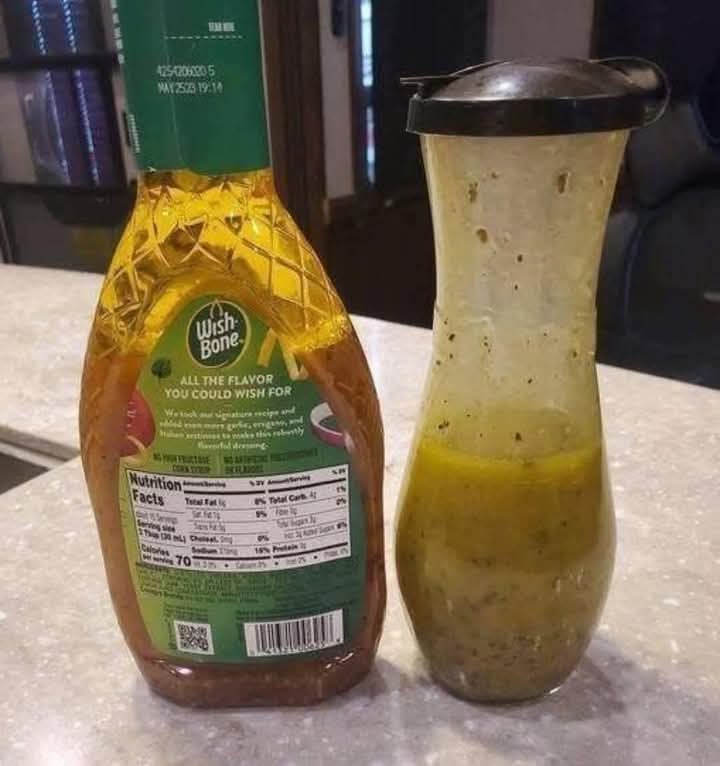
Here is a comprehensive guide to Homemade Italian Dressing, designed to help you ditch processed foods for good. I’ve structured it exactly as you requested, using your own recipe as the centerpiece.
Introduction
You’ve already discovered the first step to eating cleaner: reading labels. Processed foods, like bottled dressings, often contain inflammatory soybean oil, hidden sugars, and artificial preservatives—all for the sake of shelf stability. The good news? A fresher, healthier, and more delicious alternative takes less time to make than reading those ingredients. This Homemade Italian Dressing is vibrant, customizable, and puts you back in control of what fuels your body.
History
Italian dressing has roots in simple, rustic vinaigrette—a mixture of oil and vinegar used across Italy for centuries. The “Italian dressing” known in the US and UK emerged in the mid-20th century, popularized by restaurants and later bottled by brands like Wishbone. Unfortunately, the commercial version drifted far from the original, adding sugar, gums, and cheap oils. This recipe returns to the authentic, whole-food tradition.
Benefits (Why This Beats Bottled)
· No Inflammatory Oils: Uses extra virgin olive oil, rich in heart-healthy monounsaturated fats.
· No Added Sugar: Real flavor comes from herbs, not sweetness.
· No Preservatives: You eat it fresh, so none needed.
· Gut-Friendly: Vinegar and lemon juice aid digestion.
· Cost-Effective: Pennies per serving compared to $4–$7 bottles.
Ingredients (Your Recipe)
· 3/4 cup extra virgin olive oil
· 1/4 cup red or white wine vinegar (you used white)
· 1 tsp garlic powder
· 1 tsp dried oregano
· 1 tsp dried basil
· 1/2 tsp onion powder
· 1/2 tsp crushed red pepper
· 3/4 tsp salt
· 1/2 tsp black pepper
· 1 tsp lemon juice
Method & Instructions
This is an emulsification method—combining two liquids that don’t naturally mix (oil and vinegar).
1. Combine acid & seasonings first: In a bowl or mason jar, add vinegar, lemon juice, garlic powder, oregano, basil, onion powder, red pepper, salt, and pepper. Stir or shake to dissolve the salt and spices.
2. Add oil gradually: Pour in the olive oil slowly while whisking vigorously (or shaking the sealed jar). This creates a temporary emulsion—a creamy, cohesive dressing.
3. Rest (optional but recommended): Let sit for 10–15 minutes before serving to allow dried herbs to rehydrate and bloom.
Formation (The Science Behind It)
Without an emulsifier (like mustard or egg yolk found in creamy dressings), oil and vinegar will naturally separate. The mechanical action of whisking or shaking breaks the oil into tiny droplets suspended in the vinegar. Over time, these droplets reunite (separation). That’s normal—just shake again. Your recipe relies on this simple physical formation, which is why it’s lighter and brighter than creamy dressings.
Nutrition (Per 2-tablespoon serving, approx.)
· Calories: ~180
· Fat: 20g (14g monounsaturated, 2g saturated)
· Carbs: <1g
· Sugar: 0g
· Sodium: 220mg
· No protein, no fiber
Note: This is a fat-based dressing. A little goes a long way. Compared to processed Wishbone (which has added sugar and soybean oil), this has cleaner fats and zero empty carbs.
Lovers (Who Will Enjoy This)
· You, because you’ve already made the switch.
· Meal preppers who want quick, wholesome meals.
· Mediterranean diet followers (this fits perfectly).
· Anyone with blood sugar concerns (no sugar spikes).
· Home cooks tired of preservatives and artificial ingredients.
Conclusion
You’ve proven that breaking the processed food habit doesn’t require sacrifice—it requires a 60-second jar shake. This Italian dressing is crisp, herby, and completely honest. No hidden sugar. No inflammatory oils. Just real food that tastes better than anything from a shelf. Once you start making your own dressings, you’ll wonder why you ever bought bottled.
Mm
Your next challenge: Try the same method with a balsamic vinaigrette (swap red wine vinegar for balsamic, add 1 tsp Dijon mustard as an emulsifier). You’ve got this.