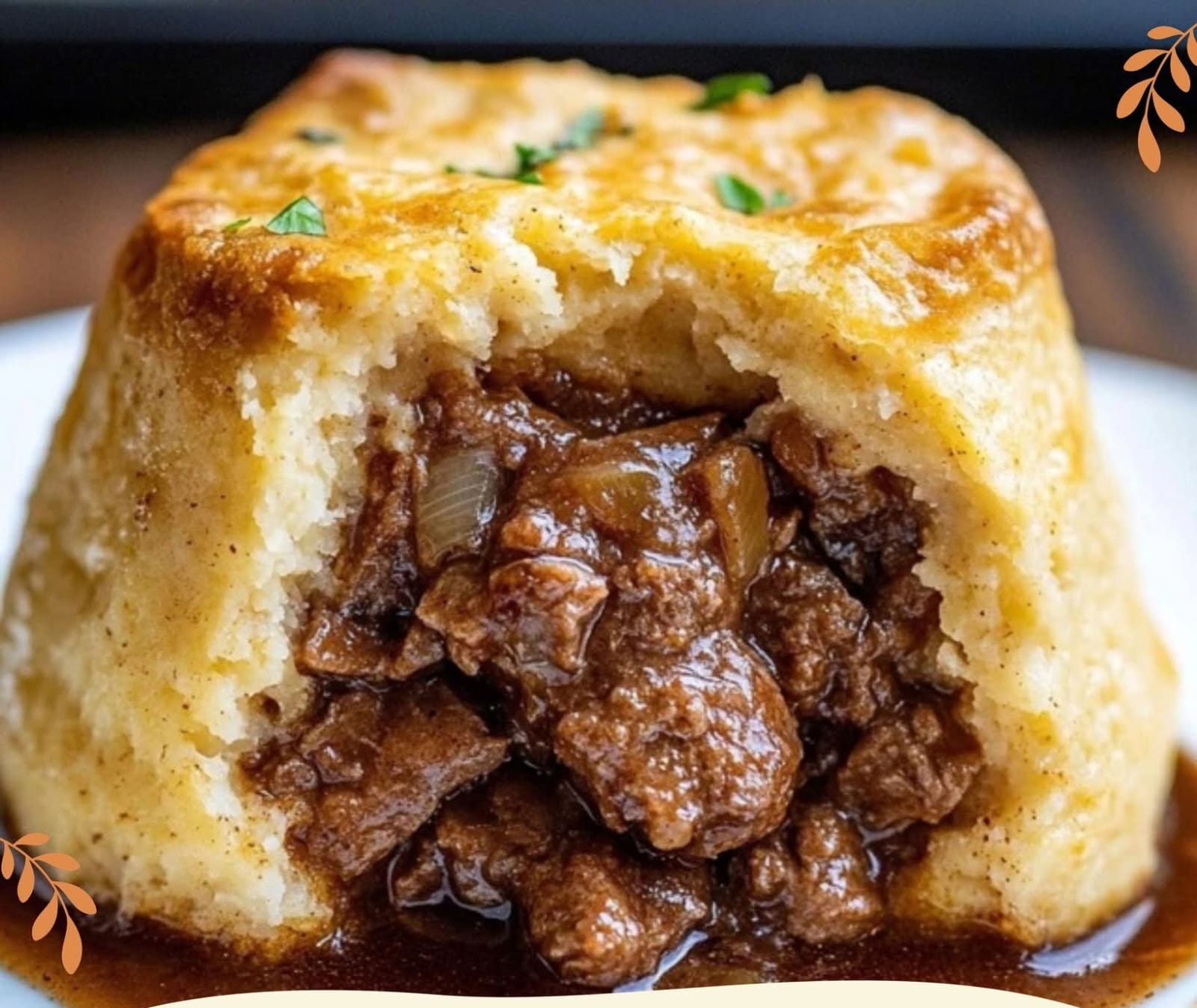
Steak and Onion Suet Pudding 🥧🍴
A Legendary British Classic
📖 History
The Steak and Onion Suet Pudding (often called “Steak and Kidney Pudding” when kidneys are included) traces its roots to 18th-century England, specifically the industrial north. Working-class families needed filling, energy-dense meals that could cook slowly while they laboured in mills and factories. The pudding basin—a simple ceramic bowl—became revolutionary because it allowed households to steam meals without expensive ovens.
Suet, the hard fat found around beef kidneys, was a cheap byproduct that created a remarkably tender, watertight pastry when steamed. This “poor man’s food” eventually climbed social ranks and became a beloved classic. During WWII rationing, variations of this pudding kept British families nourished. Today, it remains a cherished pub staple and the centrepiece of traditional Sunday dinners in regions like Lancashire and Yorkshire.
🥣 Nutrition (per serving, ~600 calories)
Nutrient Amount % Daily Value*
Calories 598 kcal ~30%
Protein 38g 76%
Fat 32g 49%
– Saturated 15g 75%
Carbohydrates 38g 14%
– Fibre 3g 11%
– Sugar 5g 6%
Sodium 420mg 18%
Iron 4.5mg 25%
Vitamin B12 3.2μg 133%
Zinc 6mg 55%
*Based on 2000-calorie diet
Health Benefits:
· 🩸 Iron-rich – Combat fatigue and support oxygen transport
· 💪 High-quality protein – Muscle repair and satiety
· 🧠 B vitamins – Energy metabolism and nervous system health
· 🦪 Zinc – Immune function and wound healing
· 🧅 Onions – Contain quercetin (antioxidant) and prebiotic fibre
Note: Those monitoring saturated fat intake may enjoy this as an occasional treat rather than daily fare.
🥧 Ingredients
For the Suet Pastry
Ingredient Amount Notes
Self-raising flour 250g (2 cups) Plus extra for dusting
Beef suet (shredded) 125g (4.4 oz) Vegetarian suet works too
Cold water ~150ml (⅔ cup) Ice-cold is best
Salt 1 pinch Fine sea salt
Butter For greasing Softened
For the Filling
Ingredient Amount Preparation
Stewing beef 500g (1.1 lb) Diced into 2cm cubes
Large onion 1 whole Finely chopped
Plain flour 2 tbsp For coating beef
Butter 25g (1 oz) Unsalted
Beef stock 400ml (1⅔ cups) Hot, preferably homemade
Fresh thyme 1 tsp Chopped (or ½ tsp dried)
Salt To taste Sea salt
Black pepper To taste Freshly ground
Optional Enhancements
· 🍄 1 tbsp mushroom ketchup or Worcestershire sauce
· 🥄 1 tsp English mustard
· 🥕 1 small carrot (finely diced for sweetness)
· 🧄 2 garlic cloves (minced)
🔪 Method (Step-by-Step)
Phase 1: Prepare the Filling (Day before or 1.5 hours ahead)
Step 1 – Toss diced beef with plain flour, salt, and pepper in a bowl. Shake off excess flour.
Step 2 – Melt butter in a heavy-based pan over medium-high heat. Brown beef in batches (don’t overcrowd). Each batch should take 3–4 minutes until deeply caramelised. Remove and set aside.
Step 3 – Reduce heat to medium. Add chopped onion to the same pan. Cook 5–7 minutes until soft and golden, scraping up browned bits from the bottom.
Step 4 – Return beef to pan. Add thyme and pour in hot beef stock. Bring to a simmer, then reduce heat to low. Cover and cook for 45–60 minutes until beef is fork-tender.
Step 5 – Allow filling to cool completely (warm filling will melt raw pastry!). Refrigerate if making ahead.
Phase 2: Make the Suet Pastry (15 minutes)
Step 6 – In a large bowl, mix self-raising flour, suet, and salt.
Step 7 – Gradually add cold water, mixing with a flat-bladed knife or your fingertips. Stop when dough comes together as a soft but firm ball. It should feel slightly sticky but not wet.
Step 8 – Reserve one-quarter of the dough for the lid. On a lightly floured surface, roll the remaining dough into a circle about 0.5cm (¼ inch) thick and large enough to line a 1-litre (1 quart) pudding basin.
Phase 3: Assemble the Pudding (10 minutes)
Step 9 – Generously grease the pudding basin with softened butter.
Step 10 – Carefully lift the rolled pastry into the basin. Gently press it against the sides, allowing the excess to overhang the rim. There should be no air bubbles between pastry and basin.
Step 11 – Spoon the cooled beef and onion filling into the pastry-lined basin. Press down gently to eliminate air pockets.
Step 12 – Roll out the reserved quarter of dough to form a lid. Brush the rim of the lining pastry with cold water. Place the lid on top and press edges firmly to seal. Trim overhanging pastry, leaving a small lip.
Phase 4: Steam the Pudding (3 hours)
Step 13 – Cut a piece of greaseproof paper and a piece of aluminium foil, each large enough to cover the basin top with extra overhang.
Step 14 – Place paper over the basin (paper side down against pudding). Top with foil. Tie securely with kitchen string, creating a handle for easy lifting.
Step 15 – Place the basin in a large, deep pot with a tight-fitting lid. Pour boiling water into the pot until it reaches halfway up the sides of the basin (never higher—you’re steaming, not boiling).
Step 16 – Cover the pot and bring to a gentle boil, then reduce to a steady simmer. Steam for 2.5 to 3 hours, checking water level every 45 minutes. Top up with boiling water as needed.
Phase 5: Serve (5 minutes)
Step 17 – Carefully lift the basin from the pot using the string handle. Remove foil and paper. Run a knife around the inside rim to loosen.
Step 18 – Place a warmed plate upside down over the basin, then invert confidently. Give a gentle shake—the pudding should release beautifully.
Step 19 – Rest for 5 minutes before cutting into wedges. Serve with creamy mashed potatoes, buttered peas, and extra onion gravy poured into the centre.
👨🍳 Alternative Methods
🍲 Slow Cooker Method
· Prepare filling as directed (browning beef is still essential).
· Line slow cooker insert with pastry (some round slow cookers work perfectly).
· Fill with beef mixture, add lid pastry.
· Cover with two layers of paper towel under the lid to absorb condensation.
· Cook on LOW for 6–8 hours or HIGH for 4–5 hours.
Instant Pot/Pressure Cooker Method
· Brown beef using Sauté function directly in pot.
· Make pastry separately (traditional method).
· Assemble pudding in a heatproof bowl that fits inside the Instant Pot.
· Add 500ml water to pot, place bowl on trivet.
· Steam at HIGH pressure for 90 minutes, natural release for 10 minutes.
⏱ Quick(er) Version (2 hours total)
· Use puff pastry instead of suet pastry (different texture but faster).
· Slice beef very thinly (paper-thin) so it cooks in 45 minutes.
· Add ½ tsp baking soda to tenderise beef rapidly.
· Steam for only 90 minutes.
🏗️ Formation – The Science Behind the Pudding
Why Suet Works
Suet is hard fat (around 50% saturated, 40% monounsaturated) with a melting point of 42–45°C (107–113°F). During steaming, the fat melts slowly, creating tiny steam pockets that expand and push the flour matrix outward. This produces the signature light, spongy texture—different from the flaky layers of butter pastry.
The Magic of Steaming
· Moist heat gelatinises starches at 60°C (140°F), creating structure without drying.
· Gentle temperature (98–100°C / 210–212°F) keeps collagen in beef breaking down into gelatin, which enriches the filling.
· Closed system means no evaporation—flavours concentrate rather than escape.
Pastry-to-Filling Ratio
The traditional 30% pastry : 70% filling ratio creates:
· Enough structural integrity to hold shape when unmoulded
· Sufficient starch to absorb beef juices without becoming soggy
· Proper steam circulation during cooking
💕 Lovers & Cultural Impact
Who Adores This Dish?
Group Why They Love It
British grandparents Nostalgia – tastes like childhood Sundays
Pub chefs A signature dish that separates quality gastropubs from ordinary ones
Winter comfort seekers Deep warmth on cold, rainy evenings
Meal preppers Improves with age; freezes brilliantly
History buffs Eating a genuine 18th-century working-class recipe
Adventurous home cooks Mastering steaming is a proud skill
Beef farmers Celebrates humble, economical cuts
Football fans Traditional match-day meal in northern England
Famous Fans
“A steak pudding from a proper chippy—there’s nothing better. It’s Mancunian gold.”
— Karl Pilkington (English comedian)
“When I’m homesick for England, I dream of my grandmother’s suet pudding. The steam hitting your face as you cut into it… that’s love.”
— Nigella Lawson (celebrity chef, paraphrased)
Regional Variations Across Britain
Region Variation
Lancashire Adds black pudding chunks to filling
Yorkshire Uses beef dripping in pastry instead of suet
London “Pie and mash” style – adds parsley liquor
Scotland Includes haggis alongside the beef
Wales Adds leeks instead of or alongside onions
Cornwall Pastry uses clotted cream fat
✅ Pro Tips for Success
Problem Solution
Pastry cracks when rolling Add 1 tbsp more water; let dough rest 10 minutes
Pudding collapses when unmoulded Pastry was too thin (should be 0.5cm minimum)
Beef is tough after 3 hours Dice smaller (1.5cm cubes) or use blade/chuck steak
Water gets into pudding Foil wasn’t tight; crimp edges more securely
Pastry is heavy/dense Overworked dough or water was too warm
Filling is dry Add more stock; should be quite liquid before steaming
Basin floats Weigh down with a heatproof plate on top
🎯 Conclusion
The Steak and Onion Suet Pudding is far more than a recipe—it’s a culinary time capsule that connects us to generations of British cooks who transformed humble ingredients into something transcendent. The gentle patience of steaming rewards you with a dish where every component shines: the peppery beef falling apart in rich gravy, sweet onions melted into silk, and that remarkable suet pastry—crisp at the rim yet impossibly tender within.
In an age of air fryers and microwave meals, making this pudding is a radical act of slow cooking. It demands no special equipment (just a bowl and a pot), only the willingness to wait. And wait you should. Because when your knife breaks through that golden crust and savoury steam rises toward your face, you’ll understand why this dish has survived centuries of changing fashions.
Make it for Sunday dinner. Make it for someone you love. Make it just because it’s raining outside. However you choose to enjoy it, you’re now keeper of a delicious tradition.
🍽️ Final Serving Suggestions
Accompaniment Why It Works
Creamy mashed potatoes Absorbs extra gravy; buttery contrast to savoury pudding
Garden peas Bright sweetness and colour against rich brown
Caramelised onion gravy Doubles down on onion flavour
Horseradish cream Sharp kick cuts through richness
Pickled red cabbage Acidic crunch balances fatty notes
A pint of bitter Traditional pub pairing—malt and beef are soulmates
📋 Recipe Card Summary
Detail Information
Prep Time 30 minutes
Cook Time 3 hours 30 minutes
Total Time 4 hours
Servings 4 hungry adults
Difficulty Medium (requires patience, not skill)
Cost ££ (approximately £8 total / £2 per serving)
Storage Refrigerate 3 days; freeze 3 months
Reheating Steam 30 minutes or microwave 2 minutes (pastry softer)
Now tie on your apron, fill the kettle, and give yourself over to the steam. Your steak and onion pudding is waiting to be born. 🥧❤️