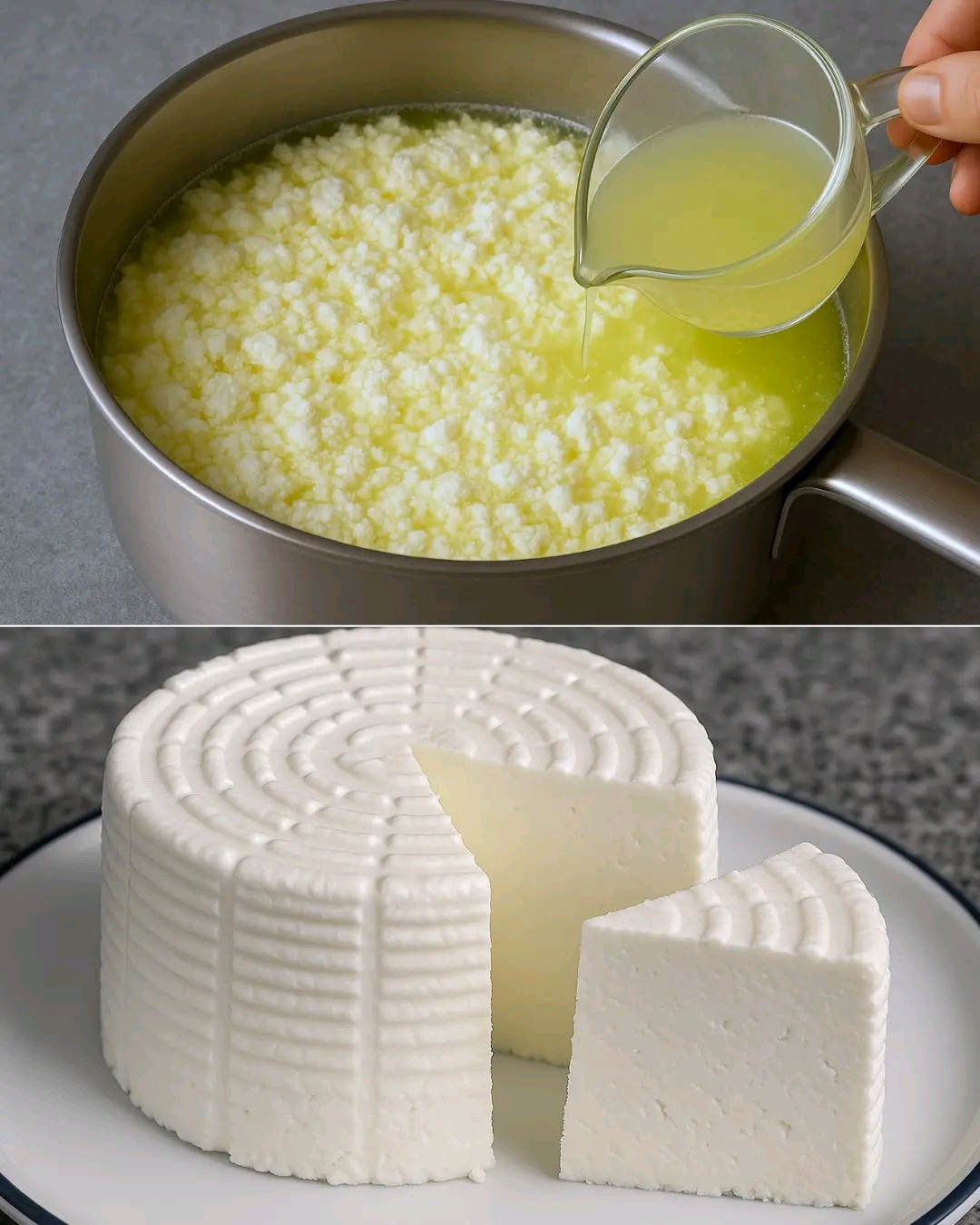
Homemade Fresh Cheese with 3 Ingredients
Introduction
Homemade fresh cheese is one of the simplest and most rewarding dairy recipes you can prepare in your own kitchen. Soft, creamy, and delicately tangy, this cheese is made with only a few everyday ingredients yet delivers rich flavor and freshness that store-bought versions often lack. Whether spread on warm bread, added to salads, or enjoyed with herbs and olive oil, this rustic cheese offers pure comfort in every bite.
Origin
Fresh cheeses have been made for centuries across many cultures, from the Mediterranean and Middle East to Europe and North Africa. Before refrigeration existed, families would transform milk into soft cheese to preserve its nutrients and extend its shelf life. Similar versions include ricotta in Italy, paneer in India, and farmer’s cheese in Eastern Europe. This homemade method reflects those traditional techniques that rely on natural curdling with acidic ingredients like lemon juice or vinegar.
Cultural Significance
Fresh cheese holds an important place in traditional home cooking around the world. It symbolizes simplicity, nourishment, and resourcefulness. In many households, homemade cheese is associated with family breakfasts, rural traditions, and handcrafted food prepared with care. Its versatility allows it to accompany both savory and sweet dishes, making it a beloved staple in many culinary traditions.
Ingredients Quantity
2 liters whole milk
80 ml lemon juice
1 teaspoon salt
Optional Additions
Fresh chopped herbs such as parsley, dill, or chives
Crushed garlic for a savory flavor
Black pepper or chili flakes for a spicy touch
Olive oil drizzle for serving
Honey for a lightly sweet variation
Tips for Success
Use full-fat whole milk for the creamiest texture.
Avoid ultra-pasteurized milk if possible, as it may not curdle properly.
Heat the milk gently and do not let it boil aggressively.
Stir slowly after adding the lemon juice to avoid breaking the curds too much.
Let the curds rest long enough to separate completely from the whey.
For firmer cheese, drain longer and press lightly.
Instructions
Pour the whole milk into a large saucepan and heat over medium heat. Stir occasionally to prevent scorching.
Once the milk becomes hot and starts to simmer gently, remove it from the heat.
Add the lemon juice gradually while stirring slowly. The milk will begin separating into curds and whey.
Allow the mixture to rest for 10–15 minutes so the curds fully develop.
Place a cheesecloth or clean kitchen towel over a strainer and pour the mixture through it.
Sprinkle the salt over the curds and mix gently.
Gather the cloth and let the cheese drain for 30–60 minutes depending on your preferred texture.
Transfer the fresh cheese to a bowl or mold and refrigerate before serving.
Description
This homemade fresh cheese is creamy, soft, and lightly tangy with a clean, milky flavor. Its delicate texture makes it perfect for spreading, crumbling, or pairing with fruits, vegetables, and warm bread. The freshness and natural taste create a comforting homemade experience that feels both rustic and elegant.
Nutritional Information
Approximate values per serving:
Calories: 140
Protein: 8 g
Fat: 10 g
Carbohydrates: 4 g
Calcium: High source
Sugar: 4 g
Nutritional values may vary depending on the type of milk used and draining time.
Conclusion
Making fresh cheese at home is an easy and satisfying process that transforms simple ingredients into something wholesome and delicious. With minimal effort, you can enjoy a preservative-free cheese that tastes fresh, authentic, and customizable to your preferences.
Recommendation
Serve this fresh cheese with toasted bread, olives, tomatoes, cucumbers, or a drizzle of olive oil. It also pairs wonderfully with fresh fruit, honey, and nuts for a light and elegant snack or breakfast.
Embracing Healthful Indulgence
Homemade fresh cheese is a beautiful example of how simple ingredients can create nourishing comfort food. Rich in protein and calcium while free from unnecessary additives, it offers a balanced way to enjoy creamy indulgence naturally. Preparing it yourself also reconnects you with traditional cooking methods that celebrate freshness, simplicity, and homemade goodness.