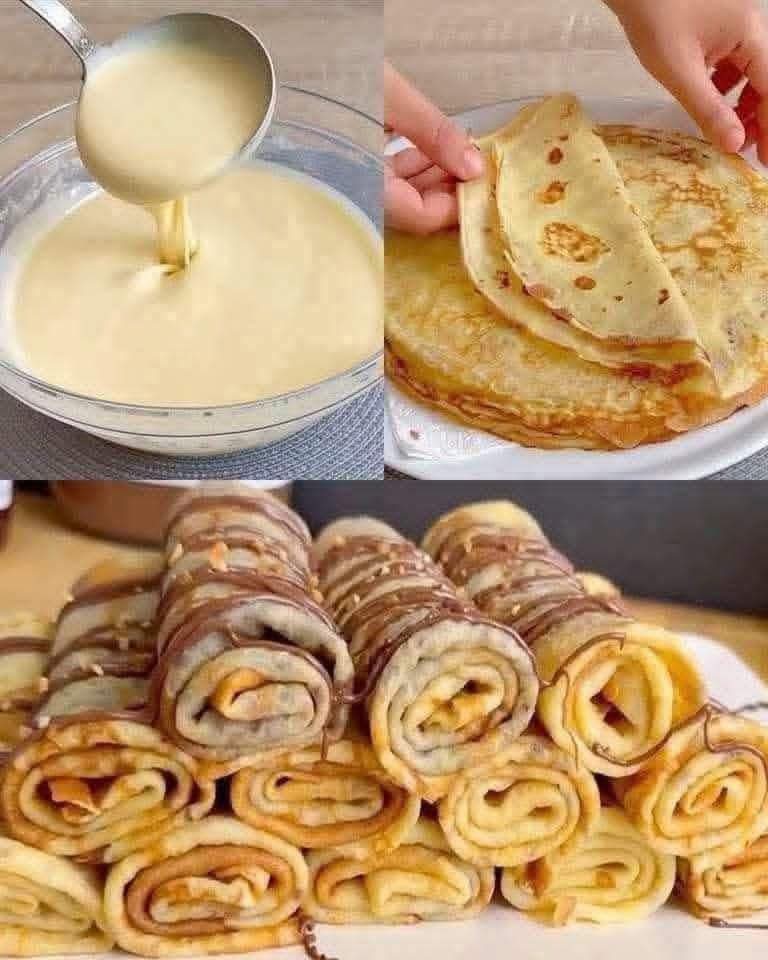
Here is a complete guide to making delicious, classic French crêpes, from their rich history to step-by-step instructions, nutritional insights, and more.
📖 Introduction
Crêpes are incredibly thin, delicate pancakes that originated in the Brittany region of France. Unlike their fluffy American counterparts, crêpes have a smooth, lacy texture that makes them incredibly versatile. They can be enjoyed as a savory meal or a sweet dessert, making them a beloved dish worldwide.
🛒 Ingredients
This recipe makes approximately 8-10 crêpes.
· 125g (1 cup) all-purpose flour (spooned & leveled)
· 2 large eggs, at room temperature
· 180ml (¾ cup) whole milk, at room temperature
· 120ml (½ cup) water, at room temperature
· 43g (3 tbsp) unsalted butter, melted, plus extra for the pan
· 1 tbsp granulated sugar
· 1/8 tsp salt
· 1½ tsp pure vanilla extract
👩🍳 Instructions & Methods
1. Make the Batter: In a large bowl, beat the melted butter until light and fluffy. Add the sugar and beat until dissolved. Sift in the flour and salt, then mix well.
2. Add Liquids: Gradually add the milk, water, and vanilla, mixing until smooth. Finally, add the eggs one at a time, beating until fully incorporated.
3. Rest the Batter: Cover the bowl with plastic wrap and refrigerate for at least 1 hour (or up to 24 hours). This step is crucial for tender crêpes.
4. Cook the Crêpes: Heat a non-stick skillet over medium heat. Lightly grease with butter. Pour about ¼ cup of batter into the pan, immediately tilting and swirling to evenly coat the bottom in a thin layer.
5. Flip and Finish: Cook for about 2 minutes until the bottom is lightly golden. Flip and cook the other side for another minute. Remove to a plate and repeat with the remaining batter, greasing the pan as needed.
🏛️ History
The story of the crêpe is a long one. Historians believe a version of the crêpe has existed since 7000 BC. It was originally a thick, porridge-like “galette” made from ground cereals and water. The modern crêpe began to take shape in the 13th century in Brittany, France, following the introduction of buckwheat from Asia during the Crusades. By the 19th century, the first crêperies opened, and the dish became a French staple. A famous legend tells of the Crêpes Suzette, accidentally invented in 1895 when a young assistant chef set the sauce on fire, much to the delight of the future King Edward VII.
✨ Benefits
While often seen as an indulgence, crêpes can be part of a balanced diet:
· Nutrient Foundation: The eggs and milk provide protein, calcium, and Vitamin E.
· Versatile Canvas: Their neutral flavor makes them perfect for incorporating nutritious fillings like lean proteins, vegetables, and healthy fats.
· Energy Source: They provide a good source of carbohydrates for energy.
⚙️ Formation (The Science)
The magic of a crêpe lies in its batter. When the liquid batter hits the hot, greased pan, the water turns to steam, creating small air pockets and a delicate, lacy structure. The resting period allows the gluten (from the flour) to relax, preventing the crêpes from becoming tough or rubbery.
🍽️ Nutrition
Nutritional values are for one plain crêpe (approx. 40g):
· Calories: ~86 kcal
· Protein: 3.3g
· Carbohydrates: 11.9g
· Fat: 2.7g
· Fiber: 0.5g
(These values will vary based on ingredients and added fillings.)
💖 For Crêpe Lovers
The love for crêpes has inspired dedicated eateries like “Crepe Lovers” in Ryde, England, which offers a popular “Nutella Lovers” menu item. The dish has become a global social media trend, and even traditional supermarkets have reported a +121% surge in demand for crêpe ingredients.
🎯 Conclusion
The crêpe is far more than a simple pancake; it is a culinary canvas with a rich history and a world of possibilities. From the batter’s simple chemistry to the joy it brings to food lovers globally, making crêpes at home is a rewarding experience that connects you to a centuries-old tradition. So, heat up your pan and start swirling—a delicious creation awaits.