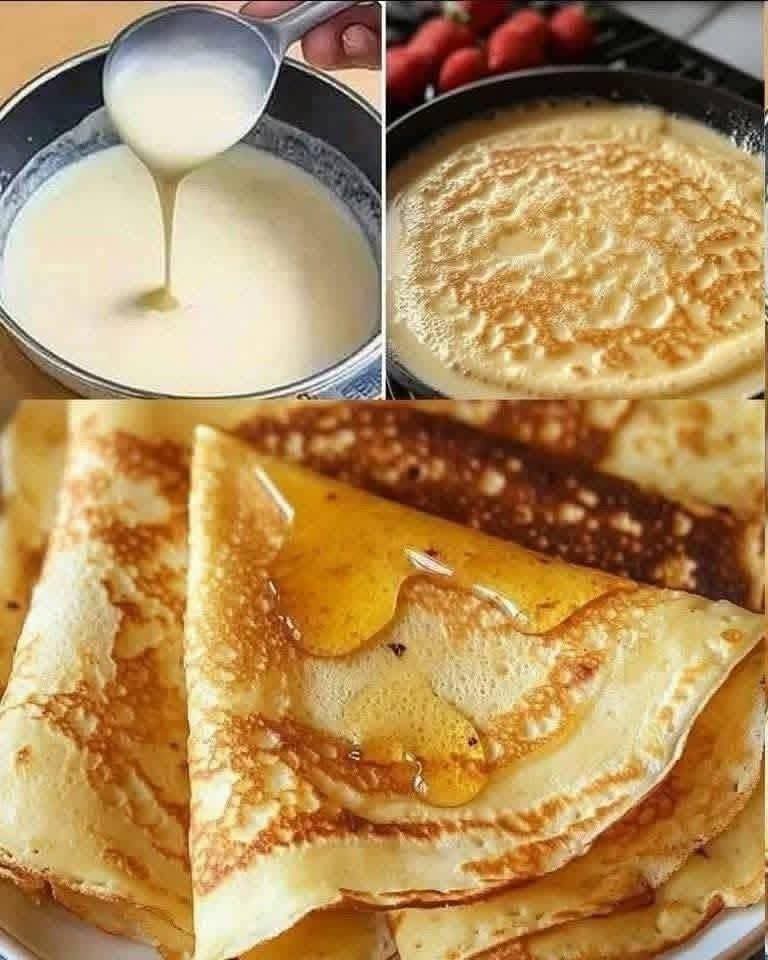
Crepes are a deliciously versatile dish, beloved for their paper-thin elegance and ability to be enjoyed in both sweet and savory forms. While their roots trace back to 13th-century Brittany, France, the modern version we know today has become a global sensation. Their universal appeal comes from being both incredibly simple to make and a canvas for endless creativity. This recipe provides a step-by-step guide to creating perfect, restaurant-quality crepes in your own kitchen.
📝 The Perfect Crepe Recipe
This recipe yields about 12-15 crepes and is designed for success.
Equipment You’ll Need
· Non-stick Pan: A traditional “billig” or a good non-stick crepe pan is ideal.
· Mixing Bowls: One large, one small.
· Whisk: For a smooth, lump-free batter.
· Ladle: To portion the batter consistently.
· Spatula: A thin, flexible one for easy flipping.
Ingredients
· All-purpose flour: 250g (about 2 cups).
· Large eggs: 4.
· Whole milk: 500ml (about 2 cups).
· Unsalted butter (melted): 50g (about 3.5 tbsp).
· Granulated sugar: 2 tbsp (for sweet crepes).
· Pinch of salt: 1.
· Optional flavorings: 1 tsp vanilla extract or 1 tbsp rum or orange blossom water.
👩🍳 Step-by-Step Instructions
1. Make the Batter
· In a large bowl, combine the flour, sugar, and salt. Make a well in the center.
· Crack the eggs into the well and begin whisking, gradually incorporating the flour from the inner edge of the well.
· Once the mixture is thick and pasty, slowly pour in the milk while whisking continuously to prevent lumps. If lumps form, simply strain the batter.
· Finally, whisk in the melted butter and your chosen flavorings.
2. Rest the Batter (Crucial for Tender Crepes)
· Cover the bowl and let the batter rest at room temperature for at least 30 minutes, or up to an hour. Resting allows the gluten to relax, ensuring your crepes are tender, not rubbery.
3. Heat the Pan
· Place your non-stick pan over medium heat. Lightly grease it with a little butter or oil—a paper towel is great for wiping away any excess.
4. Pour and Swirl
· Pour about 1/4 cup (60ml) of batter into the center of the hot pan. Immediately lift the pan and tilt it in a circular motion to spread the batter evenly into a very thin layer.
5. Cook to Perfection
· Cook for 45-60 seconds, until the edges start to look dry and the bottom is lightly golden. The surface will look slightly matte.
· Carefully slide your spatula under the edge and flip. Cook for another 30 seconds on the second side.
6. Serve Immediately
· Slide the cooked crepe onto a plate. Keep them warm in a low oven (around 200°F / 95°C) while you cook the rest. Serve with your favorite fillings.
🧑🍳 Tips & Common Methods
For the Best Results
· Consistency is Key: The batter should be as thin as heavy cream. If it’s too thick, add a tablespoon of milk at a time until it’s right.
· Make-Ahead Magic: This batter can be made up to 48 hours in advance and kept in the fridge. It’s also a fantastic way to use up leftover batter from other recipes.
· The First Crepe: The first crepe is always a bit of a test; don’t be discouraged if it’s not perfect. Use it to adjust the pan’s heat and batter consistency.
Sweet vs. Savory Fillings
· Sweet (Dessert): Nutella & banana, lemon juice & sugar, fresh berries & whipped cream, or a classic sugar & butter crepe.
· Savory (Galette): Ham, egg, and gruyère cheese (a “complète”), sautéed mushrooms and spinach, smoked salmon with crème fraîche, or roasted vegetables with goat cheese.
📜 A Journey Through History
The story of the crepe is a long and fascinating one.
· Ancient Origins: The earliest forms of flat cakes date back 7,000 years, with the Romans eating “galettes” during fertility festivals in February.
· Breton Roots: The crepe as we know it emerged in Brittany, France, by the 13th century. Early “galettières” (crepe-making stones) have been found in the region.
· The Buckwheat Era: Buckwheat arrived from Asia in the 12th century and became a staple grain for the Bretons, leading to the dark, savory galette.
· Wheat Flour Evolution: As wheat became more accessible in the 19th century, sweeter crepes made with white flour gained popularity.
· Modern Times: The 20th century saw the rise of the crêperie, a restaurant dedicated to this humble dish. Today, crepes are a global phenomenon, and “La Chandeleur” (Candlemas) on February 2nd is still celebrated in France as a day to make crepes for good luck.
💪 Nutritional Information
The nutritional value of a crepe depends heavily on its size, ingredients, and toppings. Here’s a breakdown for a plain crepe (approx. 64g), without any fillings.
Nutrient Amount per Crepe Notes
Calories ~105-115 kcal Varies based on the recipe.
Fat ~2-3.6g Low in saturated fat.
Carbohydrates ~8-18g Provides energy.
Protein ~5g Supports muscle repair.
Sodium ~116 mg Naturally low in sodium.
Key Health Benefits
· Supports Heart Health: Crepes are naturally low in sodium and contain cholesterol, which, in moderation, is essential for healthy bodily functions.
· Versatile for Any Diet: The beauty of a crepe is its adaptability. You can easily make gluten-free, dairy-free, or protein-rich versions by swapping ingredients. Choosing lighter toppings like fresh fruit or vegetables boosts the nutritional value.
🌍 Why We Love Crepes (And You Will Too!)
Crepes are universally loved for many good reasons.
· Their Simple Elegance: They manage to feel both rustic and sophisticated at the same time.
· They’re a Blank Canvas: Crepes can be anything from a simple street food to an elegant dessert.
· They Bring People Together: From French families on La Chandeleur to bustling crêperies worldwide, crepes are a food that is meant to be shared.
So, go ahead, gather your ingredients, and master this timeless classic. Whether you’re making them for a special brunch, a weeknight dinner, or a simple sweet treat, crepes are sure to bring a little bit of joy to your table. Bon appétit!