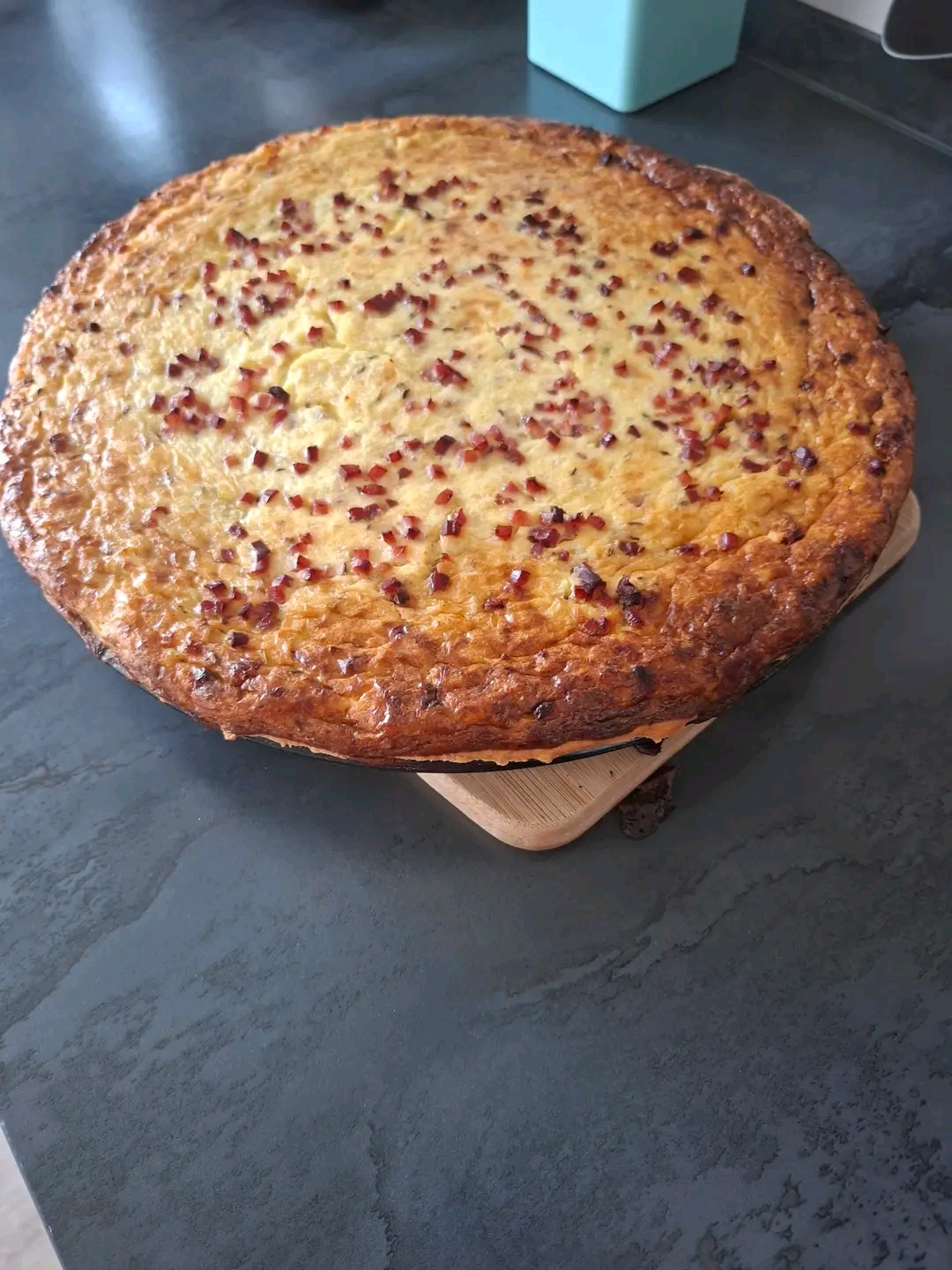
Traditional German Onion Cake (Zwiebelkuchen)
Introduction
German Onion Cake, or Zwiebelkuchen, is a wonderfully comforting savory bake made with soft, sweet onions, smoky bacon, and a rich, creamy egg mixture. With its golden crust and hearty filling, it is perfect for a cozy family dinner, weekend baking, or a casual gathering with friends.
Origin
Zwiebelkuchen is a traditional specialty associated particularly with southern and central Germany, including regions such as Swabia, Franconia, and the Rhineland. Recipes vary from region to region, with some versions using a yeast dough while others use a shortcrust-style pastry.
It is especially popular in autumn, when onions are plentiful and traditional wine regions celebrate the new harvest.
Cultural Significance
Onion cake is closely connected with German autumn food traditions and wine culture. It is commonly enjoyed alongside young, freshly fermented wine known as Federweißer. The combination of savory onion filling and lightly sweet, young wine has become a beloved seasonal tradition.
Ingredients Quantity
For the Dough
– 250 g all-purpose flour
– ½ teaspoon salt
– ½ teaspoon sugar
– ½ teaspoon instant yeast
– 125 ml warm milk
– 30 g butter, melted
For the Onion Filling
– 750 g yellow onions, thinly sliced
– 150 g bacon or smoked lardons, diced
– 2 tablespoons butter or oil
– 3 large eggs
– 200 g sour cream
– 100 ml heavy cream
– 1 teaspoon salt
– ½ teaspoon black pepper
– ½ teaspoon caraway seeds, optional
– 100 g shredded Gruyère, Emmental, or mild Swiss cheese, optional
Optional Additions
– A pinch of nutmeg for warmth
– Chopped fresh chives or parsley
– Smoked bacon for a deeper flavor
– A little grated cheese for a golden topping
– Thinly sliced spring onions
– A small spoonful of Dijon mustard in the filling for extra savory flavor
Tips for Success
– Cook the onions slowly: Allow them to soften and become lightly golden without burning.
– Do not rush the filling: Properly softened onions give the cake its characteristic sweetness.
– Drain excess bacon fat: This prevents the filling from becoming unnecessarily greasy.
– Let the dough rise: If using yeast dough, give it enough time to become light and flexible.
– Cool briefly before slicing: The creamy filling sets as it rests, making cleaner slices.
– Season carefully: Bacon can already be quite salty, so taste the onion mixture before adding too much salt.
Instructions
1. Prepare the dough: Combine the flour, salt, sugar, and yeast in a bowl. Add the warm milk and melted butter. Knead until a smooth dough forms.
2. Cover the dough and let it rise in a warm place for about 45–60 minutes, or until noticeably puffy.
3. Cook the bacon: Place the diced bacon in a large skillet and cook until lightly crisp. Remove and set aside.
4. Cook the onions: Add the butter or a little of the bacon fat to the skillet. Add the sliced onions and cook over medium-low heat for about 15–20 minutes, stirring occasionally, until soft and lightly golden. Do not brown them too aggressively.
5. Allow the onions to cool slightly.
6. Prepare the creamy mixture: Whisk together the eggs, sour cream, heavy cream, pepper, and caraway seeds. Add salt cautiously because of the bacon.
7. Stir the cooked onions and bacon into the egg mixture. Add cheese if desired.
8. Assemble: Preheat the oven to 200°C (400°F). Roll the dough out and press it into a greased 9-inch (23 cm) tart or springform pan, slightly raising the edges.
9. Pour the onion mixture evenly over the dough.
10. Bake: Bake for approximately 35–45 minutes, until the crust is golden and the center is set but still pleasantly creamy.
11. Let the Zwiebelkuchen rest for 10–15 minutes before slicing.
12. Garnish with fresh herbs if desired and serve warm.
Description
This Zwiebelkuchen has a crisp, tender crust surrounding a rich filling of sweet caramelized onions, smoky bacon, creamy sour cream, and delicate egg custard. Caraway adds a traditional German touch, while melted cheese can provide an additional layer of savory richness.
It is rustic, satisfying, and wonderfully aromatic straight from the oven.
Nutritional Information
Approximate per serving, based on 8 servings and depending on the exact ingredients used:
– Calories: 390–450 kcal
– Protein: 13–16 g
– Carbohydrates: 35–40 g
– Fat: 22–27 g
– Fiber: 2–3 g
– Sodium: 600–800 mg
For a lighter version, reduce the bacon and cream and increase the amount of onions and herbs.
Conclusion
Traditional German Onion Cake is a delicious example of how simple ingredients can become an exceptionally comforting meal. Sweet onions, smoky bacon, creamy custard, and golden pastry come together beautifully in every slice.
Recommendation
Serve it warm with a crisp green salad, steamed vegetables, or a simple cucumber salad. For an authentic autumn-inspired meal, enjoy it with a glass of young wine or your favorite non-alcoholic sparkling drink.
It is also excellent the next day, gently reheated in the oven.
Embracing Healthful Indulgence
Zwiebelkuchen is naturally a rich dish, but it can easily be adapted for a more balanced meal. Use plenty of onions, moderate the bacon and cheese, choose a lighter dairy option, and serve smaller portions alongside fresh vegetables or salad.
The goal is not to eliminate the comforting qualities of this traditional recipe, but to enjoy them thoughtfully—with plenty of flavor, satisfying ingredients, and a balanced plate.