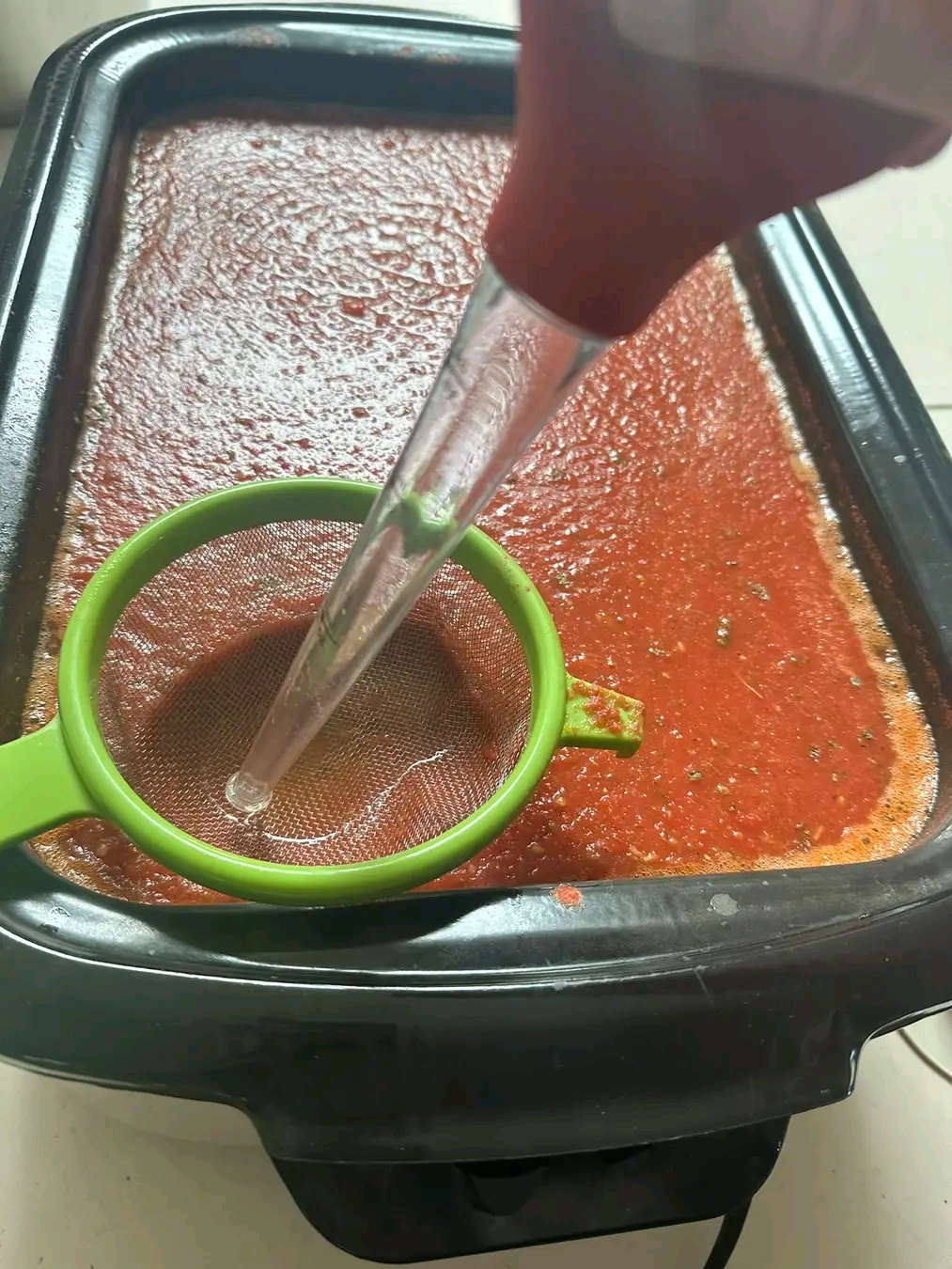
The Game-Changing Tomato Sauce Water Removal Method
Introduction
Making homemade tomato sauce from fresh tomatoes can sometimes leave you with an enormous amount of excess liquid. Instead of letting all that flavorful tomato water evaporate slowly or simply throwing it away, this clever method separates the liquid from the tomatoes so the sauce can reduce much more efficiently.
The result is a thicker, richer tomato sauce while the strained tomato water can be saved for another use, such as a Bloody Mary mix, soups, dressings, or other savory recipes.
Origin
Removing excess liquid from tomatoes is a familiar technique in traditional tomato preservation and sauce-making. Home cooks have long found ways to concentrate tomatoes by draining, simmering, roasting, or reducing them.
Modern cooks have adapted these methods using large roasting pans and strainers, making it possible to process large quantities of garden tomatoes efficiently.
Cultural Significance
Homemade tomato sauce is closely connected with seasonal cooking and preserving the summer harvest. In many families, late-summer tomatoes mean large batches of sauce, salsa, passata, and canned or frozen tomato products.
Saving the tomato water also reflects an important principle of traditional cooking: use as much of the ingredient as possible rather than wasting flavorful by-products.
Ingredients Quantity
For a Large Batch of Tomato Sauce
– 10–15 kg ripe fresh tomatoes
– 2–3 large onions, optional
– 6–10 garlic cloves, optional
– 2–4 tablespoons olive oil
– 2–3 tablespoons salt, adjusted to taste
– Fresh basil, optional
– Fresh oregano or thyme, optional
– Black pepper, to taste
For Collecting Tomato Water
– Large roasting pans or roasters
– Fine-mesh strainer or colander
– Large bowls or food-safe containers
– Ladle
– Cheesecloth, optional
The quantities can easily be reduced for a smaller batch.
Optional Additions
For a more flavorful finished sauce, consider adding:
– Fresh basil
– Oregano
– Roasted garlic
– Red pepper flakes
– Diced onions
– Carrots for natural sweetness
– Roasted red peppers
– A small amount of tomato paste for extra concentration
For the reserved tomato water, you can later add:
– Celery
– Lemon or lime juice
– Worcestershire sauce
– Hot sauce
– Black pepper
– Celery salt
– Prepared horseradish
These additions work particularly well when turning the tomato water into a Bloody Mary-style drink.
Tips for Success
Use ripe tomatoes: Fully ripe tomatoes provide the best flavor and the most vibrant sauce.
Don’t discard the liquid: The separated tomato water contains plenty of tomato flavor. Save it for another recipe or beverage.
Work in batches if necessary: Large quantities are easier to manage when divided between several roasting pans.
Don’t rely on evaporation alone: Removing excess liquid before the final reduction can dramatically shorten the time needed to achieve a thick sauce.
Taste before adding lots of salt: Tomato water can be concentrated later, so season the finished sauce carefully.
Use clean equipment: If you plan to store the tomato water, use clean food-safe containers and refrigerate it promptly.
Important for canning: Separating liquid from tomatoes can change the composition of a sauce. If you plan to water-bath or pressure-can the finished sauce, use a tested canning recipe rather than improvising the acid level or processing time.
Instructions
1. Prepare the Tomatoes
Wash the tomatoes thoroughly and remove stems, blemished areas, and any damaged portions.
Cut large tomatoes into chunks. Smaller tomatoes can be halved.
If desired, remove some seeds, although this is not essential.
2. Fill the Roasters
Place the prepared tomatoes into large roasting pans or electric roasters.
Do not pack them so tightly that the heat cannot circulate.
If making a seasoned sauce, add onions, garlic, olive oil, and herbs according to your preferred recipe.
3. Begin Cooking
Heat the tomatoes until they become soft and release a substantial amount of liquid.
Stir occasionally so the tomatoes cook evenly.
As the tomatoes break down, you will notice a considerable amount of watery liquid accumulating around the solids.
4. Remove the Excess Tomato Water
Using a clean ladle, carefully remove the liquid from the roasting pans.
Transfer the liquid to a large food-safe container.
Continue removing liquid periodically as more is released from the tomatoes.
For an especially clear tomato water, pour the collected liquid through a fine-mesh strainer lined with cheesecloth.
5. Continue Concentrating the Sauce
Once much of the excess liquid has been removed, continue cooking the tomatoes until the sauce reaches your desired thickness.
Stir regularly, particularly as the sauce becomes thicker, to prevent sticking or scorching.
At this point, you can blend the sauce until smooth or leave it somewhat chunky.
6. Season the Sauce
Taste the concentrated tomato sauce.
Adjust the salt, pepper, herbs, garlic, or other seasonings according to how you intend to use it.
Continue cooking briefly if additional reduction is needed.
7. Save the Tomato Water
Cool the collected tomato water promptly and transfer it to clean, covered containers.
Refrigerate and use it within a few days, or freeze it for longer storage.
It can be used in soups, sauces, rice dishes, marinades, cocktails, or other savory preparations.
8. Make a Bloody Mary-Style Mix
For approximately 2 cups of tomato water, combine it with:
– 1–2 tablespoons lemon or lime juice
– 1 teaspoon Worcestershire sauce
– Hot sauce, to taste
– A pinch of celery salt
– Freshly ground black pepper
– Prepared horseradish, optional
Chill thoroughly and taste before serving, adjusting the seasoning as desired.
Description
This technique transforms a potentially frustrating problem—watery homemade tomato sauce—into an opportunity.
Instead of spending hours waiting for excess moisture to evaporate, you remove much of the liquid during cooking and allow the tomato solids to concentrate more quickly. Meanwhile, the extracted tomato water becomes a useful ingredient rather than waste.
If you’re processing a very large tomato harvest, the difference can be substantial. Removing many cups of liquid from several roasters can leave you with a much thicker, more concentrated sauce.
Nutritional Information
Because the exact amount of tomatoes and the final yield can vary considerably, nutrition will depend on the specific batch.
Fresh tomatoes are naturally low in calories and provide fiber, potassium, vitamin C, and carotenoid compounds such as lycopene.
For a plain tomato sauce without added oil or sugar, a typical ½-cup serving may contain approximately:
– Calories: 40–70 kcal
– Protein: 2–3 g
– Carbohydrates: 8–12 g
– Fat: 0–2 g
– Fiber: 2–3 g
– Sugar: 5–8 g
Conclusion
Removing excess water from homemade tomato sauce can be a true game changer when processing large quantities of fresh tomatoes. Instead of waiting endlessly for the sauce to reduce, you can remove the liquid as the tomatoes cook and concentrate the flavorful solids much more efficiently.
And perhaps the best part is that the tomato water doesn’t have to go to waste. It can become the foundation for another delicious recipe or a refreshing savory drink.
Recommendation
If you’re processing a large harvest, keep a dedicated container beside your roasting pans and collect the tomato water throughout the cooking process.
Freeze extra tomato water in measured portions so you can easily add it to soups, stews, sauces, rice, or future Bloody Mary-style mixes.
For the safest storage, refrigerate fresh tomato water promptly and use it within a few days, or freeze it. Do not assume that collected tomato water or homemade sauce is shelf-stable simply because it contains tomatoes.
Embracing Healthful Indulgence
One of the best things about this method is that it encourages whole-food, low-waste cooking. You’re getting more use from the tomatoes you already have rather than throwing away a flavorful part of the harvest.
The tomato water can add natural tomato flavor without requiring additional sugar or heavy ingredients, while the concentrated sauce lets you create rich-tasting meals from a simple seasonal vegetable.
It’s a practical reminder that delicious cooking doesn’t always require more ingredients—sometimes it simply requires using the ingredients you already have more thoughtfully.