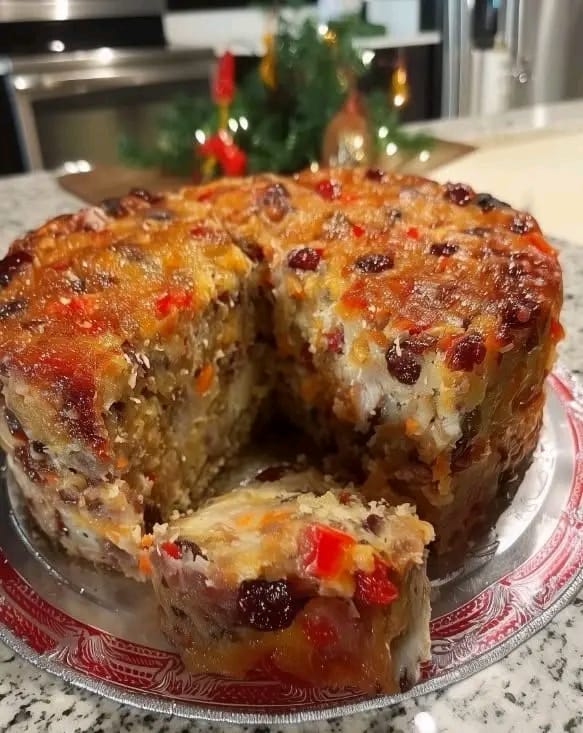
Here is a complete guide to baking that legendary Tennessee Fruit Cake, just like your Great Aunt used to make.
Introduction: The Aroma of Memory
There is no fragrance quite like a Tennessee fruit cake baking in the oven. It is a dense, humid scent of molasses, warm whiskey, and baking spices that clings to the curtains and settles in the woodwork. For my Great Aunt Mae, this wasn’t just a dessert; it was the official start of the Christmas season. She would begin soaking the fruits in October, and by December, the cake was a dark, jewel-studded monument to patience. Baking it today isn’t just following a recipe—it’s a ritual that resurrects her bustling kitchen, the clatter of her mixing bowls, and the warmth of her hug.
History: A Southern Heirloom
While traditional British fruitcakes are light and packed with citron, the Tennessee version is distinctly Southern and rustic. Born from the Appalachian frontier, this cake relied on shelf-stable dried fruits and the abundant corn whiskey of the region. Great Aunt Mae’s recipe came from her mother, who baked it during the Depression when sugar and butter were luxuries. The cake was soaked in whiskey not just for flavor, but as a preservation method, allowing it to be wrapped in cloth and stored for months. It was a cake of celebration and survival, often served at weddings and Christmas gatherings as a symbol of prosperity and endurance.
Benefits: More Than Just a Treat
While undeniably rich, this fruit cake offers surprising benefits when enjoyed in moderation.
· Antioxidant Rich: The dark dried fruits (raisins, currants, dates) and nuts are packed with polyphenols, which help combat inflammation.
· Energy Boost: The complex carbohydrates from the fruits and oats provide a slow-release energy source—perfect for cold winter days.
· Mineral Dense: Molasses and dried fruit are excellent sources of iron, potassium, and magnesium.
· Soul Medicine: The process of baking and the ritual of sharing this cake reduces stress and fosters community, which is a benefit for mental health.
Ingredients (Makes one large 10-inch tube pan or two standard loaves)
For the Fruit & Nut Soak (Day 1):
· 2 cups golden raisins
· 2 cups dark raisins
· 1 cup dried currants
· 1 cup chopped dried dates
· 1 cup chopped dried figs (or apricots)
· 2 cups chopped pecans (or black walnuts)
· 1 cup Tennessee whiskey (or bourbon) + extra for feeding
For the Batter (Day 2):
· 2 cups (4 sticks) unsalted butter, softened
· 2 cups dark brown sugar, packed
· 6 large eggs, at room temperature
· ½ cup molasses (not blackstrap)
· 4 cups all-purpose flour
· 1 teaspoon baking powder
· 1 teaspoon salt
· 1 tablespoon ground cinnamon
· 1 teaspoon ground nutmeg
· ½ teaspoon ground cloves
· 1 cup buttermilk
Methods & Formation: Step-by-Step Instructions
Day 1: The Maceration
1. In a massive glass or ceramic bowl, combine all the dried fruits and nuts.
2. Pour the 1 cup of whiskey over the top and stir thoroughly.
3. Cover with a clean kitchen towel and let it sit at room temperature for 24 hours, stirring occasionally. The fruit will plump and absorb the liquor.
Day 2: The Formation
1. Preheat & Prep: Set your oven to 275°F (135°C)—this is a low, slow bake. Generously grease your tube pan or loaf pans with butter, then dust with flour. Tap out the excess.
2. Cream Butter & Sugar: In a stand mixer, cream the butter and brown sugar until light and fluffy (about 5 minutes).
3. Add Wet Ingredients: Add the eggs one at a time, mixing well after each. Beat in the molasses until combined.
4. Dry Mix: In a separate bowl, whisk together the flour, baking powder, salt, cinnamon, nutmeg, and cloves.
5. Combine: With the mixer on low, add the dry ingredients to the wet mixture in three parts, alternating with the buttermilk (starting and ending with the flour). Mix just until combined—do not overmix.
6. The Merger: Using a very sturdy spatula, fold the soaked fruit-and-nut mixture (including any leftover whiskey juice) into the batter. This requires arm strength. Ensure every piece of fruit is coated in batter.
7. Fill the Pan: Scoop the thick batter into your prepared pan and smooth the top. Tap the pan firmly on the counter to remove air bubbles.
8. The Bake: Place the pan in the oven. Bake for 2.5 to 3 hours, or until a skewer inserted in the center comes out with only a few moist crumbs. If the top browns too fast, tent with foil.
9. The Cooling: Let the cake cool in the pan on a wire rack for 1 hour. Then, turn it out onto the rack to cool completely.
The “Feeding” Method (Aging)
Once completely cool, wrap the cake in a layer of cheesecloth. Place it in an airtight tin. Every week for 4-6 weeks, unwrap the cake and “feed” it by brushing 2-3 tablespoons of whiskey over the top and sides. Re-wrap and store in a cool, dark place. This deepens the flavor and keeps it moist.
Nutrition (Per Slice – Approx. 1/12th of cake)
· Calories: ~580
· Total Fat: 28g (Saturated: 14g)
· Carbohydrates: 72g
· Fiber: 5g
· Sugars: 48g
· Protein: 8g
(Note: Due to the high sugar and fat content, this is a “special occasion” indulgence.)
Conclusion: The Legacy of Flavor
This cake is a time capsule. It tastes of patience, with the sharp bite of whiskey mellowed by sweet molasses and the chew of sun-dried fruit. It is not a light, airy confection; it is a dense, serious cake that demands you sit down with a cup of strong coffee and savor it. Baking it is my way of keeping Great Aunt Mae’s spirit alive in my kitchen. It’s a tangible connection to a past where food was slow, love was loud, and the holidays smelled like this.
Lovers: Who Adores This Cake?
· Traditionalists: Those who remember the “old days” and crave the dense, boozy richness of a classic holiday fruitcake.
· Whiskey Aficionados: People who appreciate the oaky, vanilla notes that the Tennessee whiskey imparts to the cake.
· The Patient Baker: Anyone who enjoys the meditative process of soaking fruit, stirring batter, and waiting weeks for a flavor to mature.
· Nostalgia Seekers: Those who want to recreate a specific memory of a grandparent’s kitchen.
· Gift-Givers: People who love to wrap these cakes in a festive tin and share them with friends—it’s a gift that signifies effort and affection.