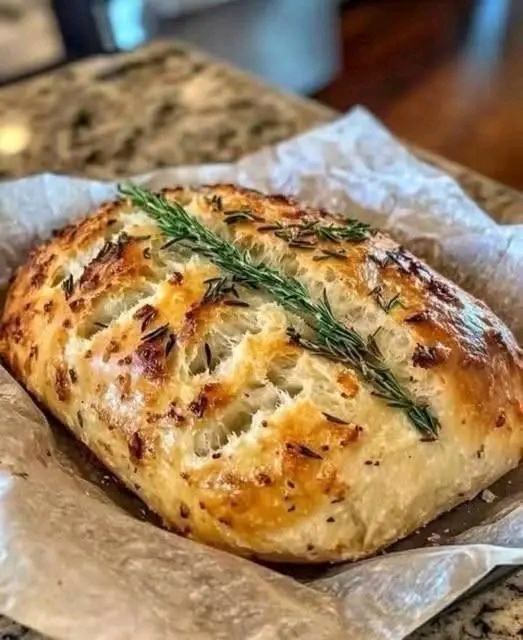
No-Knead Homemade Bread
Introduction
This easy no-knead homemade bread is soft, fluffy, inexpensive, and wonderfully satisfying. It requires no eggs, no butter, and no kneading, making it an excellent recipe for beginners or anyone who wants fresh bread without complicated techniques or ingredients.
Origin
No-knead bread belongs to a long tradition of simple homemade breads made with basic pantry ingredients. Modern no-knead methods became especially popular because they use a long resting period instead of traditional kneading, allowing time to develop flavor and structure naturally.
Cultural Significance
Bread is one of the world’s most universal foods, appearing in countless cultures and cuisines. Homemade bread also carries a strong sense of comfort and tradition, often associated with family kitchens, shared meals, and the pleasure of making something nourishing from simple ingredients.
Ingredients Quantity
– 3 cups all-purpose flour
– 1½ cups warm water
– 1 tsp salt
– 1 tsp sugar
– 2¼ tsp active dry yeast, or 1 packet
– 1 tbsp olive oil, optional, for a slightly softer crumb
Optional Additions
– 1 tsp garlic powder
– 1–2 tbsp dried herbs
– 2 tbsp sunflower or pumpkin seeds
– 1 tbsp sesame seeds
– A sprinkle of oats for the topping
– A little grated cheese for a savory variation
Tips for Success
– Use warm, not hot, water so you don’t damage the yeast.
– The dough should be sticky and soft; avoid adding too much flour.
– Give the dough enough resting time. This replaces the kneading process.
– For a crisp crust, bake the bread in a preheated Dutch oven or covered oven-safe pot.
– Allow the loaf to cool before slicing so the interior can finish setting.
– Store cooled bread in an airtight container or bread bag and enjoy within a few days.
Instructions
1. Activate the yeast: Add the warm water, sugar, and yeast to a large mixing bowl. Stir gently and let stand for about 5–10 minutes, until slightly foamy.
2. Make the dough: Add the flour and salt. Pour in the olive oil if using. Stir with a wooden spoon or spatula until a sticky, shaggy dough forms. No kneading is necessary.
3. Let it rise: Cover the bowl with plastic wrap or a clean kitchen towel. Leave the dough in a warm place for approximately 1½–2 hours, or until noticeably doubled in size.
4. Shape: Lightly flour your work surface and turn out the dough. Gently shape it into a round loaf. Avoid excessive handling.
5. Rest again: Place the dough on parchment paper and let it rest for another 20–30 minutes while the oven heats.
6. Preheat: Heat the oven to 220°C (425°F). If using a Dutch oven, preheat it according to its manufacturer’s instructions.
7. Bake: Carefully transfer the dough into the hot Dutch oven. Cover and bake for about 25 minutes. Remove the lid and bake for another 10–15 minutes, until the crust is deeply golden.
8. Cool: Transfer the bread to a wire rack and let it cool for at least 30 minutes before slicing.
Description
The finished loaf has a crisp, golden crust and a soft, airy interior. Its mild flavor makes it versatile enough for breakfast toast, sandwiches, soups, or simply serving warm with your favorite spread. The simple preparation makes it an especially convenient alternative to more labor-intensive bread recipes.
Nutritional Information
Approximate per serving, assuming the loaf is divided into 10 slices and without optional olive oil:
– Calories: 125–135
– Protein: 4 g
– Carbohydrates: 26–28 g
– Fat: 0.5–1 g
– Fiber: 1–2 g
– Sodium: Approximately 230–250 mg
Actual nutritional values will vary according to the flour, portion size, and optional ingredients used.
Conclusion
This no-knead bread proves that making homemade bread doesn’t have to be complicated. With just a handful of everyday ingredients and a little patience, you can create a fresh loaf with an irresistible crust and soft center.
Recommendation
Enjoy slices fresh from the oven once cooled, or use them for sandwiches, toast, French toast, or alongside soups and stews. For the best texture, slice only what you plan to eat and keep the remaining loaf properly covered.
Embracing Healthful Indulgence
Homemade bread gives you greater control over the ingredients and allows you to avoid unnecessary additives often found in some packaged breads. Pair a slice with protein, vegetables, eggs, or a nutritious soup for a more balanced meal. While bread is naturally carbohydrate-rich, enjoying reasonable portions as part of an overall balanced diet can make it a delicious and satisfying staple.I can also make this into a viral Facebook recipe-post format with a catchy title, short intro, ingredients, instructions, and a “Comment BREAD” call-to-action.