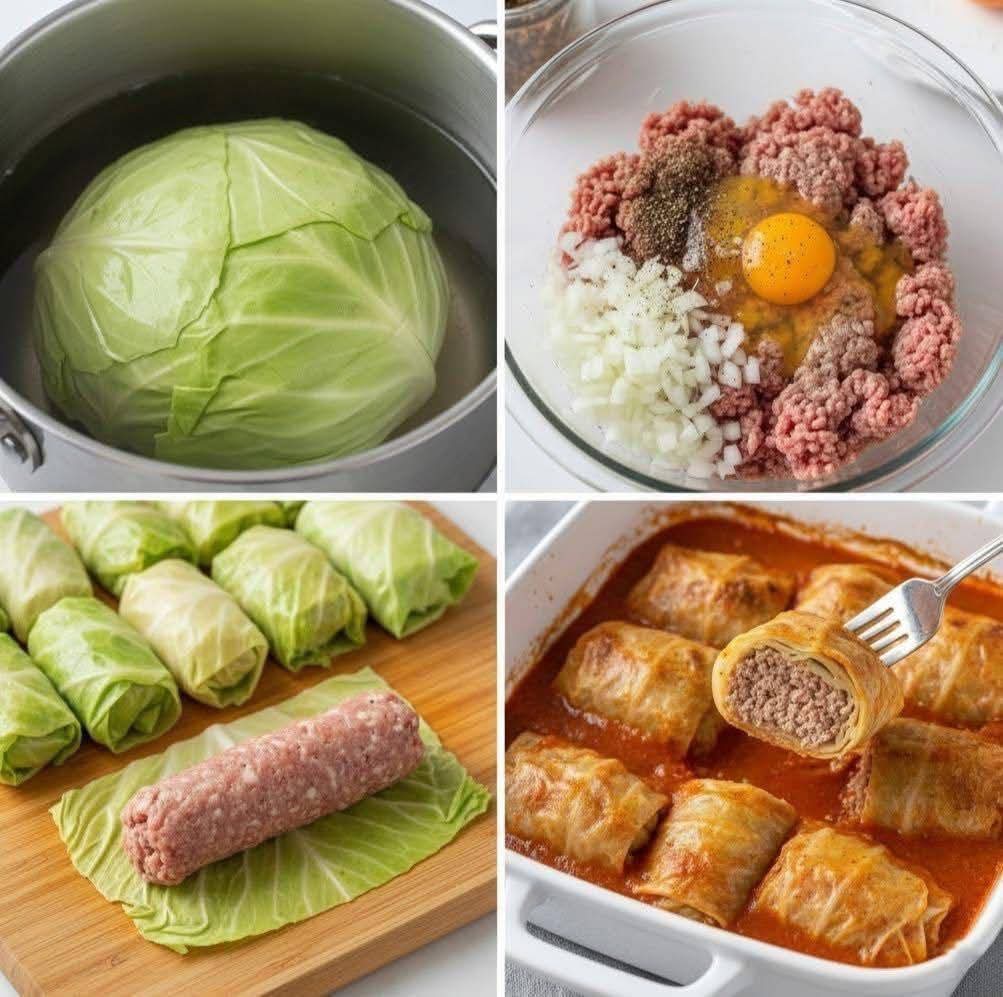
Here is a complete, in-depth recipe for Classic Stuffed Cabbage Rolls (Golubtsi / Holishkes) — a beloved comfort food across Eastern Europe and beyond.
Introduction
Stuffed cabbage rolls are the ultimate peasant dish turned celebratory staple. Tender cabbage leaves cradle a savory filling of seasoned meat and rice, all simmered slowly in a tangy tomato sauce. The magic lies in the long, gentle cooking—the flavors meld, the cabbage becomes silky, and every bite tastes like home. Whether you call them Golubtsi (Russian/Ukrainian), Holishkes (Jewish), or Sarma (Balkan), they represent patience, love, and the art of turning humble ingredients into gold.
History
The dish likely originated in the Ottoman Empire (cabbage was cheap, filling, stored well through winter). Jewish communities adapted it for Shabbat (slow-cooking without work), while Eastern Europeans added their own tomato-based or sour cream sauces. In Poland, Gołąbki (little pigeons) date to the 17th century; in Hungary, they’re often served with paprika. After WWII, the dish spread worldwide with immigrants, becoming a symbol of resilience and family tradition.
Benefits
· Nutrient-dense: Cabbage is rich in vitamin C, K, and fiber; lean meat provides protein; rice adds energy.
· Gut-friendly: Fermented versions (using sauerkraut leaves) introduce probiotics; slow-cooking breaks down fibers for easy digestion.
· Budget-wise: Uses inexpensive, shelf-stable ingredients.
· Meal-prep gold: Tastes even better the next day; freezes perfectly.
Nutrition (per 2 large rolls, ~350g)
Nutrient Amount
Calories ~380 kcal
Protein 24 g
Fat 14 g
Carbs 38 g
Fiber 6 g
Sodium 680 mg
Ingredients
For the cabbage:
· 1 large head green cabbage (about 1.5–2 kg)
· 2 tbsp salt (for boiling water)
For the filling:
· 500 g ground beef (80/20) or half beef/half pork
· 1 cup cooked white rice (or ½ cup uncooked)
· 1 medium onion, finely chopped
· 2 garlic cloves, minced
· 1 egg, lightly beaten
· 1 tsp salt
· ½ tsp black pepper
· 1 tsp paprika
· 1 tbsp fresh dill or parsley (optional)
For the sauce:
· 1 can (800g) crushed tomatoes
· 2 cups beef or vegetable broth
· 1 medium onion, sliced
· 2 tbsp tomato paste
· 1 tbsp brown sugar or honey (balances acidity)
· 1 bay leaf
· Salt and pepper to taste
Optional garnish:
· Sour cream or Greek yogurt
· Fresh dill
Instructions (Method)
Prep time: 30 min | Cook time: 1.5 hours | Serves: 6–8
Step 1 – Prepare the cabbage leaves
1. Bring a large pot of water to a boil with 2 tbsp salt.
2. Cut the core out of the cabbage (cone-shaped).
3. Submerge the whole cabbage in boiling water, core-side down.
4. As outer leaves soften (2–3 min), peel them off with tongs. Repeat until you have 12–16 large leaves.
5. Trim the thick center vein from each leaf (make a shallow V-cut). Set leaves aside.
Step 2 – Make the filling
1. In a bowl, mix ground meat, cooked rice, onion, garlic, egg, salt, pepper, paprika, and herbs.
2. Knead gently until just combined (do not overwork).
Step 3 – Roll the cabbage rolls
1. Place a cabbage leaf on a board, vein side up.
2. Put ~2 tbsp filling near the bottom edge.
3. Fold bottom over filling, then fold in sides, and roll up tightly like a burrito.
4. Repeat with all leaves.
Step 4 – Prepare the sauce & cook
1. In a Dutch oven or deep pot, sauté sliced onion in a little oil until soft.
2. Stir in tomato paste, then add crushed tomatoes, broth, sugar, bay leaf, salt, and pepper.
3. Place cabbage rolls seam-side down in the pot, nestling them close together (multiple layers fine).
4. Pour remaining sauce over to cover. If needed, add water.
5. Bring to a simmer, then reduce heat to low. Cover and cook for 1–1.5 hours, basting occasionally.
Step 5 – Finish
· Remove bay leaf. Taste sauce and adjust seasoning.
· Serve hot, topped with sour cream and fresh dill.
Formation (Visual/texture process)
· Raw cabbage leaf → stiff, crunchy, bitter.
· After blanching → flexible, sweet, translucent.
· Rolled → tight, compact, seam held by pressure of sauce.
· During cooking → rice expands inside, meat firms up, leaves soften into silky layers.
· Final dish → glossy red-brown sauce, rolls plump but hold shape, cut with a spoon.
Lovers (Who adores this dish)
· Grandmothers – the ultimate Sunday dinner passed down.
· Meal preppers – freezes like a dream.
· Budget cooks – fills bellies for pennies.
· Cold-weather eaters – ultimate winter comfort.
· Jewish, Polish, Ukrainian, Romanian, Hungarian, Turkish families – each claims it as their own
Conclusion
Classic stuffed cabbage rolls are more than a recipe—they are a culinary hug. Slow cooking transforms simple cabbage, meat, and rice into a deeply satisfying dish that connects us to generations past. Whether for a holiday table or a quiet weeknight, these rolls reward patience with flavor. Make extra; your future self will thank you.
Enjoy with crusty bread and a dollop of sour cream. Smaknego! (Bon appétit!)